Vessel
Unknown
19th–20th century · Terracotta, pigment · Arts of Africa, Oceania, and the Americas
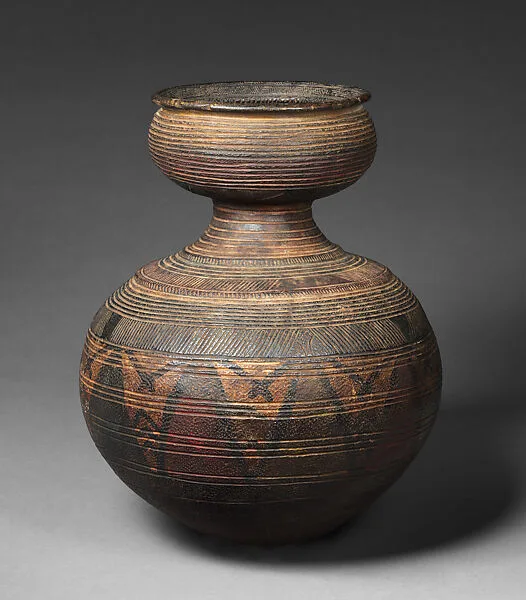
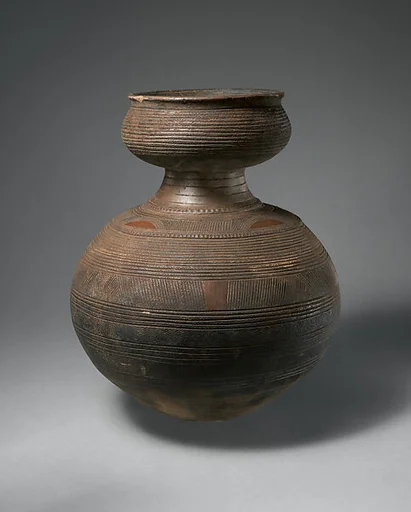
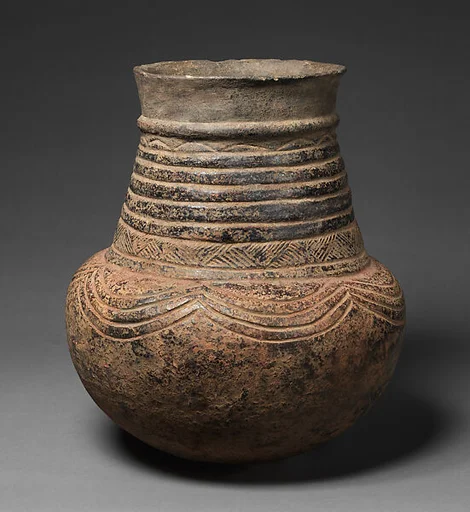
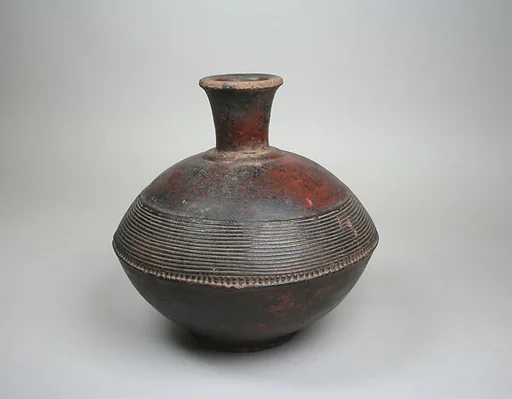
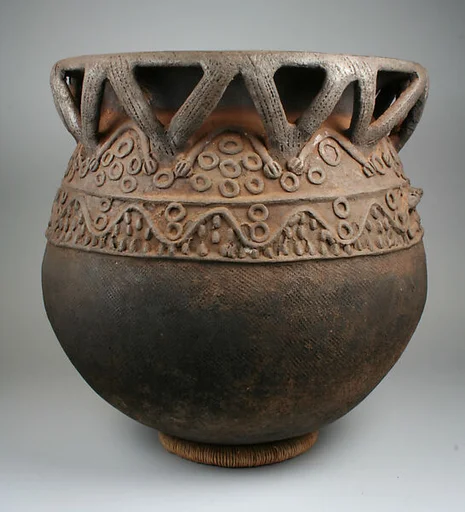
The double-tiered design of this vessel expresses both the generosity of its owner and the sense of containment and belonging found in communion. Such works are shaped in three separate pieces using a molding technique popular among neighboring Nupe and northern Yoruba artists. Developed at the nexus of the Lower Niger River’s vibrant trade networks, these fired ceramics became a valued form of tribute to the the Fulani leaders of the Sokoto Caliphate in the early nineteenth century. Later, as expressions of personal wealth required a host to supply food and drink to others, these vessels constituted an important component of bride-price payments. In the commercial center of Bida, some sleeping houses for female elders continue to retain a dedicated display area for these keepsakes.
- Artist
- Unknown
- Date
- 19th–20th century
- Medium
- Terracotta, pigment
- Culture
- Nupe peoples
- Department
- Arts of Africa, Oceania, and the Americas
- Credit line
- The Bryce Holcombe Collection of African Decorative Art, Bequest of Bryce Holcombe, 1984