Pendant Figure
Unknown
2nd century BCE–3rd century CE · Shell (spondylus) · Arts of Africa, Oceania, and the Americas
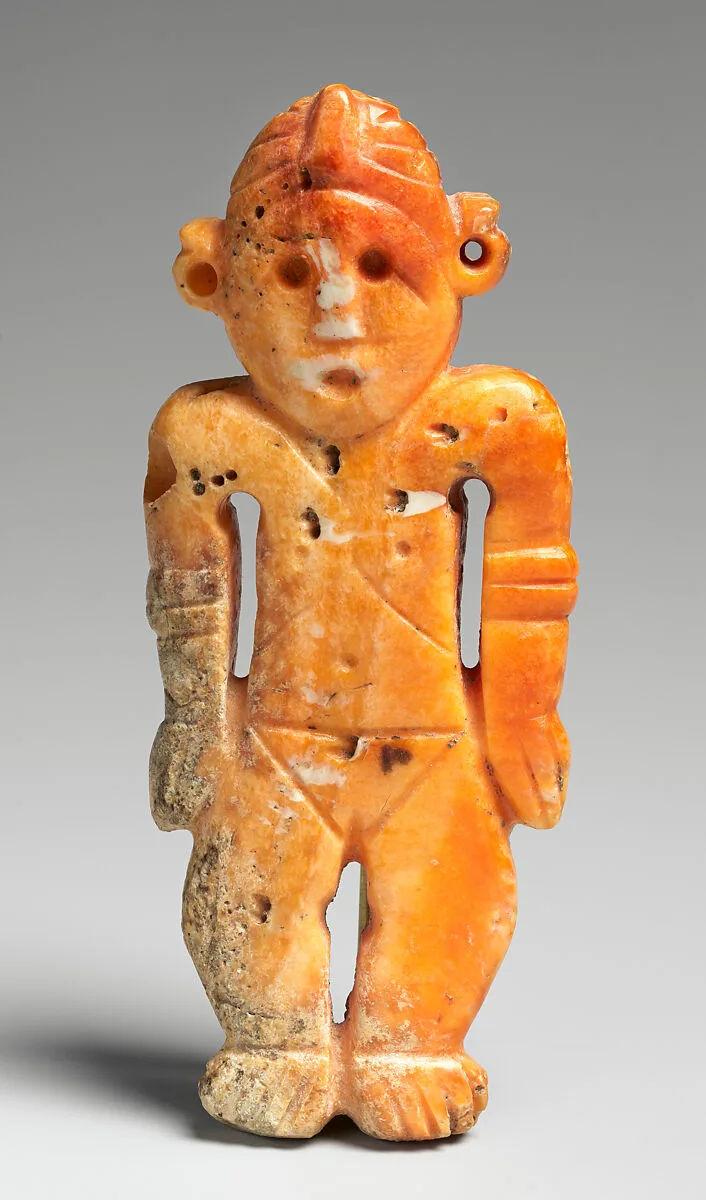
Spondylus, the shell of a thorny oyster native to the warm coastal waters of the Pacific Ocean, is a vibrant red-orange color that caused it to become a highly valued material collected and traded in ancient Mesoamerica and beyond. Primarily used as a material for carving jewelry, its preciousness and value are confirmed by its repeated presence in the tombs of important individuals. This small sculpture, probably a pendant that hung on a necklace strung with spondylus beads, depicts a bare-chested male figure wearing a turban, earspools, armbands, and loincloth. Despite the challenge of working in a material with very limited depth, the carver of this object skillfully created the illusion of volume in the face and, to a certain extent, within the body of the figure.
- Artist
- Unknown
- Date
- 2nd century BCE–3rd century CE
- Medium
- Shell (spondylus)
- Culture
- Colima
- Department
- Arts of Africa, Oceania, and the Americas
- Credit line
- Purchase, Rogers Fund and Gifts in honor of Carol R. Meyer, 1985