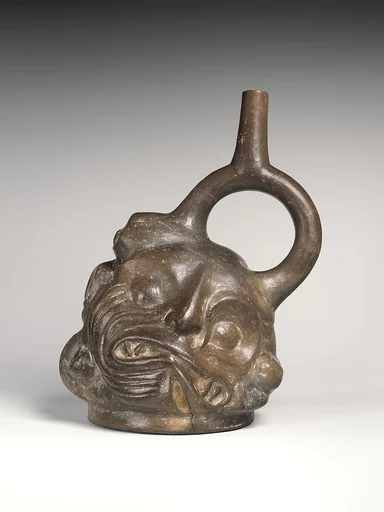
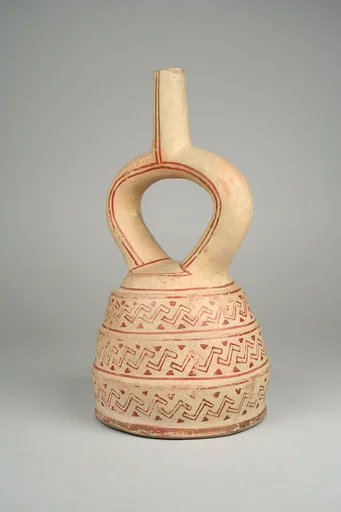
Stirrup-spout Bottle
Unknown
12th–5th century BCE · Ceramic · Arts of Africa, Oceania, and the Americas
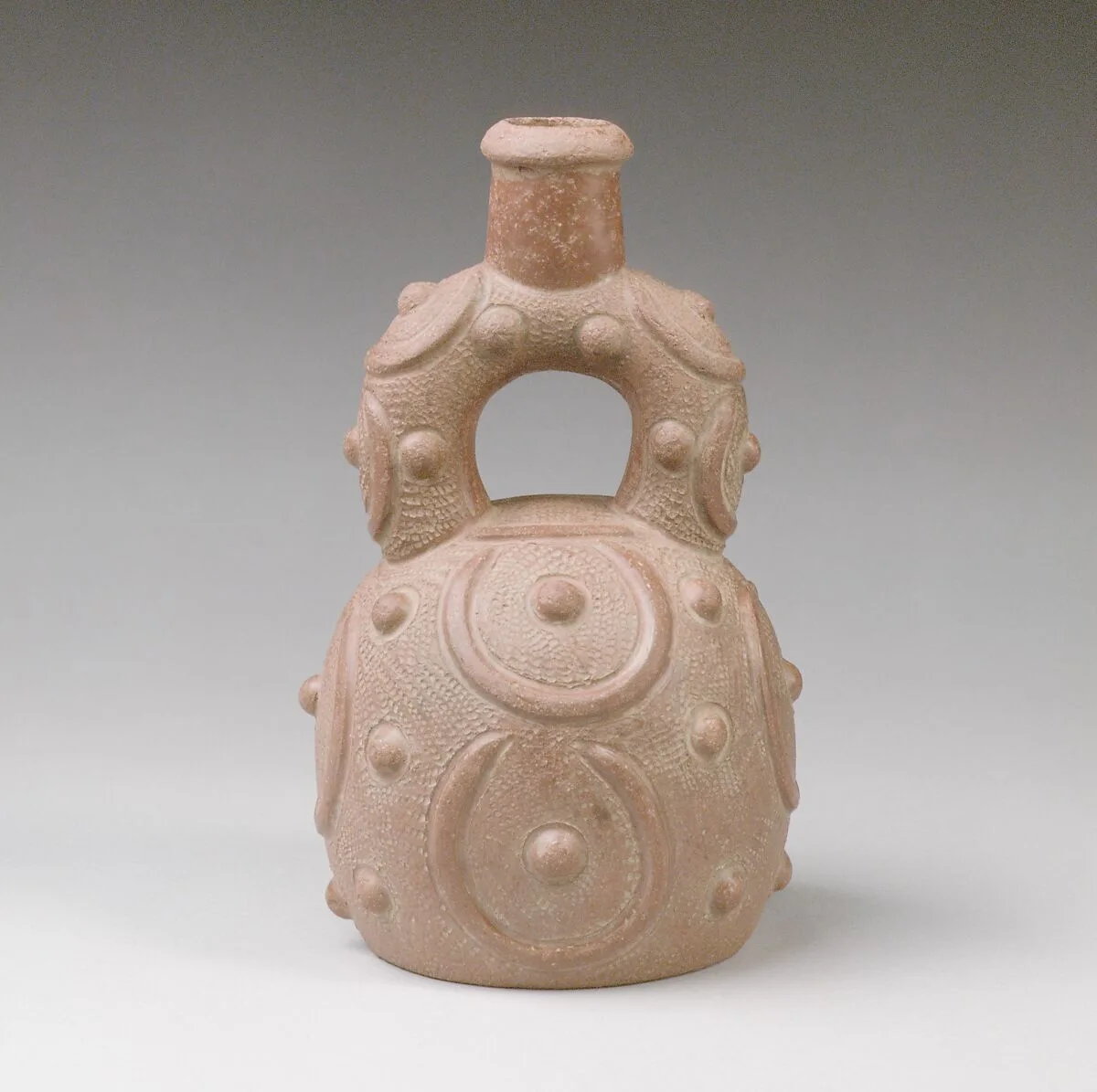
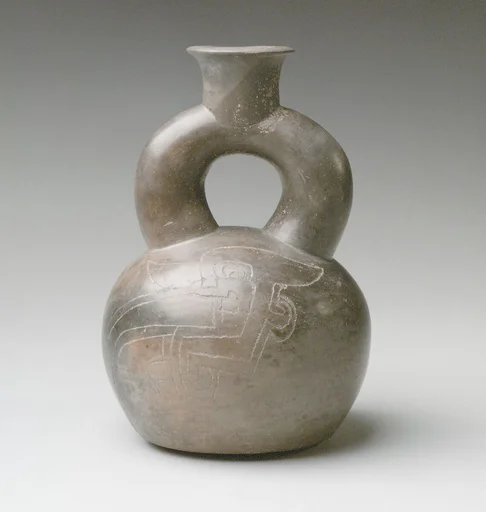
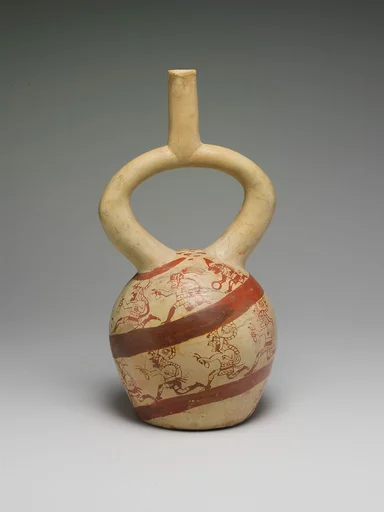
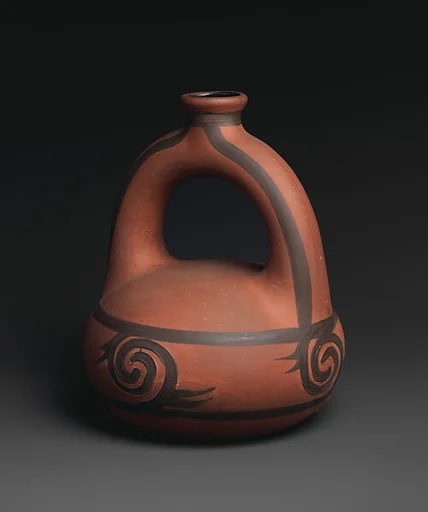
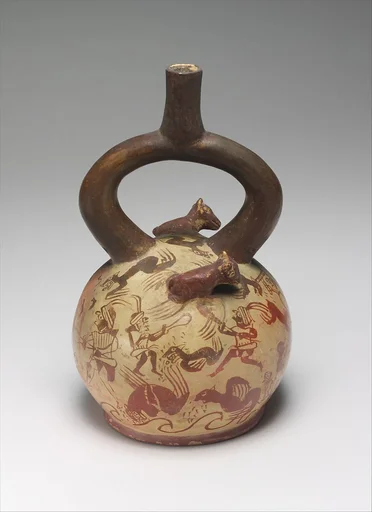
Bottles made in northern South America beginning in the second millennium B.C. were frequently made in a shape that is visually reminiscent of the stirrup on a horse's saddle. Stirrup-spout bottles, as they are called, were particularly favored in Peru, where for thousands of years they were made in a great variety of shapes, sizes, and finishes. Those stirrup-spout bottles, such as this example, termed Cupisnique, after the location in which many vessels in the style were initially discovered, are robustly sculptural and often monochrome in color. Strong and squat in shape, this bottle has a particularly well-balanced surface, with carefully placed, raised projections and round protrusions that echo the curved forms of body and spout. Since the Cupisnique style became known in the 1930s, it has become clear that there are a number of ceramic styles that are contemporary with and similar to it, but that can be distinguished from it by size, depiction, and surface treatment.
- Artist
- Unknown
- Date
- 12th–5th century BCE
- Medium
- Ceramic
- Culture
- Cupisnique
- Department
- Arts of Africa, Oceania, and the Americas
- Credit line
- Gift of Mr. and Mrs. Frederick E. Landmann, 1981