Ornamental mask
Unknown
6th–7th century · Silvered copper, shell · Arts of Africa, Oceania, and the Americas
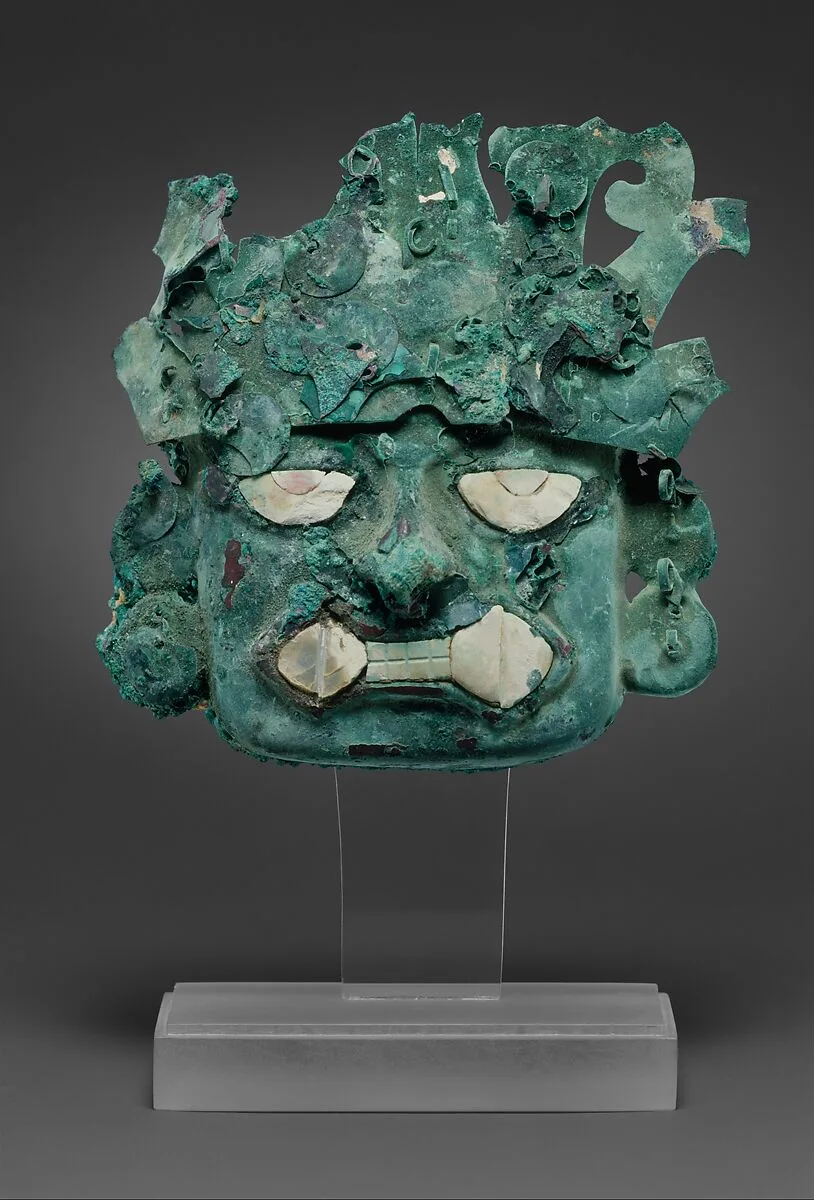
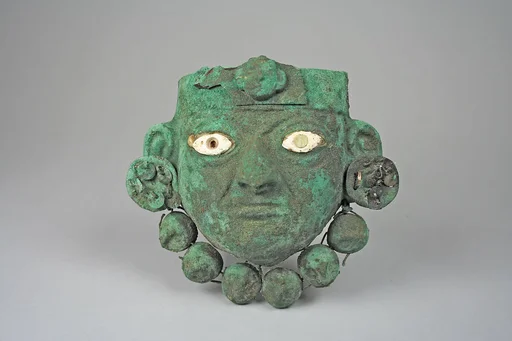
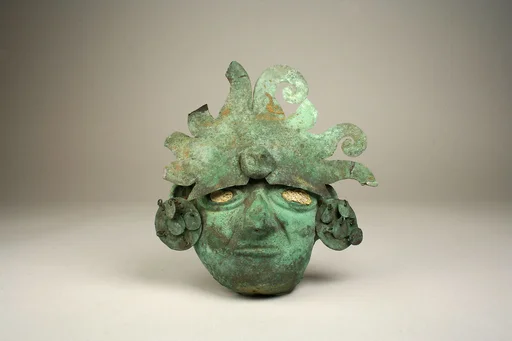
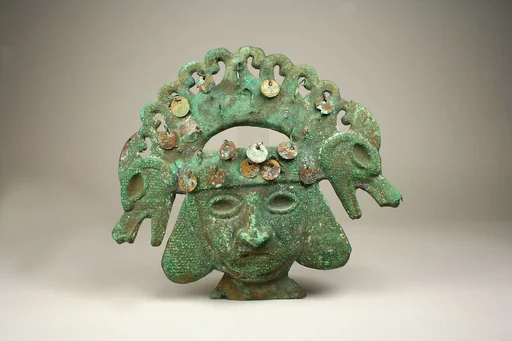
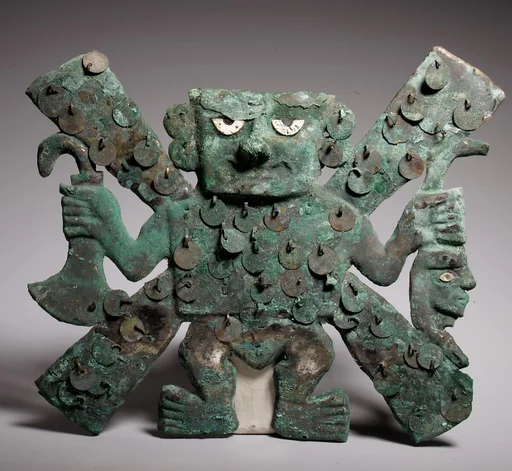
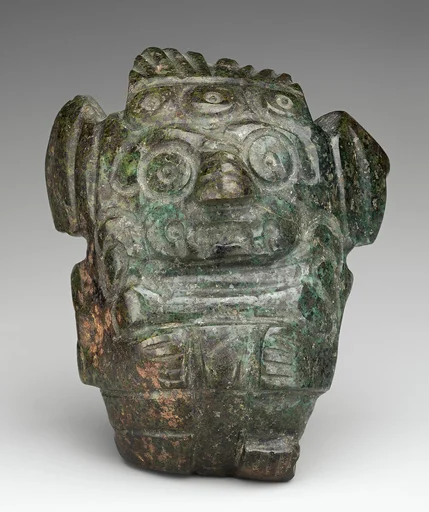
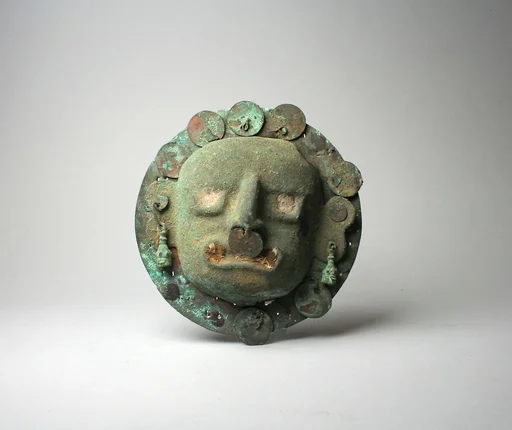
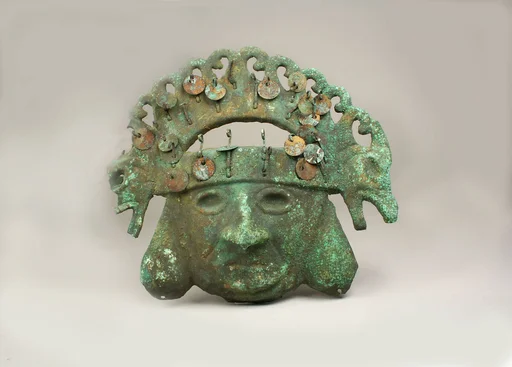
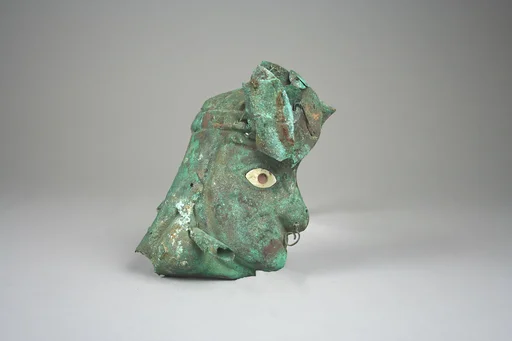
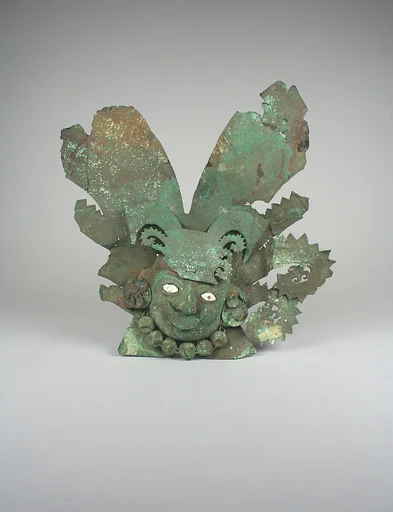
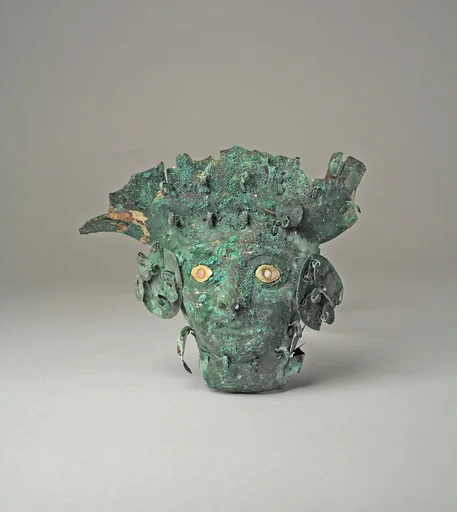
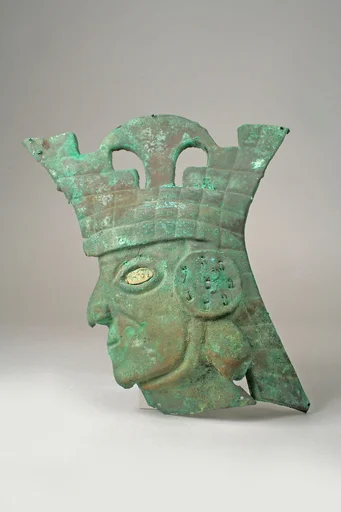
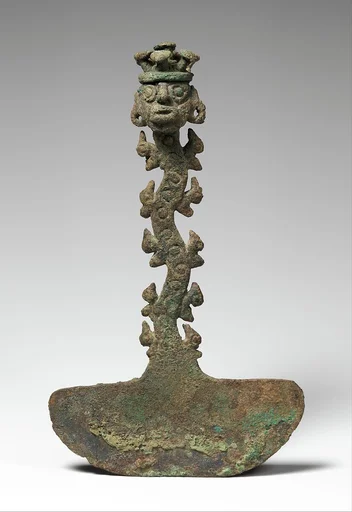
This mask was reportedly found at Loma Negra, an ancient cemetery near Cerro Vicús in the Piura Valley of Peru. Hundreds of tombs were discovered there containing large numbers of burial offerings, including works in gold, silver, and copper. Powerful Moche rulers were interred there in the third century, when their control reached almost as far as Ecuador. The mask, made of silvered copper, has small tabs along the back edges that were once fastened to a larger object, probably a crescent-shaped headdress also made of metal. The relief face was raised by hammering a copper sheet over a special form, and the separately shaped headdress—now fragmentary—and the numerous small round dangles—now mostly missing—were originally attached by means of the tabs and staples. Many centuries of burial and exposure to salts in the soil caused corrosion products to form, covering the once brilliant, thin silver surface. "Half-eyes" and the fanged mouth, with its original shell inlay, depict a Moche deity known as the "decapitator." Full-bodied representations of him on ceramics, textiles, wood, metal, and architectural reliefs show him holding a tumi (ritual cutting knife) in one hand and a severed human head in the other.
- Artist
- Unknown
- Date
- 6th–7th century
- Medium
- Silvered copper, shell
- Culture
- Moche
- Department
- Arts of Africa, Oceania, and the Americas
- Credit line
- Gift of Jane Costello Goldberg, from the Collection of Arnold I. Goldberg, 1980