Figure
Unknown
2200–2000 BCE · Ceramic · Arts of Africa, Oceania, and the Americas
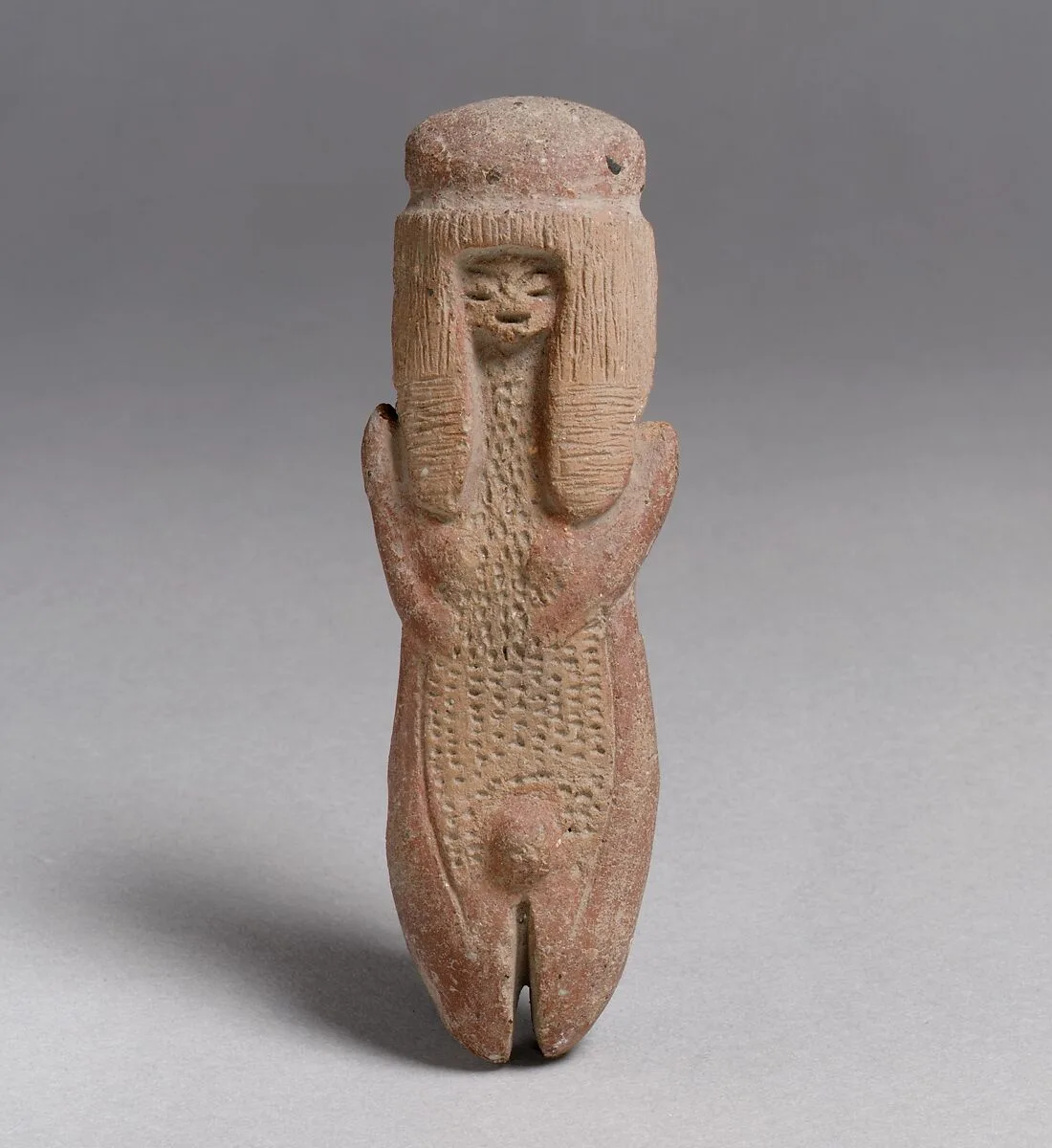
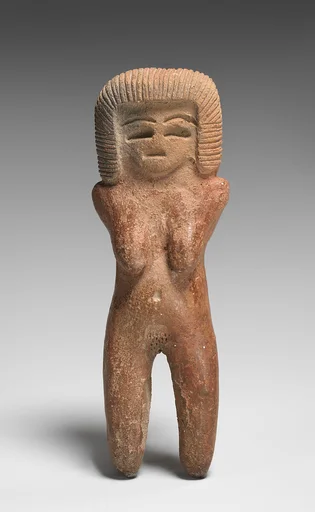
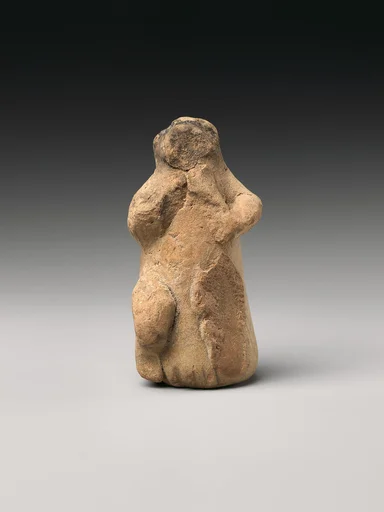
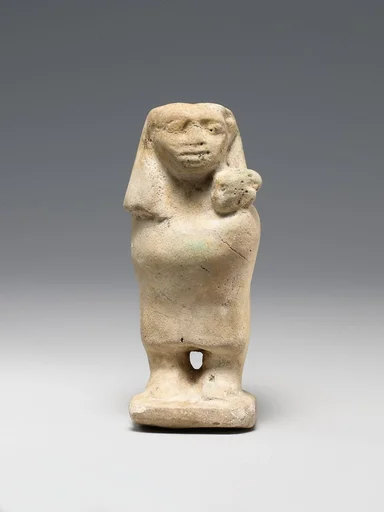
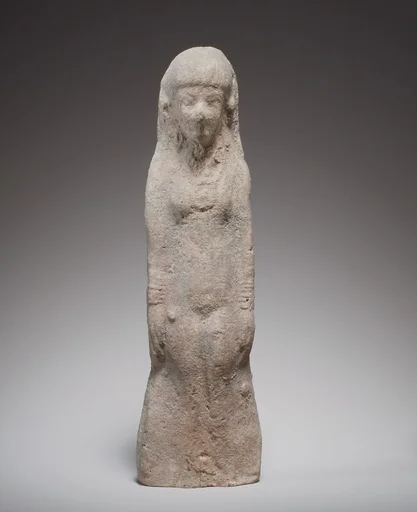
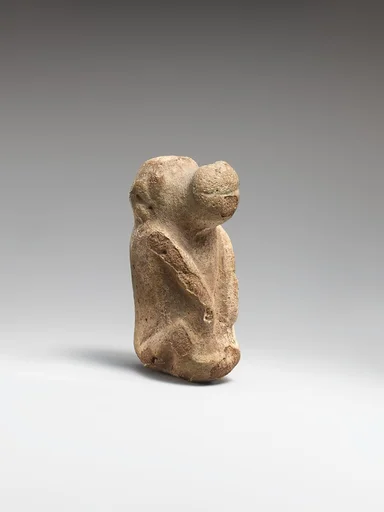
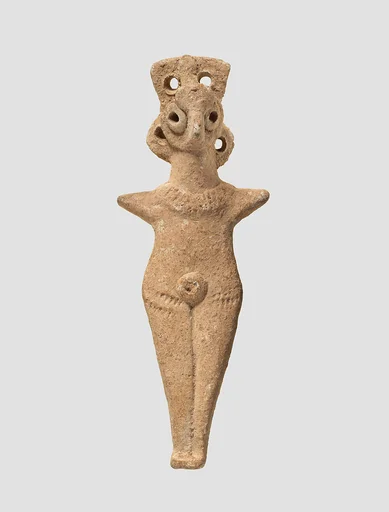
Around 4000–3500 BCE, ceramic figurines began to be produced along the coast of Ecuador at Valdivia sites like Real Alto and Loma Alta. Rooted in the region's earlier stone figurine tradition, these statuettes were the first of their kind in South America. The figurines were constructed by squeezing together two rolls of clay, which were then sculpted to form the body of the figure. Like their stone predecessors, the majority of the ceramic figurines were female, although there were instances in which figurines displayed both male and female attributes. As seen in the object here, the figurine possesses breasts as well as a lower abdominal protrusion that may symbolize male genitalia. The torso, chest, and neck are covered with strippling, while the arms, legs, breasts, and phallus remain bare. The figure's hair—elaborately styled, as is typical of Valdivian clay figurines—falls below the shoulders and frames the face. The figure's upright stance and clasped hands is evocative of some present-day Native American dance postures, and have led some scholars to suggest that a portion of the Valdivia statuettes actually represent dancing figures.
- Artist
- Unknown
- Date
- 2200–2000 BCE
- Medium
- Ceramic
- Culture
- Valdivia
- Department
- Arts of Africa, Oceania, and the Americas
- Credit line
- Gift of Timothy, Peter, and Jonathan Zorach, 1980