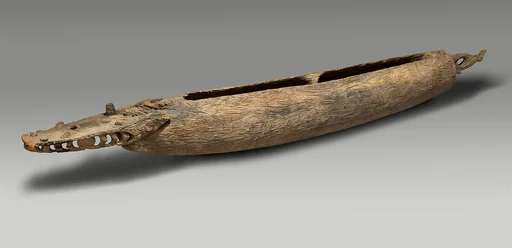
Friction Drum (Lunet or Livika)
Unknown
late 19th–early 20th century · Wood, shell · Arts of Africa, Oceania, and the Americas
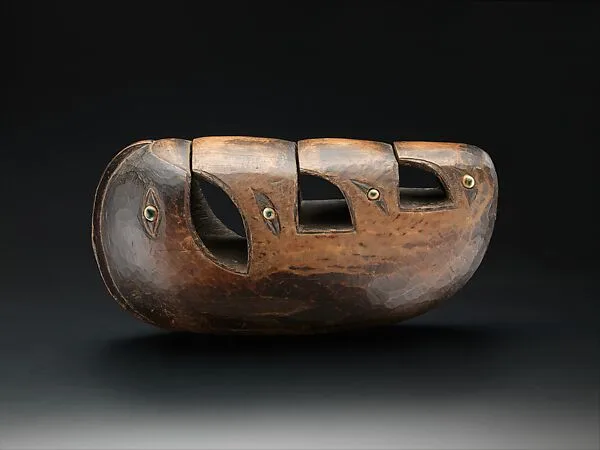
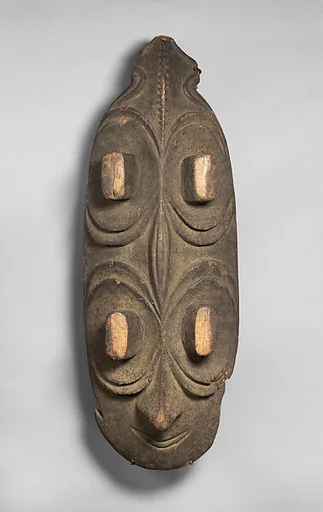
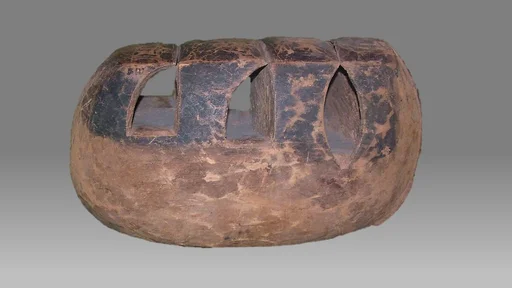
In northern New Ireland, wooden drums known as lunet were used as musical instruments during malagan ceremonies, elaborate feasts that honored the dead. In contrast to the complex funerary carvings displayed during these ceremonies, drums were neither painted nor adorned with intricate designs. Instead, they were unique in their simplicity of form, and their decoration was limited to a series of carved, almond-shaped eyes inset with opercula, the calcified "doors" that originally covered the openings of snail shells. Lunet were "friction drums" with three sound-producing wedges (or "tongues") on top. These wedges, each cut to a different size, separated from each other and have small spaces hollowed out underneath. A musician would have played the drum by moistening one of his hands with water and rubbing it across the wedges, creating a unique blend of tones reminiscent of the cry of the bird for which the drum was named.
- Artist
- Unknown
- Date
- late 19th–early 20th century
- Medium
- Wood, shell
- Culture
- Northern New Ireland
- Department
- Arts of Africa, Oceania, and the Americas
- Credit line
- The Michael C. Rockefeller Memorial Collection, Bequest of Nelson A. Rockefeller, 1979
![Canoe bailer (Tiheru [?])](https://d2pvxr3eb77vb4.cloudfront.net/assets/v1/20/20fa04f1ea82c711298a04c1b1c470b8b20e2b2e802900d55f31e2f1f61e8a9f/graph.webp)