Spotted Feline
Unknown
1st century BCE–4th century CE · Bone · Arts of Africa, Oceania, and the Americas
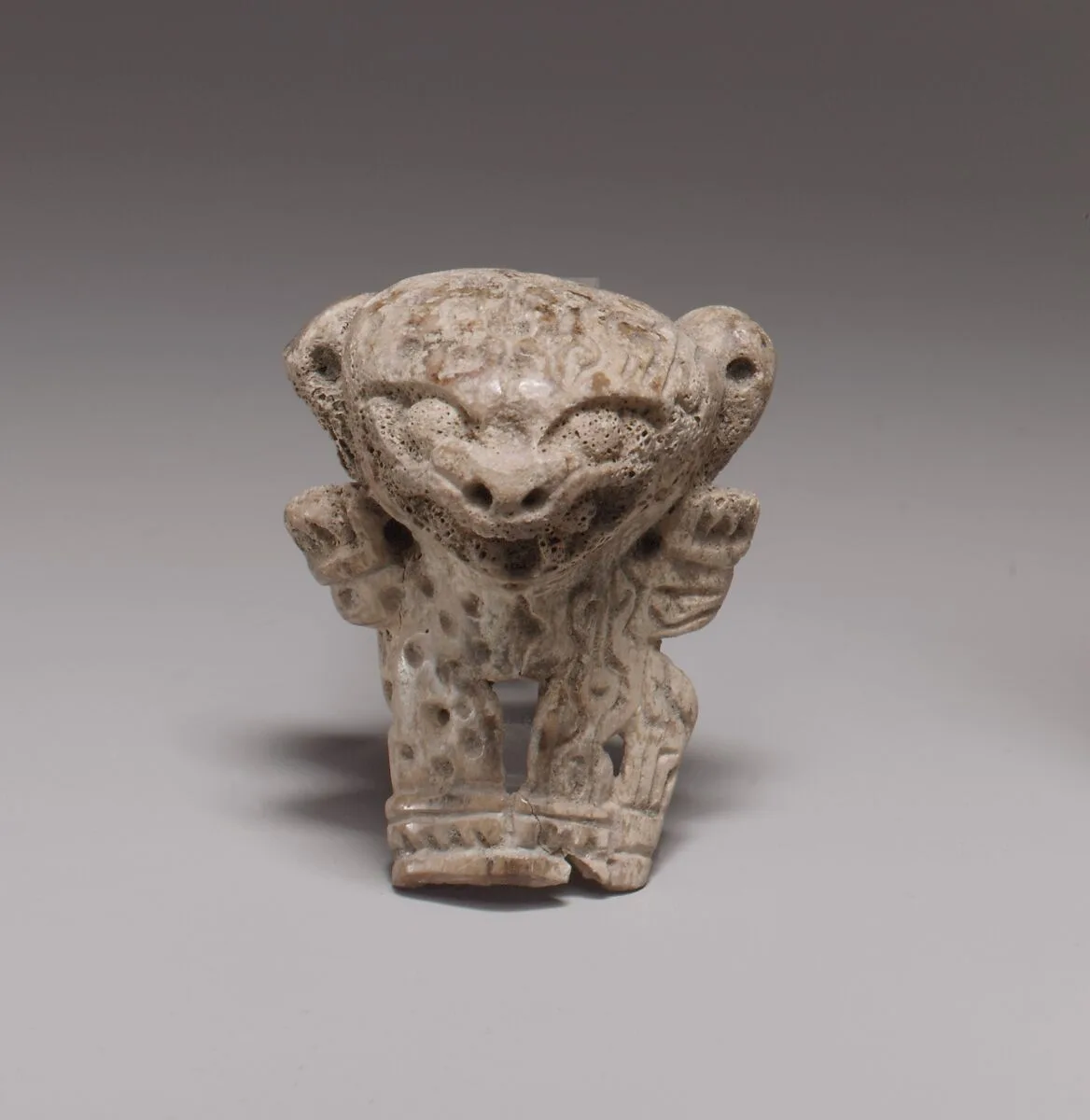
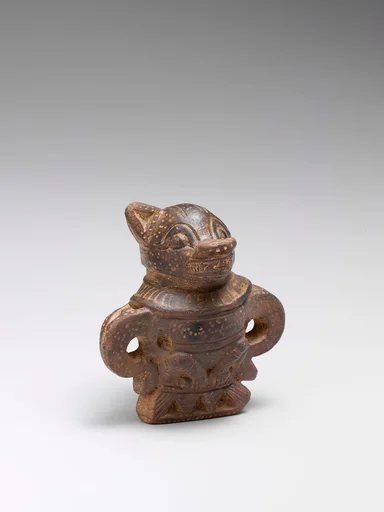
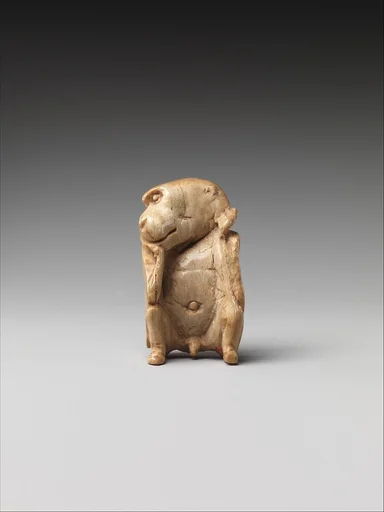
The best-known Tolita/Tumaco objects from the Ecuador/Colombia border region are ceramics, including vessels of diverse types and sizes and freestanding figures; many were made using molds. Works in other media such as precious metals, bone, stone, and shell were also made. This small anthropomorphized feline is carved of bone. The animal is standing upright in a human position, with front legs further raised like human arms. A huge head, as tall as the rest of the figure, has bared fangs, flared nostrils, and wide eyes that exude aggression and strength. Two different patterns elaborate the body. On the right are the dots of a spotted feline, while on the left is an unusual banded design. The meaning of this difference is unclear. Utilitarian objects such as needles, awls, spatulas, and fishhooks were also made of bone.
- Artist
- Unknown
- Date
- 1st century BCE–4th century CE
- Medium
- Bone
- Culture
- Tolita-Tumaco
- Department
- Arts of Africa, Oceania, and the Americas
- Credit line
- Gift of Margaret B. Zorach, 1980