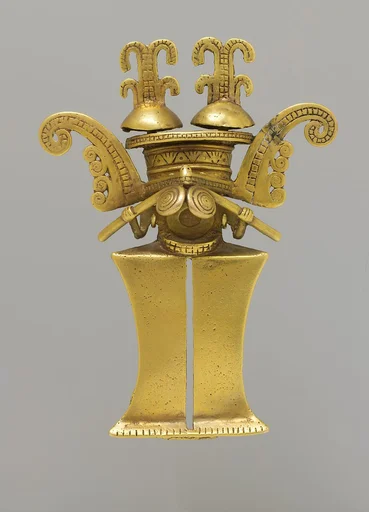
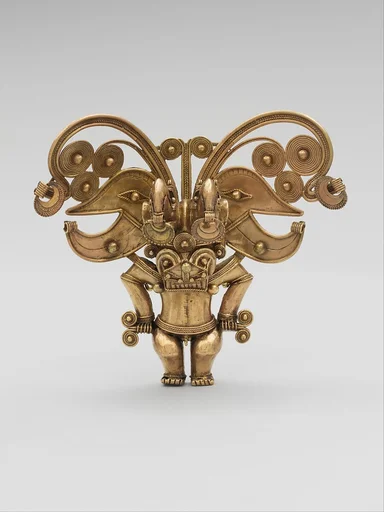
Bat-Nosed Figure Pendant
Unknown
12th–14th century · Gold, whale tooth · Arts of Africa, Oceania, and the Americas
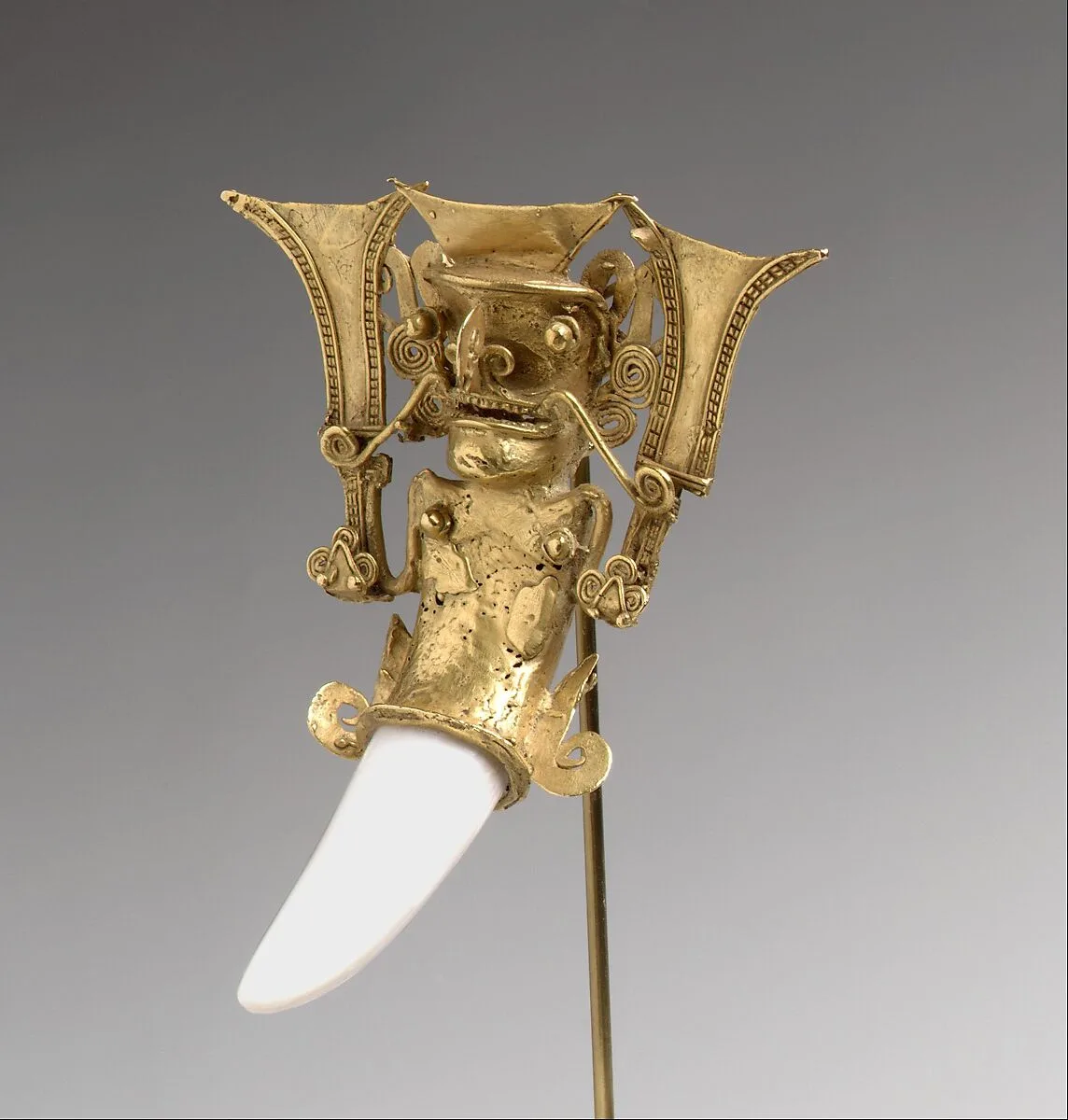
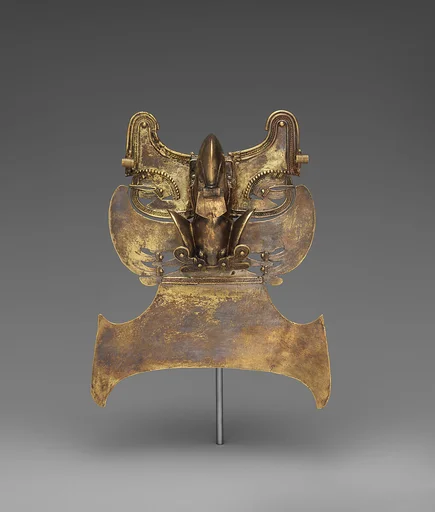
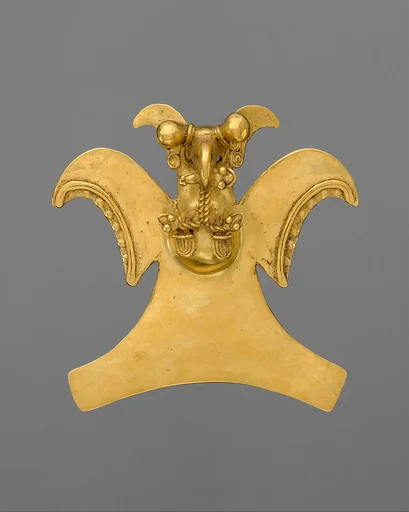
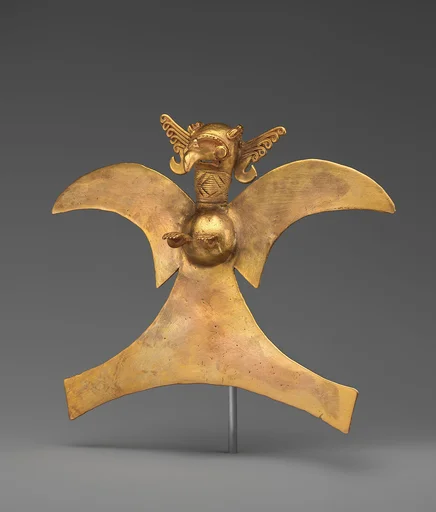
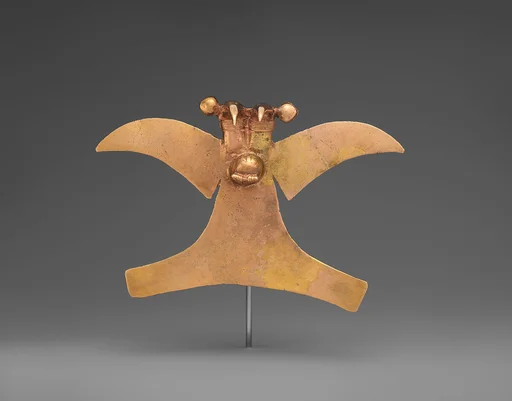
The powerful Prehispanic rulers of present-day Panama and Costa Rica expressed their authority and status by the ostentatious display of gold ornaments in both life and death. Pendants that combine human form with those of various animals selected for specific behavioral characteristics were suspended from the neck by a thong or cord. The ability of a bat to move in the dark might have led to the use of abstractions of its features in the goldwork of the region, particularly the loop nose and eyes on stalklike projections. In present-day Central American lore, bats are associated with sacrifice, agriculture, and vegetation. At his sides, the bat-headed human torso holds two paddles with flared tops that repeat the shape of his headdress. The open mouth of the figure reveals bared teeth, and catfishlike barbels extend from above its corners. The unclothed torso features prominent knoblike breasts and is flanked by two spiraling flares suggestive of crocodilians. A whale tooth emerges from the hollow base of the torso with a curved shape that continues the line of the upper body.
- Artist
- Unknown
- Date
- 12th–14th century
- Medium
- Gold, whale tooth
- Culture
- Coclé (Parita)
- Department
- Arts of Africa, Oceania, and the Americas
- Credit line
- The Michael C. Rockefeller Memorial Collection, Bequest of Nelson A. Rockefeller, 1979