Spouted jar
Unknown
3rd–1st century BCE · Ceramic · Arts of Africa, Oceania, and the Americas
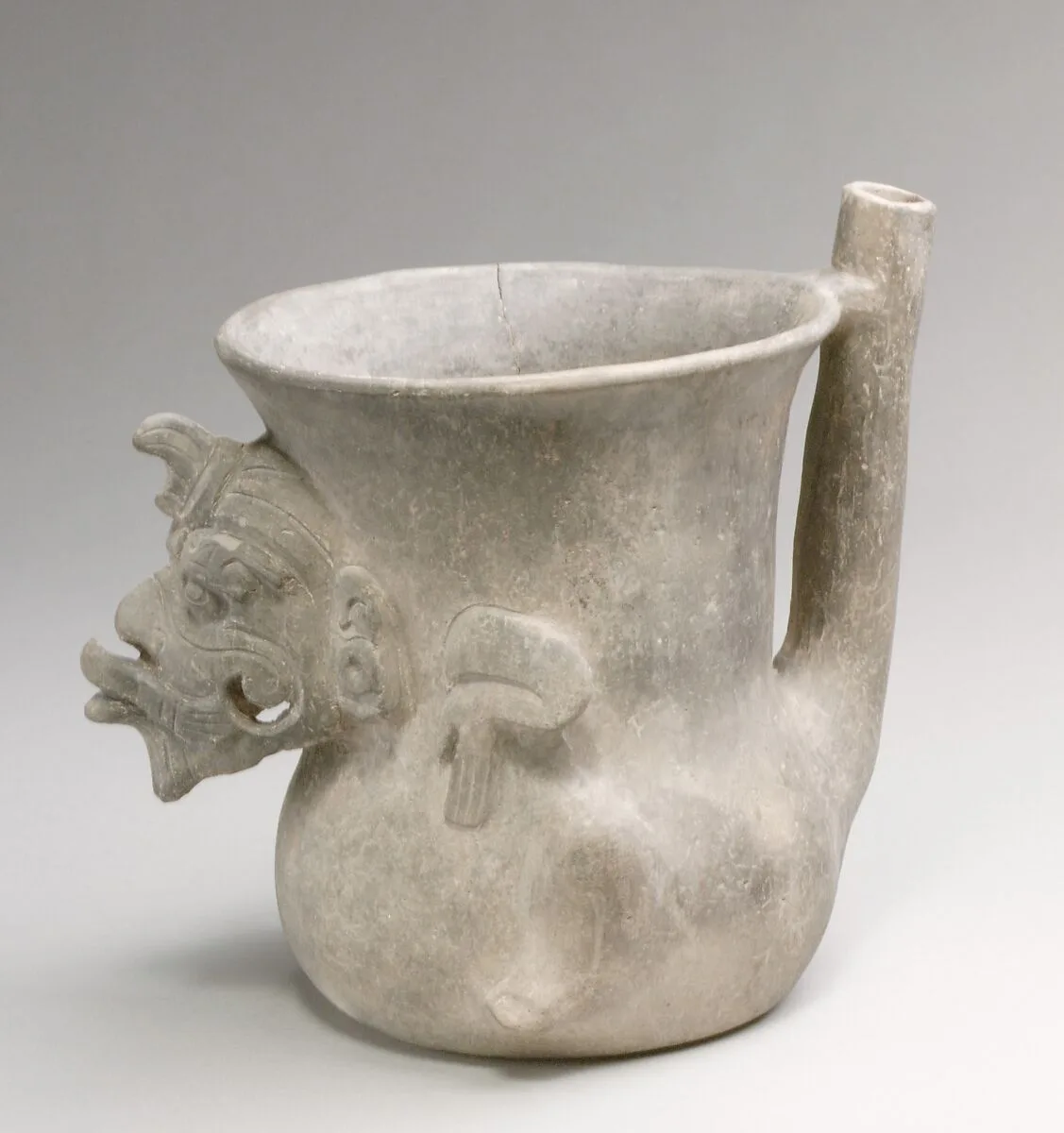
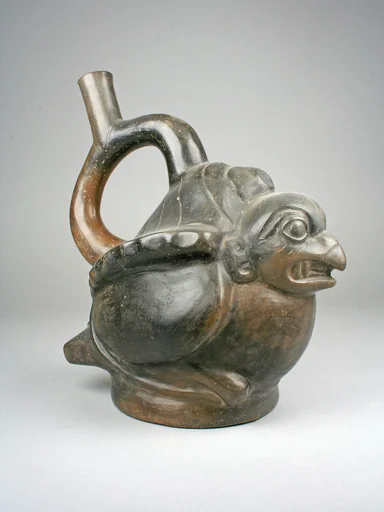
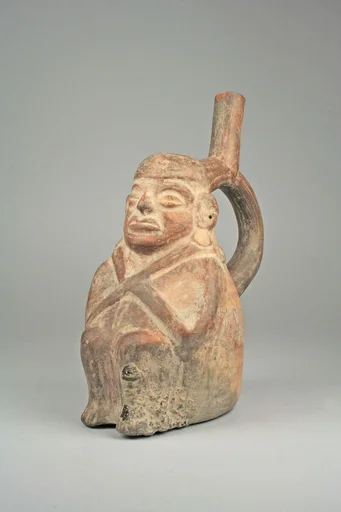
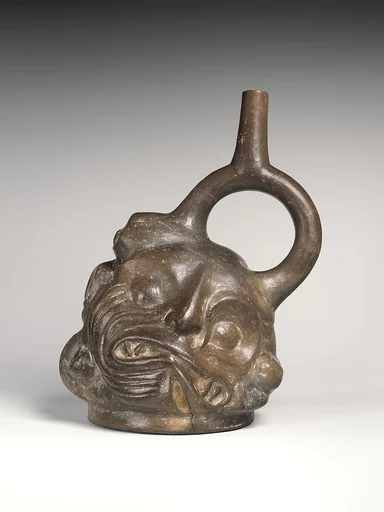
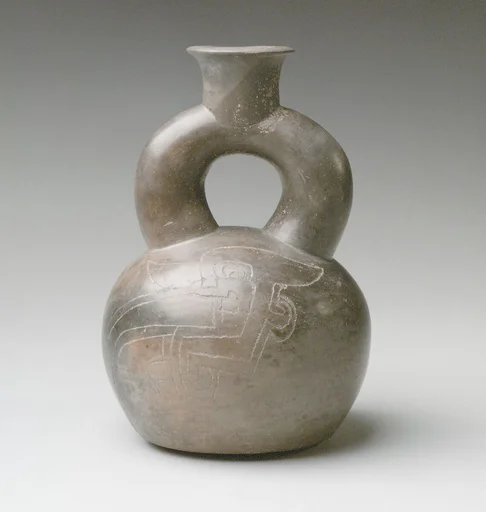
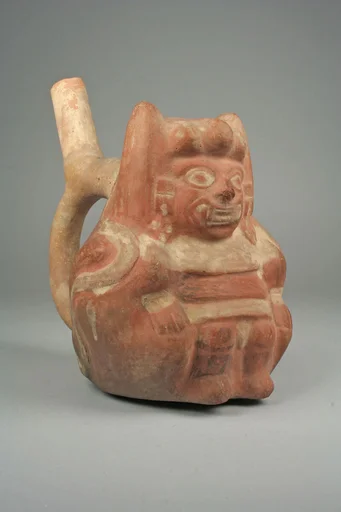
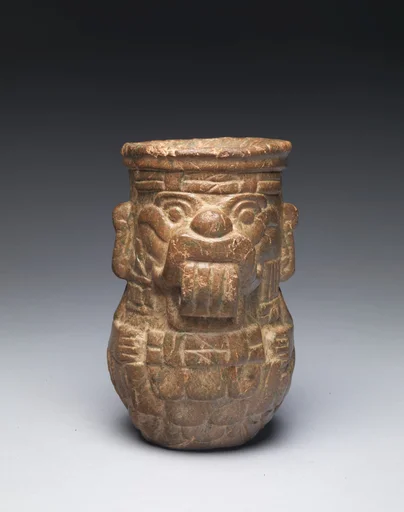
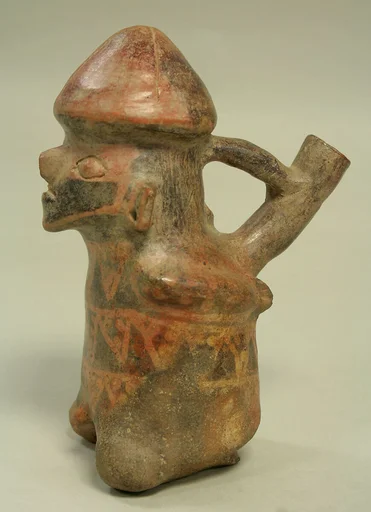
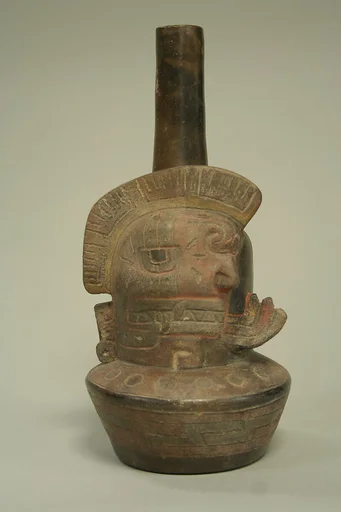
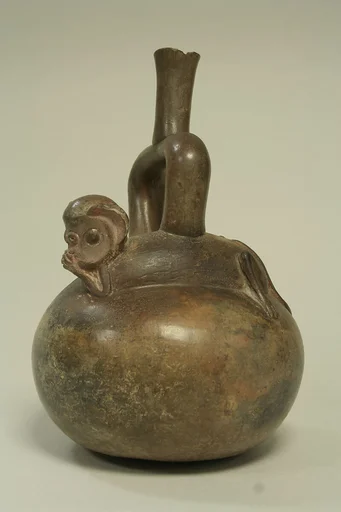
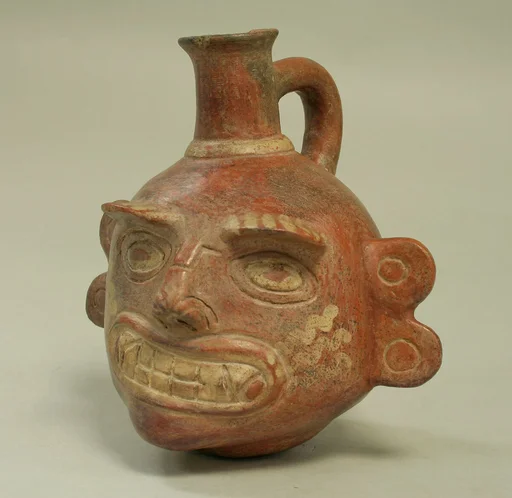
During the late first millennium B.C., fine grayware ceramics associated with the hilltop site of Monte Albán and its neighbors in the southern Mexico state of Oaxaca have their most significant manifestation in the vessel form known as a bridge-and-spout (or bridge-spout). The bodies of such vessels were elaborated on the front opposite the spout with raised images of what appear to be the deities venerated in the region. In this example, for instance, head, arms, and legs were worked in relief on the surface, transforming the body of the vessel into the body of the figure. The high-relief head, with its wrinkled face and extended lips, may relate to the deities known later in Mexico as the "old god," Huehuetotl, and Ehecatl, the "wind god."
- Artist
- Unknown
- Date
- 3rd–1st century BCE
- Medium
- Ceramic
- Culture
- Monte Alban
- Department
- Arts of Africa, Oceania, and the Americas
- Credit line
- The Michael C. Rockefeller Memorial Collection, Bequest of Nelson A. Rockefeller, 1979