Tunic Fragment
Unknown
7th–9th century · Camelid hair, cotton · Arts of Africa, Oceania, and the Americas
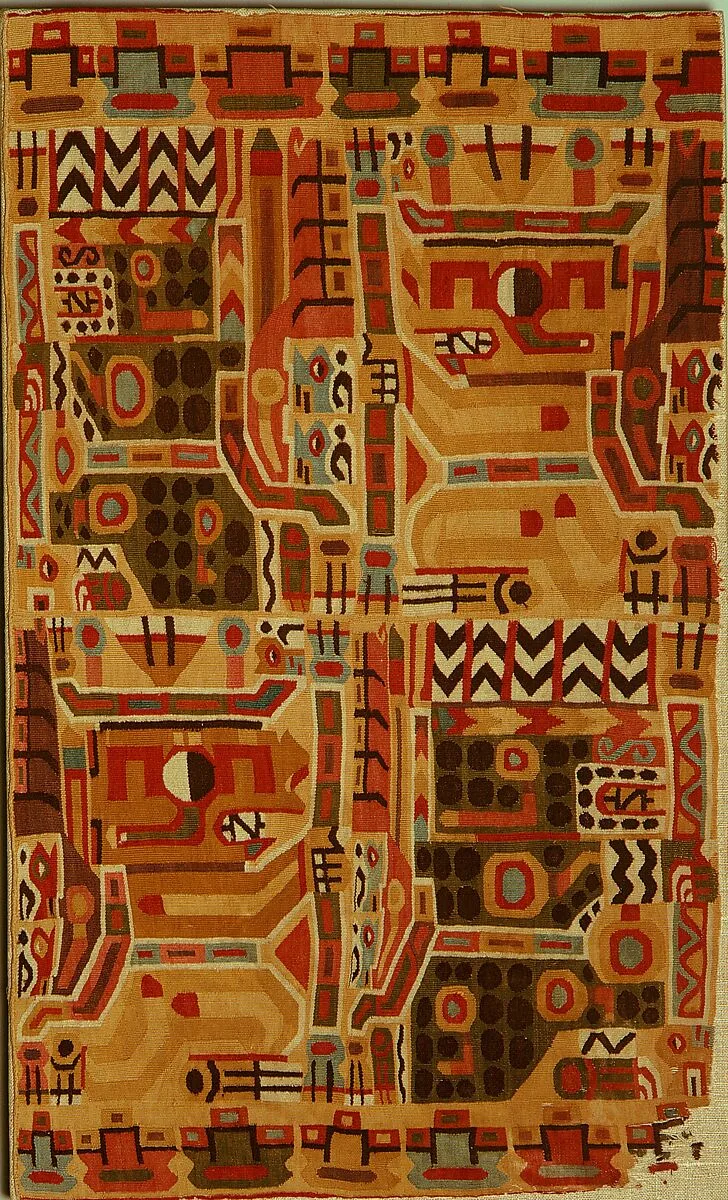
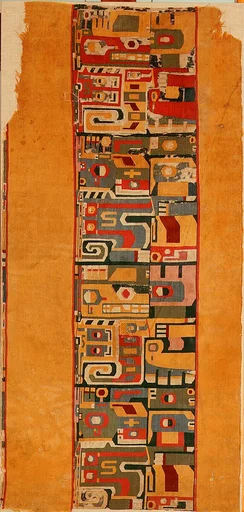
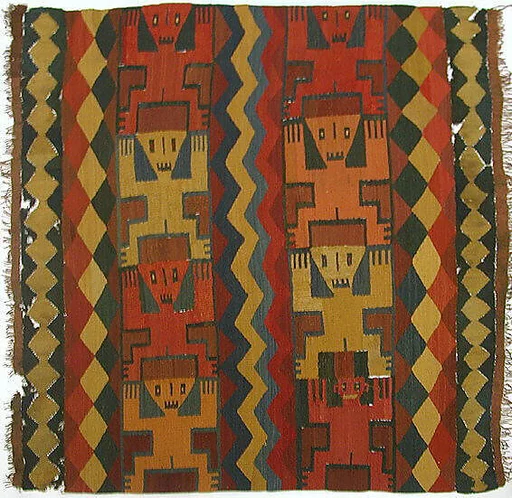
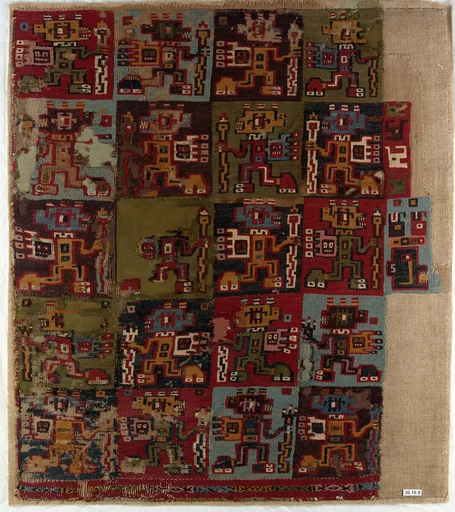
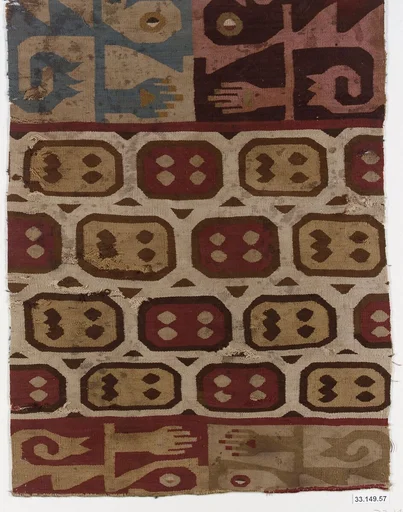
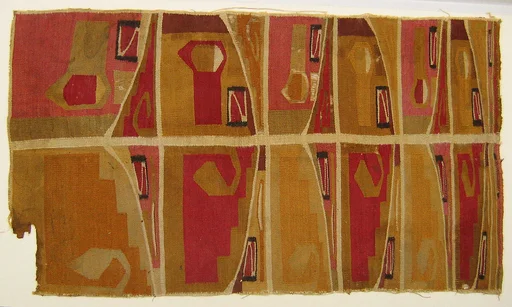
Wari tunics are among the most elaborate textiles of ancient America. The colorful designs are grid-based, with vertical rows of squares frequently separated with monochrome bands. Compositions are highly geometric and often illegible at first glance. Figures are distorted, compressed, expanded, and rotated until they reach the limits of abstraction. However, the woven figures ultimately refer to humans and animals known in the Wari iconographic corpus, such as staff-bearers, frontal and profile human heads, felines, and raptorial birds. This fragment shows four profile staff-bearing figures. Light brown figures with split eyes have a human aspect and the fangs of beings endowed with supernatural power. Green figures have the spots, muzzles, and claws of felines. All figures have wings, belts ending with stylized flowers, and appear as if they were running or kneeling.
- Artist
- Unknown
- Date
- 7th–9th century
- Medium
- Camelid hair, cotton
- Culture
- Wari
- Department
- Arts of Africa, Oceania, and the Americas
- Credit line
- The Michael C. Rockefeller Memorial Collection, Bequest of Nelson A. Rockefeller, 1979