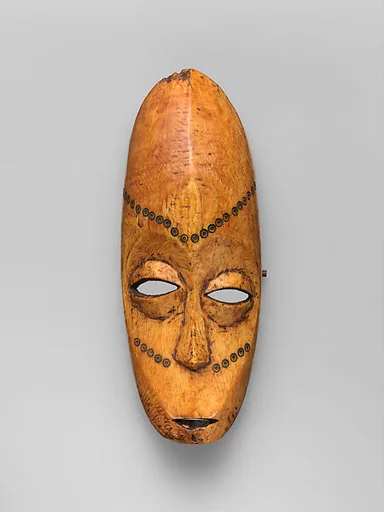
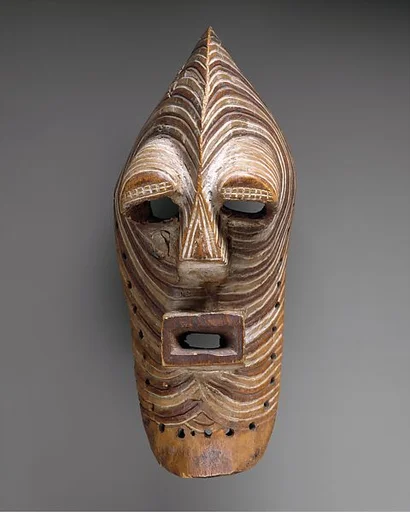
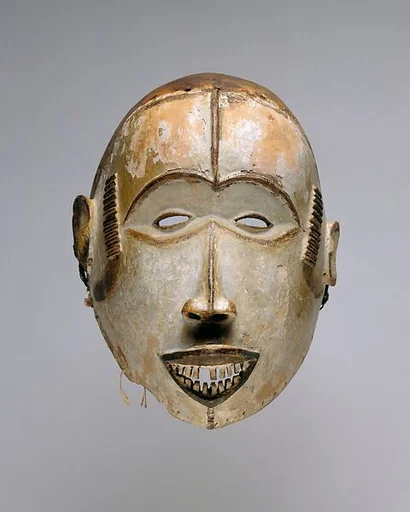
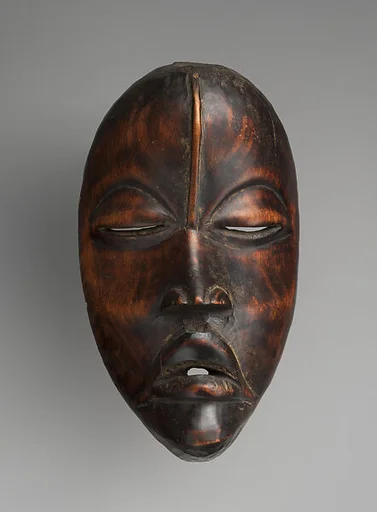
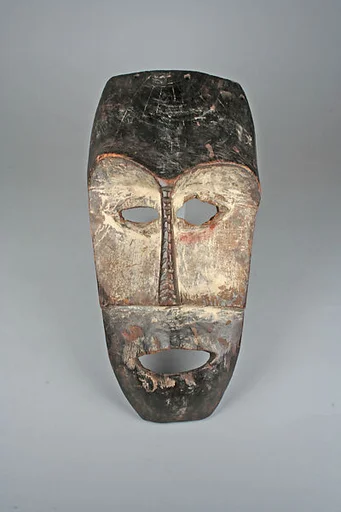
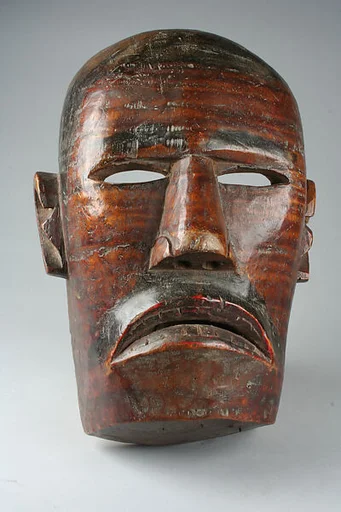
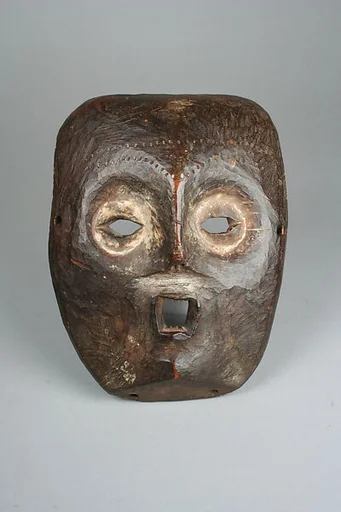
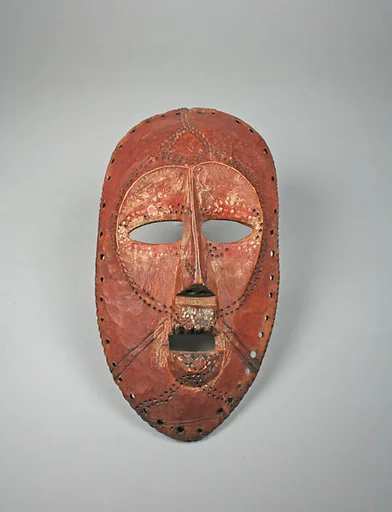
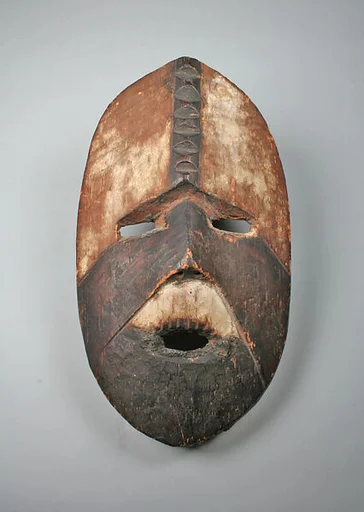
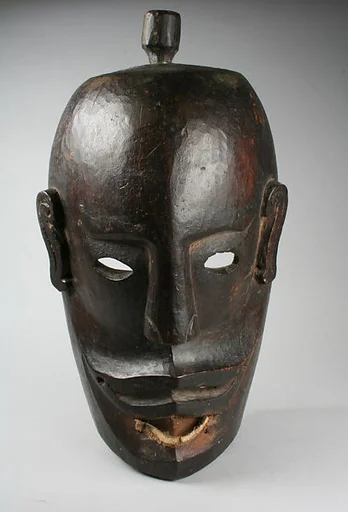
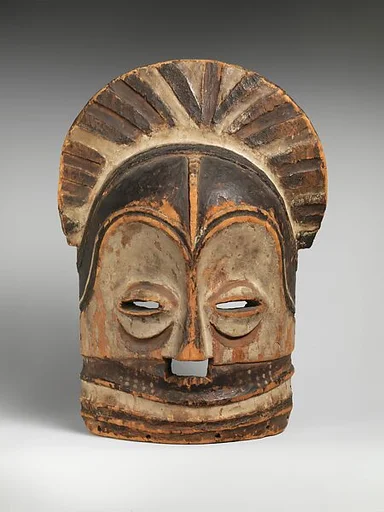
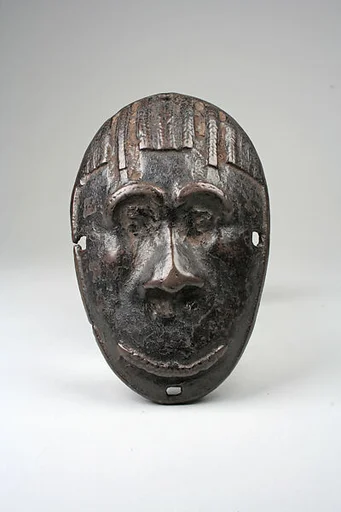
Mask (Bwami, Lukungu)
Unknown
19th–20th century · Ivory · Arts of Africa, Oceania, and the Americas
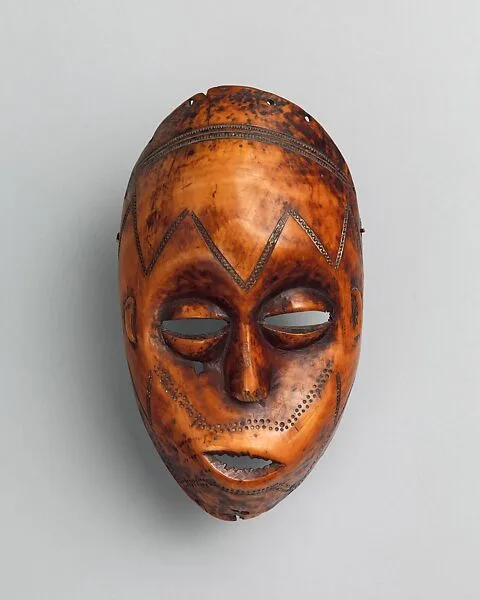
Imbued with intrinsic and sacred power, Lega sculptures served as layered metaphors for social values and universal concepts. They were commissioned by the bwami society, whose primary purpose was to instruct male and female initiates in wisdom and moral excellence. Individually owned lukungu were displayed on specially constructed fences during initiation ceremonies. Underscoring the inevitability of death, the assemblage of ivory masks recalled the remains of deceased community leaders. A lukungu could be placed near an owner's final resting site before being passed on to the deceased's nephew. This mask type was among the most potent forms entrusted to senior members of the highest grade of bwami: lutumbo lwa kindi. Prior to use, they were cleaned, oiled, and rubbed with a red powder, transforming the natural white of the ivory. These actions echoed those of an initiate preparing themselves for the upcoming events.
- Artist
- Unknown
- Date
- 19th–20th century
- Medium
- Ivory
- Culture
- Lega peoples
- Department
- Arts of Africa, Oceania, and the Americas
- Credit line
- The Michael C. Rockefeller Memorial Collection, Bequest of Nelson A. Rockefeller, 1979