Bell: Face
Unknown
15th–19th century · Bronze · Arts of Africa, Oceania, and the Americas
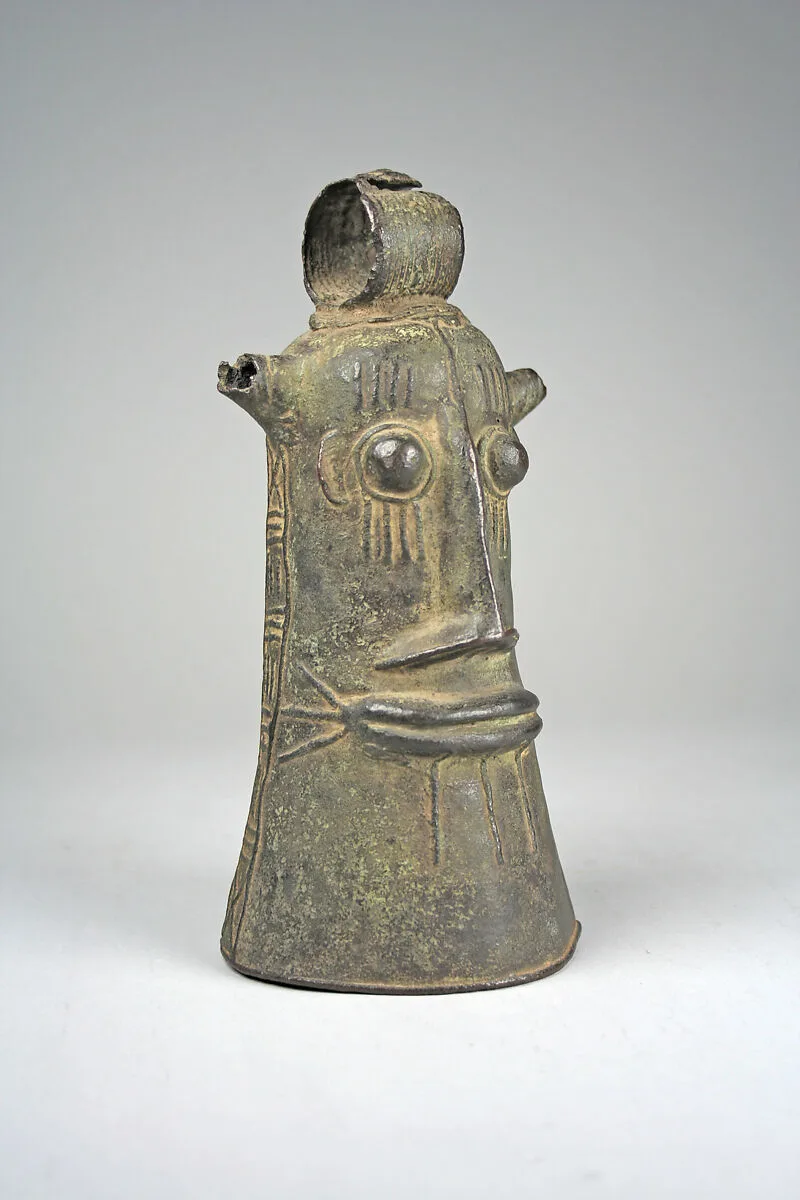
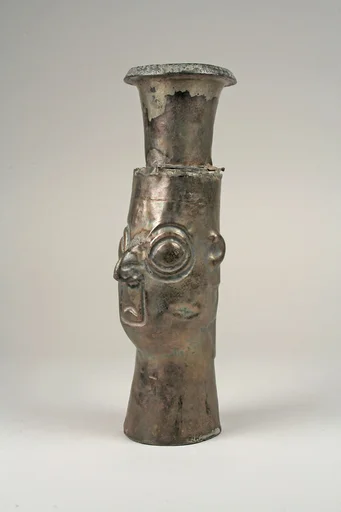
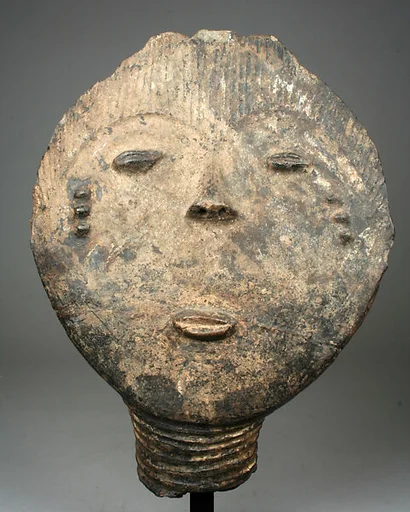
Residents of the mineral-rich region south of the confluence of the Niger and Benue Rivers developed technical expertise in copper-alloy casting as early as the ninth century CE. Over time, Igbo-Ukwu, Ile-Ife, and Benin City emerged as renowned casting centers, each responsible for its own tradition of artistry in metalwork. Across this vast cultural zone, trade networks, powerful oracles, and waves of migration contributed to the sharing and cross-pollination of aesthetic ideals. In this context a concentration of provincial casting sites flourished. Art historians have used the term Lower Niger Valley Bronze Industries to refer to the outpouring of stylistically related, yet original works produced by artists at these centers. The copper alloys used in the creation of these bronzes were valued for their rich sonic qualities as well as their warm hue, making them an ideal medium for bells and the jangling insignia used by leaders to augment their presence. Rung to summon spiritual entities or as attributes of powerful individuals, bells make up a great number of Lower Niger Bronzes. Durable and portable, they circulated widely throughout southern Nigeria. Many bells are shaped like human heads, with embellishments that highlight the powers of speech and sight. Others depict animals, possibly as subjects of prestige or sacrifice. One variety of bell head became so popular at the turn of the twentieth century that brass replicas were mass-produced in Birmingham, England, and exported to Nigeria before recirculating on the global art market.
- Artist
- Unknown
- Date
- 15th–19th century
- Medium
- Bronze
- Culture
- Lower Niger Bronze Industry
- Department
- Arts of Africa, Oceania, and the Americas
- Credit line
- The Michael C. Rockefeller Memorial Collection, Bequest of Nelson A. Rockefeller, 1979