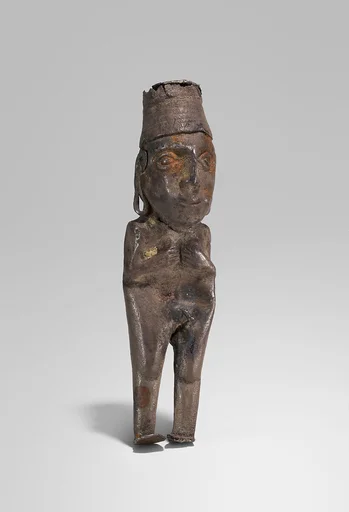
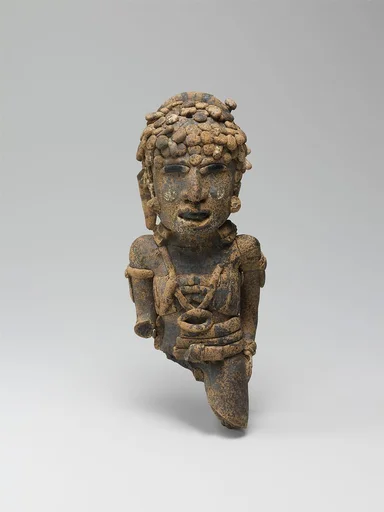
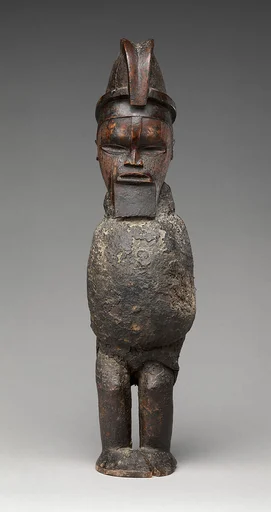
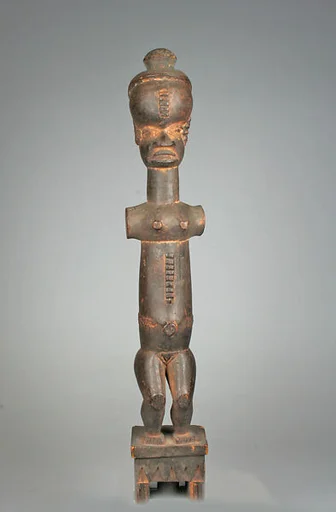
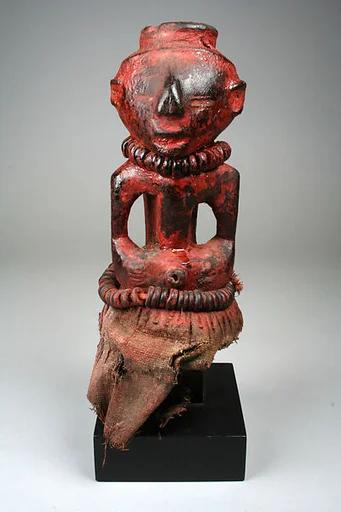
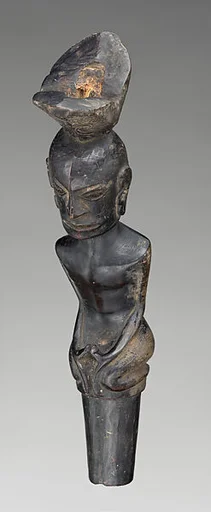
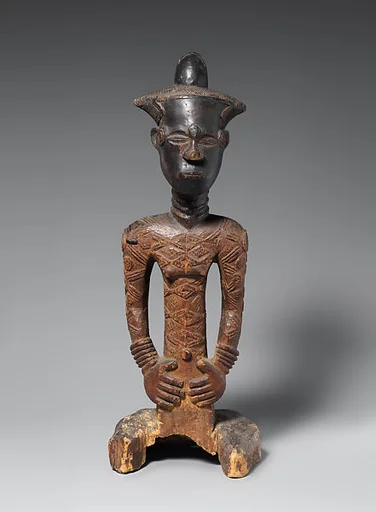
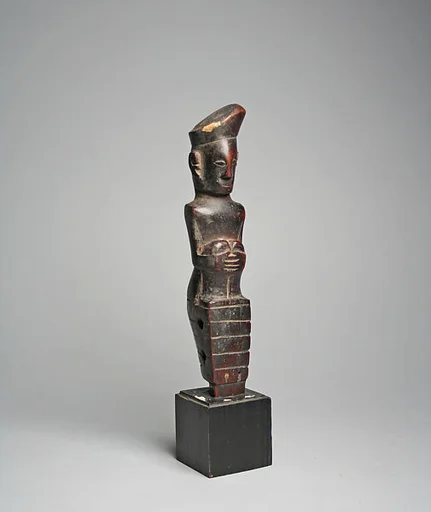
Power Figure: Male (Nkisi)
Unknown
19th–20th century · Wood, glass, metal, cloth, organic matter · Arts of Africa, Oceania, and the Americas
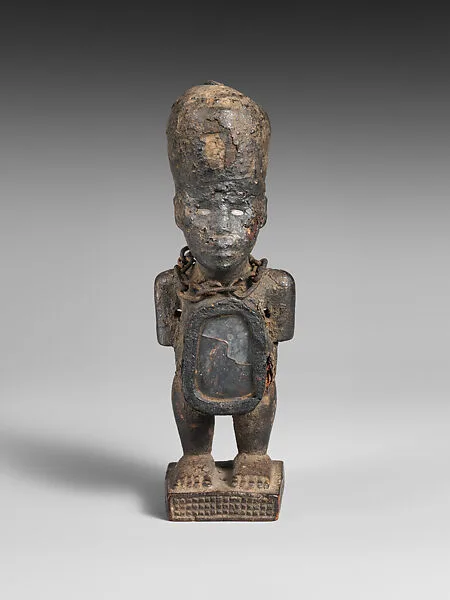
The kingdom of Kongo was at the height of its power in 1482, when Portuguese sailors first visited the coast of central Africa. The kingdom, founded between 1350 and 1400, was a model of centralized government, with a divine king and a network of advisers, provincial governors, and village chiefs who ruled as many as three million people. Portuguese navigators brought with them Catholic missionaries who converted the kings of Kongo leading to the creation of the first Christian kingdom south of the Jahra until its collapse in the mid-eighteenth century. Among the most disctinctive subject of Kongo statuary are the "power figures" (minkisi). After a sculptor carves such a figure, a religious expert packs powerful substances about its head and into a mirror-covered receptacle on its abdomen. The diverse ingredients, which may include special earths and stones, leaves and seeds, parts of animals, bird beaks and feathers, are specially combined to attract forces and direct them to a desired goal, such as healing an illness or afflicting an enemy. As the figure is used and reused, additional materials may be added--nails, bits of cloth, beads, bells, even miniature carvings--which gradually alter its appearance.
- Artist
- Unknown
- Date
- 19th–20th century
- Medium
- Wood, glass, metal, cloth, organic matter
- Culture
- Kongo peoples
- Department
- Arts of Africa, Oceania, and the Americas
- Credit line
- The Michael C. Rockefeller Memorial Collection, Purchase, Nelson A. Rockefeller Gift, 1968