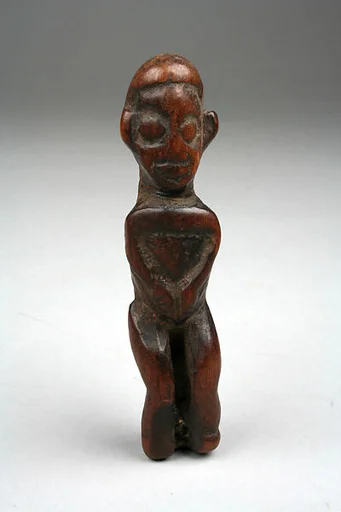
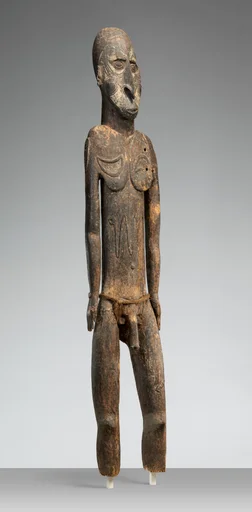
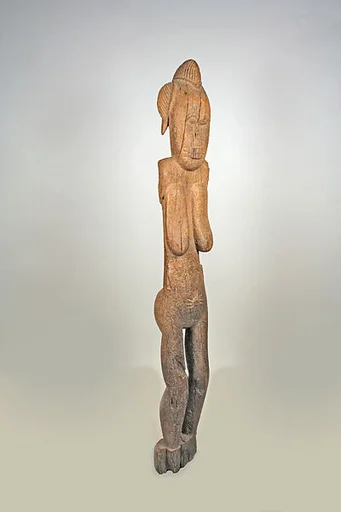
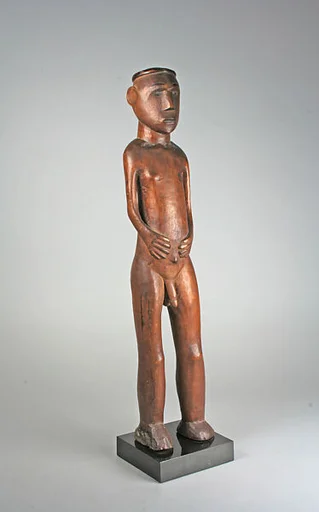
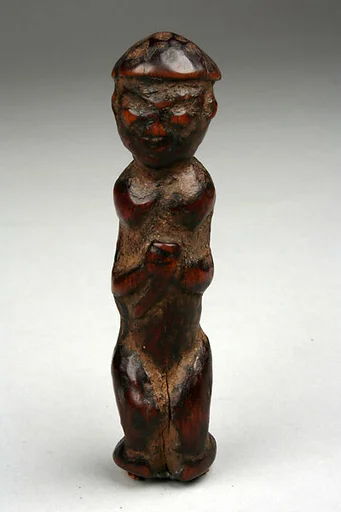
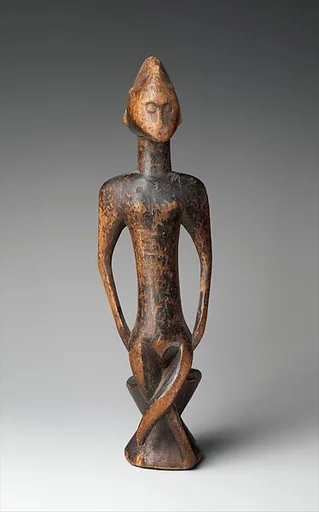
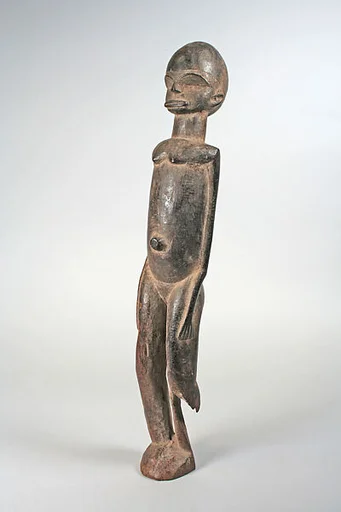
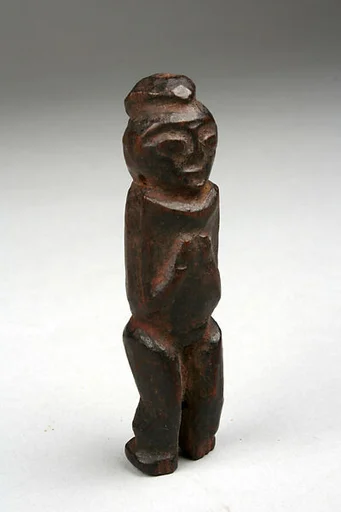
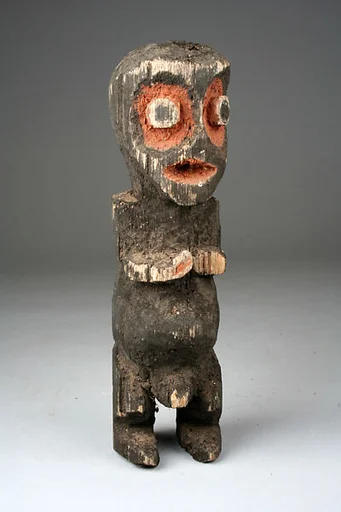
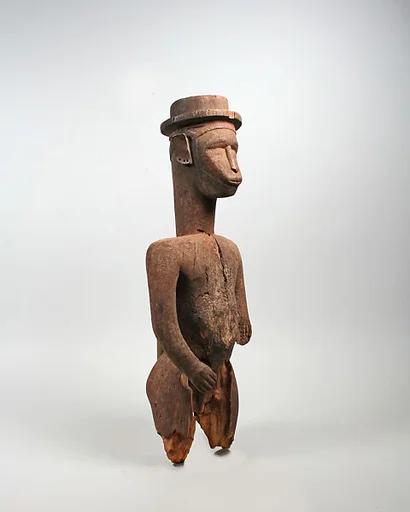
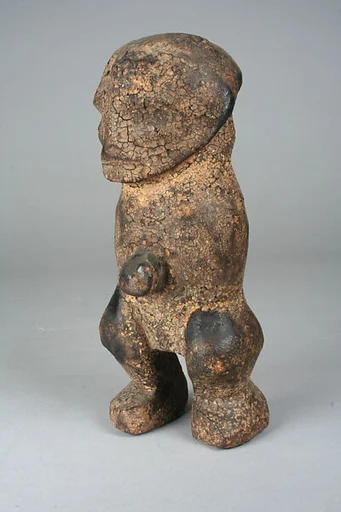
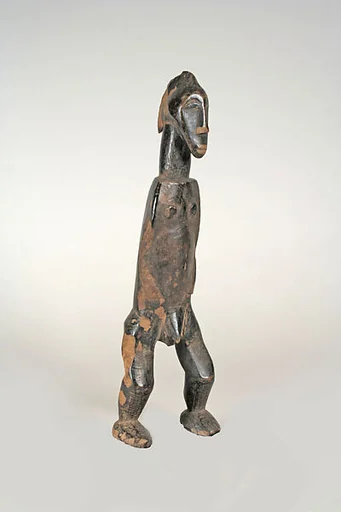
Figure: Male (Bwami)
Unknown
19th–20th century · Ivory · Arts of Africa, Oceania, and the Americas
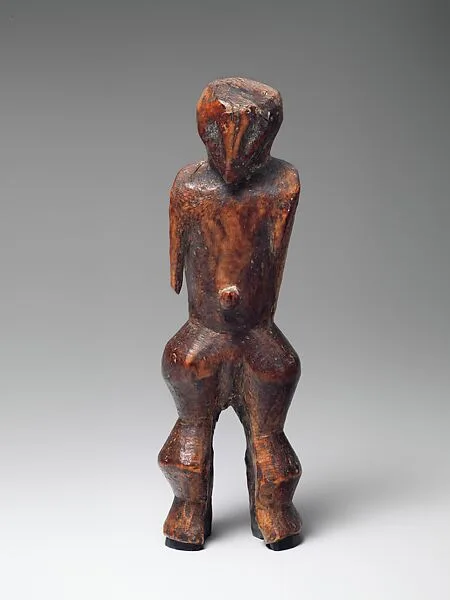
Guiding communal moral development, the bwami society taught that all things have magala, an undefined, diffuse force. Members harnessed magala by transforming objects and materials into masengo, "heavy things" lifted from daily life or objects created specifically for bwami teachings. While little documentation exists about Lega artists, recent scholarship suggests that they likely specialized in carving sculptures and masks or in creating objects that are found and bound together. In both instances the artist operated on commission, receiving a general description and creating the desired object in an isolated workshop to protect the uninitiated from seeing a restricted piece. Ivory and wood sculptures of the human figure were among those potent forms entrusted only to members of the highest grades of bwami. The political turmoil that followed independence in 1960, and the 1994 Tutsi genocide in neighboring Rwanda, had a devastating impact on Lega communities and the continuity of bwami.
- Artist
- Unknown
- Date
- 19th–20th century
- Medium
- Ivory
- Culture
- Lega peoples
- Department
- Arts of Africa, Oceania, and the Americas
- Credit line
- The Michael C. Rockefeller Memorial Collection, Gift of Mr. and Mrs. Raymond Wielgus, 1967