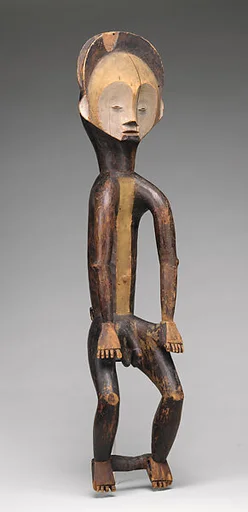
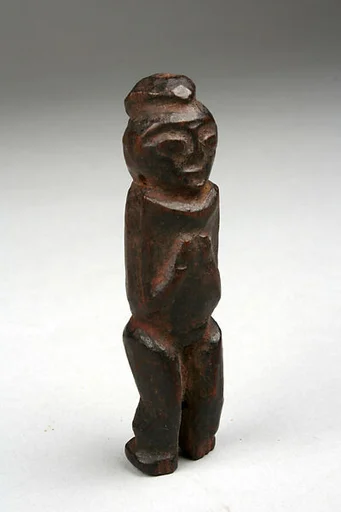
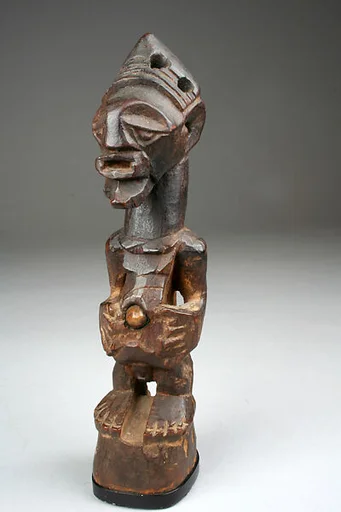
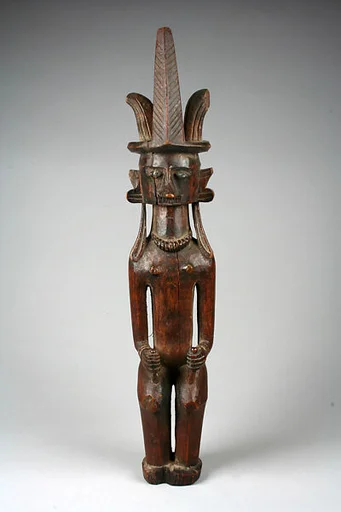
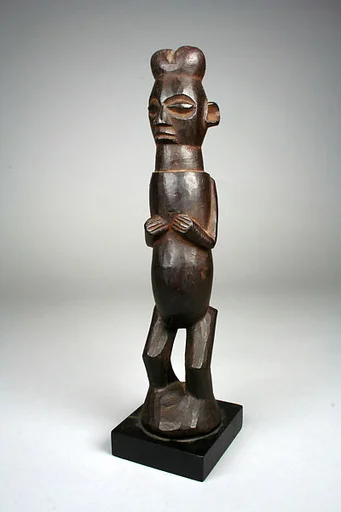
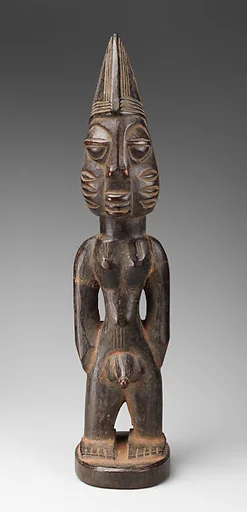
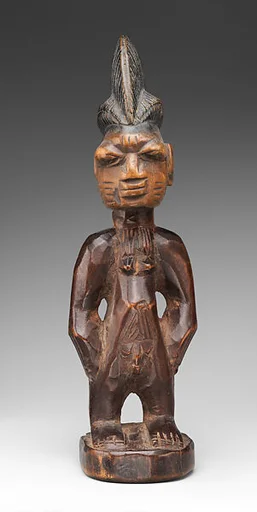
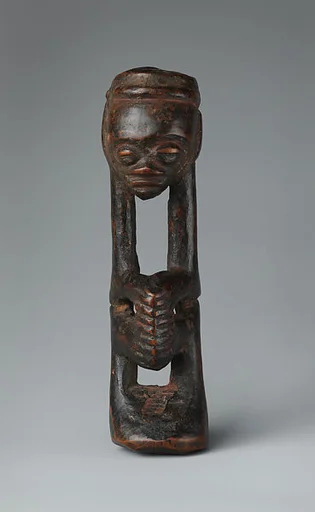
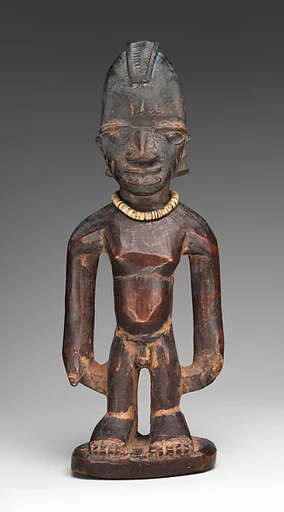
Figure: Seated Male
Unknown
19th–20th century · Wood · Arts of Africa, Oceania, and the Americas
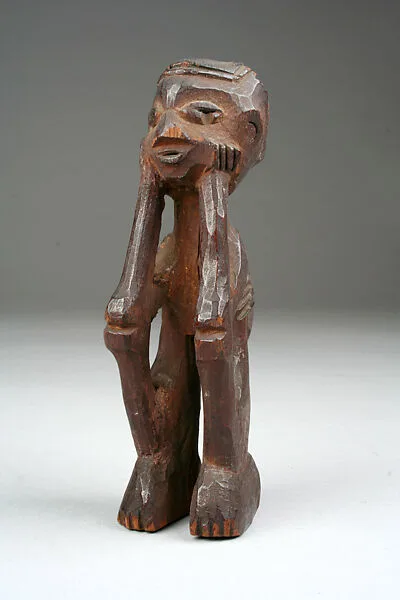
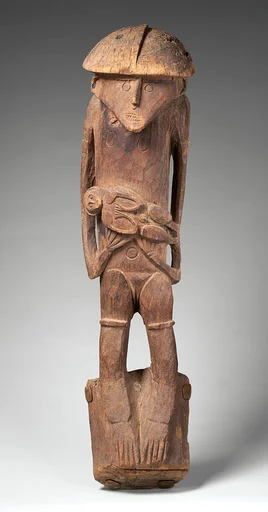
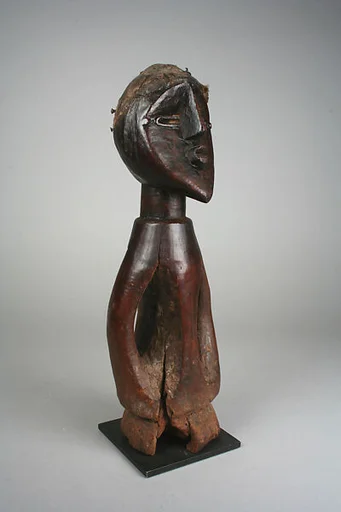
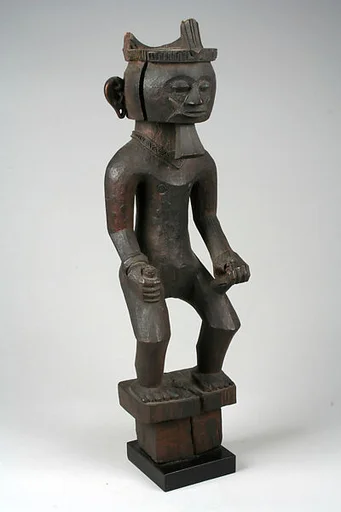
The Luluwa people live at the crossroads of several major art-producing cultures: the Luba to the east, the Chokwe to the southwest, and the Kuba to the north. In contrast to the more public prestige-enhancing royal arts of their powerful neighbors, the arts of the Luluwa in pre-colonial times were generally privately owned. Nonetheless, symbols of authority, such as ceremonial weapons, staffs of office and leopard-skin skirts, are seen on many of the figures. The hallmark of Luluwa sculpture is a profusion of intricate scarification patterns that adorn the surface, preserving in sculpture a form of body art abandoned over a century ago. Luluwa figures referred to ancestral spirits who bestowed protection, good fortune, and beauty on their devotees. During pregnancy and childbirth, women tucked the small half figures that end in a point into their wrappers or belts for protection; after the child was born, the standing figures were placed next to the baby's bed to keep the infant from harm. Small crouching figures, spectacularly poised as if in space, served as tobacco mortars, hemp containers, or amulets to be hung from hunters' belts.
- Artist
- Unknown
- Date
- 19th–20th century
- Medium
- Wood
- Culture
- Luluwa peoples
- Department
- Arts of Africa, Oceania, and the Americas
- Credit line
- The Michael C. Rockefeller Memorial Collection, Gift of George N. Taube, 1960