Beaker
Tiwanaku artist(s)
500–1000 CE · Wood · Arts of Africa, Oceania, and the Americas
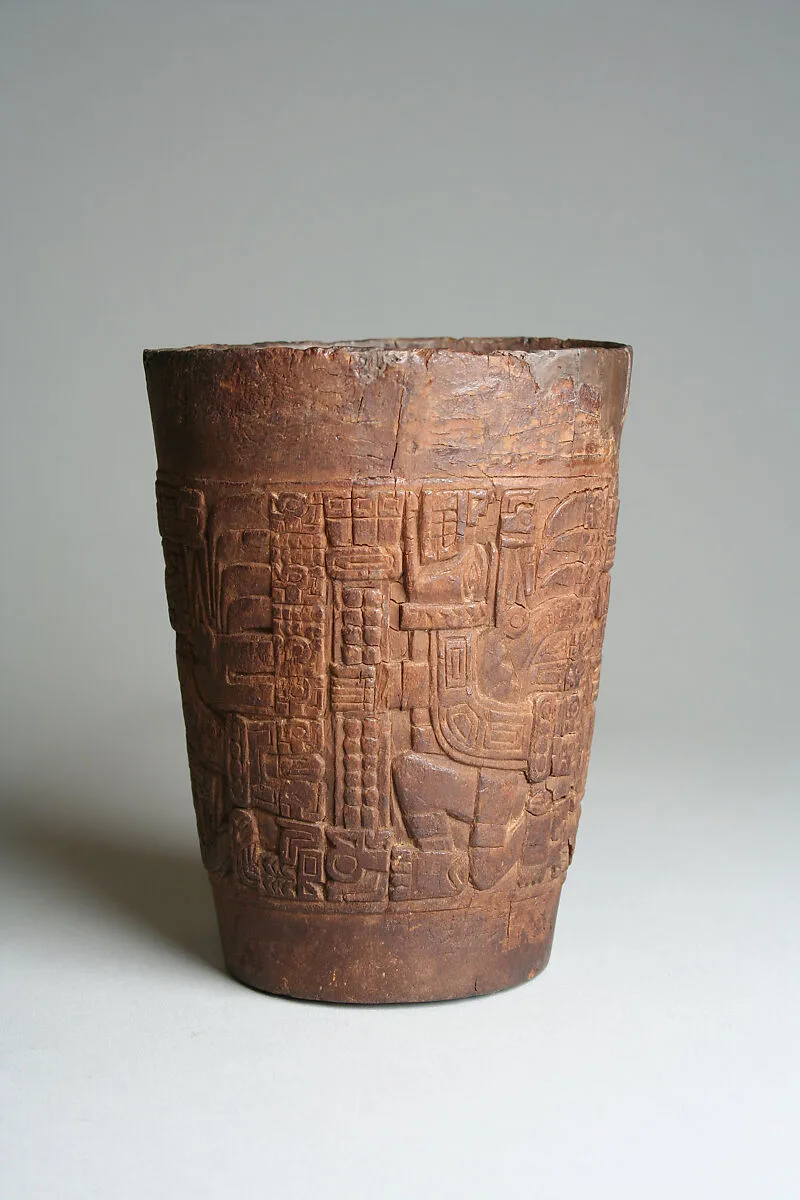
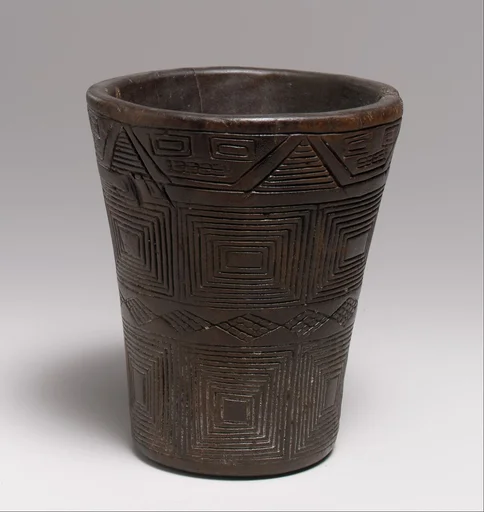
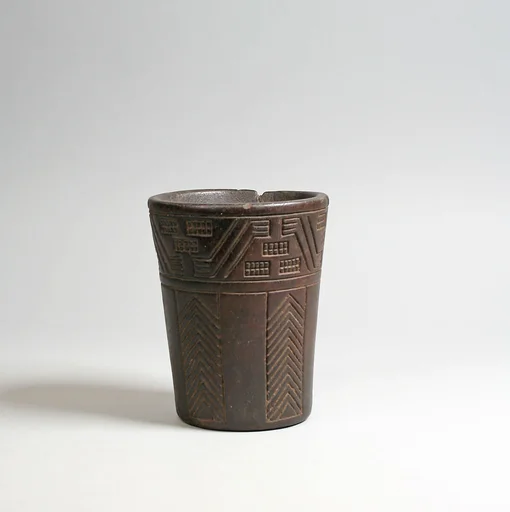
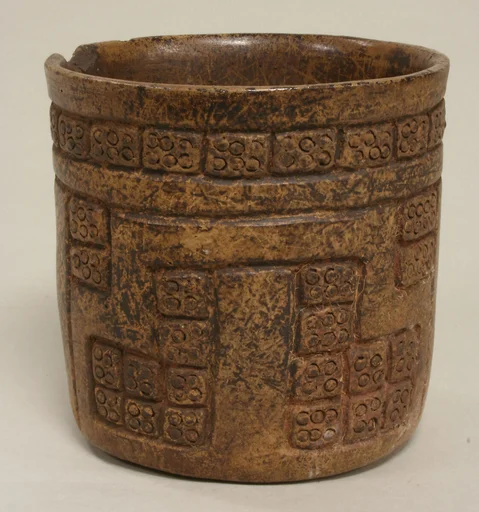
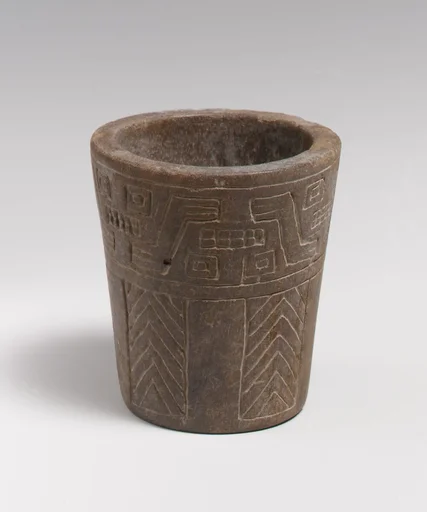
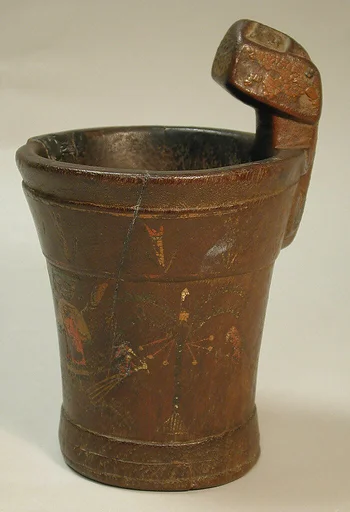
Cylindrical beakers with flaring sides, called keros, are a vessel form popular when the cities of Wari and Tiwanaku dominated the central and southern Andes. Used for the consumption of chicha (corn beer) during ceremonies and everyday gatherings, they played an important role in the maintenance of social and political relations. Keros were made of wood, fired clay, gold, and silver—the material reflecting the social status of the owner. They are decorated on the exterior with religious imagery and geometric motifs. On the circumference of this kero are four anthropomorphized winged figures in low but crisp relief. Its abstract carving style, distortion of the figures, and dense ornamentation are characteristic of Tiwanaku art. All four figures carry the staffs in their right hands that are a symbol of status and authority in ancient Peru. Two have feline faces looking skyward, the other two have raptor heads facing forward. Their wings are tipped with profile animal heads, a much used convention in Tiwanaku art. The cup was probably found in the coastal desert region where preservation conditions for organic materials such as wood are best due to the lack of moisture in the soil in which it was buried.
- Artist
- Tiwanaku artist(s)
- Date
- 500–1000 CE
- Medium
- Wood
- Culture
- Tiwanaku
- Department
- Arts of Africa, Oceania, and the Americas
- Credit line
- The Michael C. Rockefeller Memorial Collection, Purchase, Nelson A. Rockefeller Gift, 1968