House of the Head Shrine (Ile Ori)
Unknown
19th–20th century · Shell, cotton, leather · Arts of Africa, Oceania, and the Americas
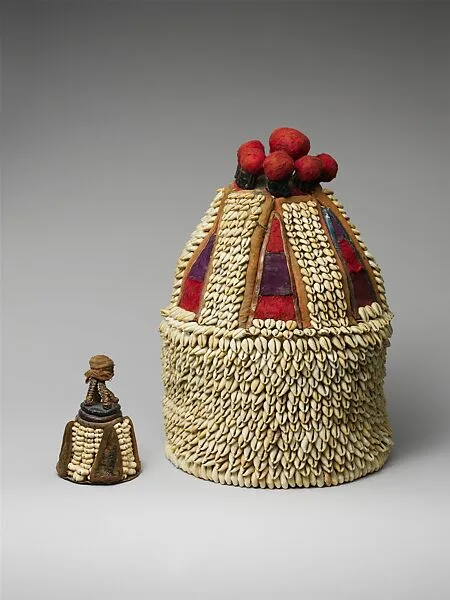
An ìbọrí is a small, upright cone invested with sacred materials that represents a person’s orí inú (inner head). It is housed within a larger shrine, or ilé-orí, through which the owner cultivates a relationship with their deepest self. Under the guidance of a babaláwo (an Ifá priest), the shrine is "fed" with kola nuts, gin, and other offerings. Densely adorned with precious cowrie shells symbolically numbering twelve thousand, the ilé-orí honors the head through the lavish application of material wealth. Red accents, present in this example, suggest the passionate temperament of its patron. Following its owner’s death, an ìbọrí would be turned on its side, while the ilé-orí’s orderly rows of cowries are disassembled and scattered to underscore the transition from the visible world to the spiritual realm.
- Artist
- Unknown
- Date
- 19th–20th century
- Medium
- Shell, cotton, leather
- Culture
- Yoruba peoples
- Department
- Arts of Africa, Oceania, and the Americas
- Credit line
- The Michael C. Rockefeller Memorial Collection, Gift of the William W. Brill Foundation, 1962