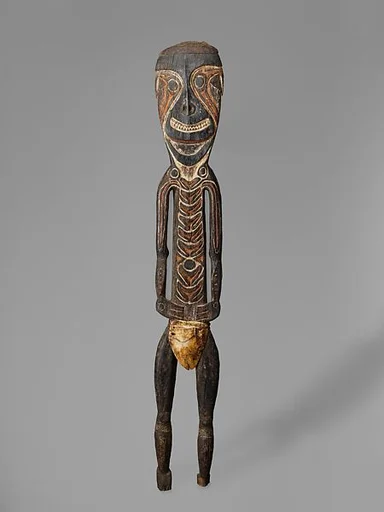
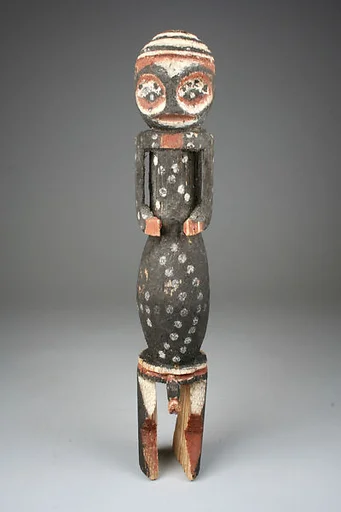
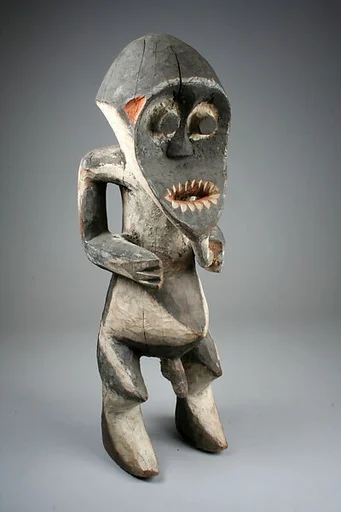
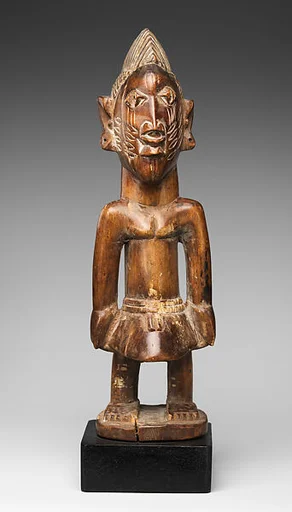
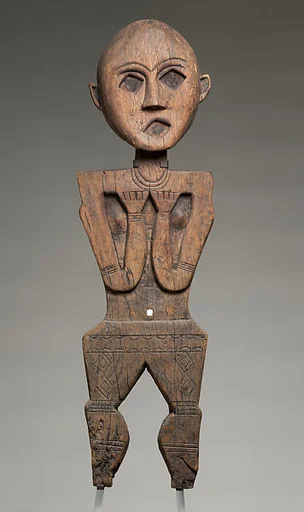
Figure (Uli)
Unknown
mid-19th–early 20th century · Wood, paint, fiber, shell · Arts of Africa, Oceania, and the Americas
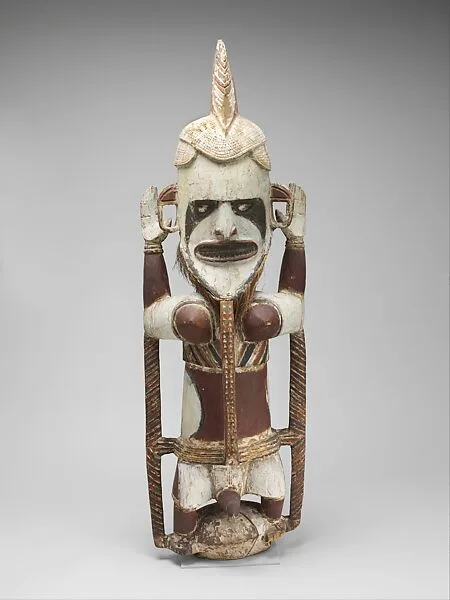
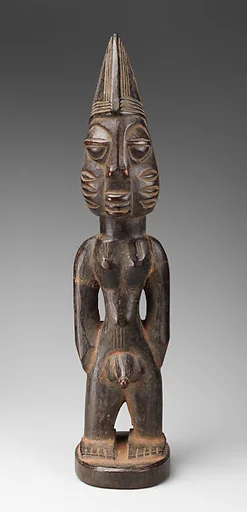
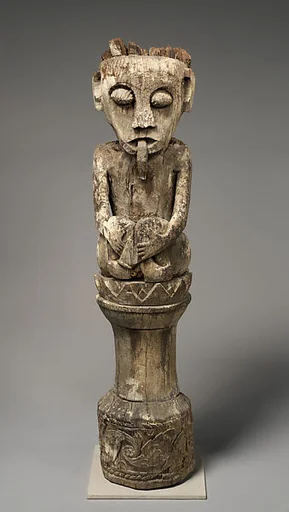
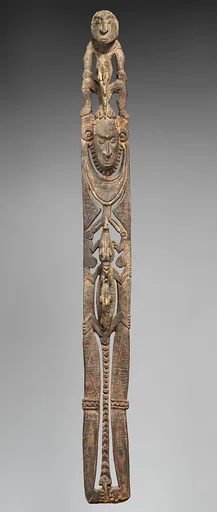
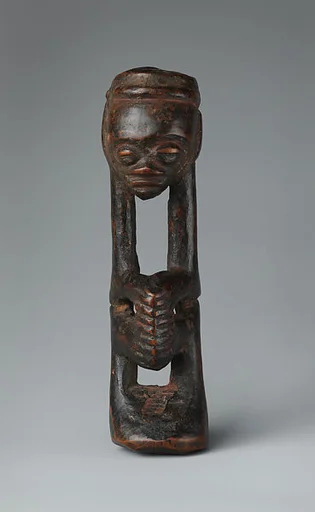
Like their neighbors to the north and south, the religion of the Mandak people of the Lelet Plateau in central New Ireland centered largely around the deaths of prominent men. The stylistic differences between the sculpture of the northern and central areas, however, are very marked. Instead of the intricate malagan carvings of the north, central New Ireland carvers produce more austere figures known as uli, which retain the raised arms and enclosing bands of malagan but are more massive and less elaborately adorned. Uli were displayed during the long cycles of ceremonies that accompanied the exhumation and subsequent reburial of the skulls of prominent men. Feasting, including the consumption of dozens of pigs, was an important activity in these occasions. Having both a phallus and prominent breasts, uli are hermaphroditic, a feature that may symbolize the fertility of people, animals, and gardens, and represent the powers of a chief to bring success in warfare.
- Artist
- Unknown
- Date
- mid-19th–early 20th century
- Medium
- Wood, paint, fiber, shell
- Culture
- Central New Ireland, Mandak-Barak region
- Department
- Arts of Africa, Oceania, and the Americas
- Credit line
- Gift of Sarah d'Harnoncourt, 1977