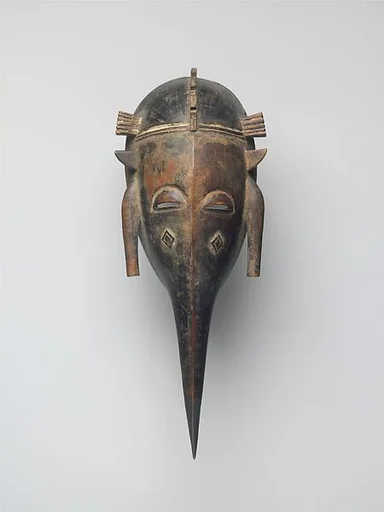
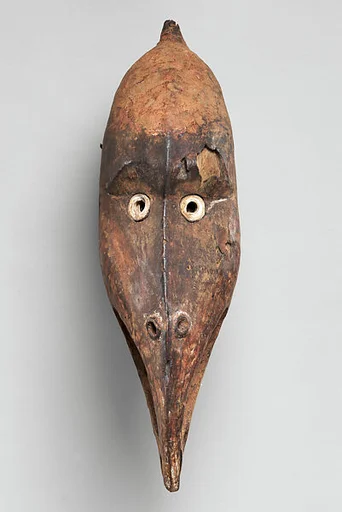
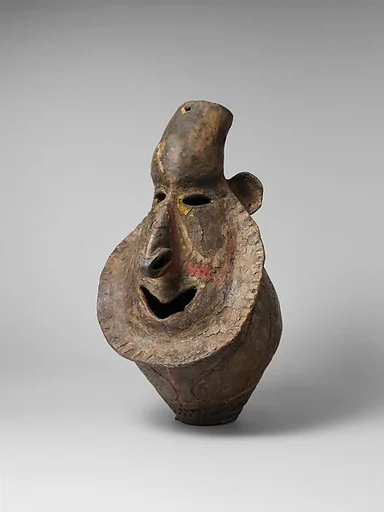
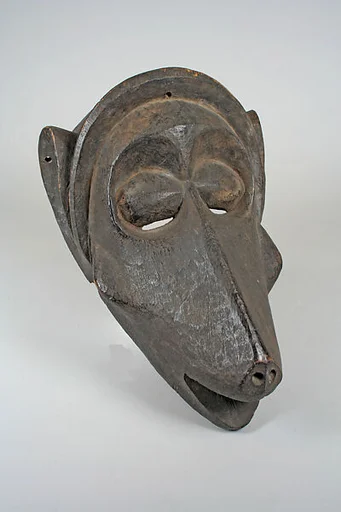
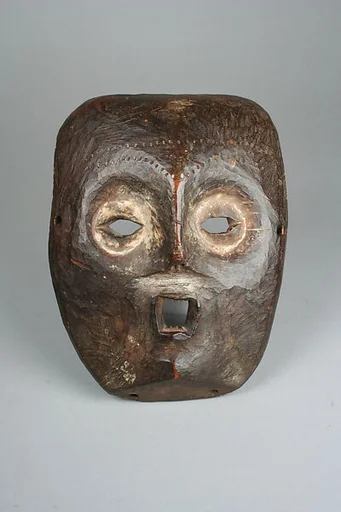
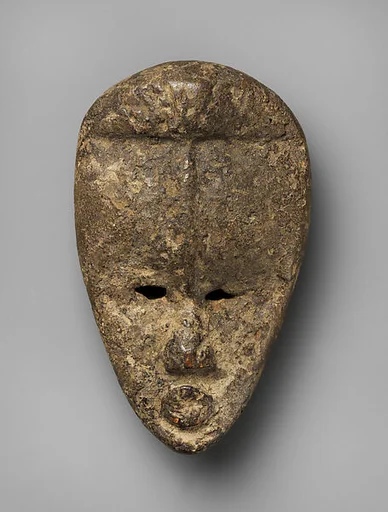
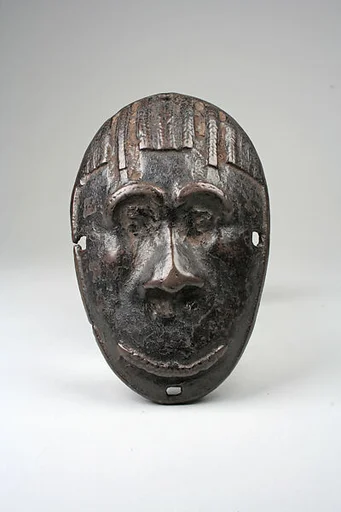
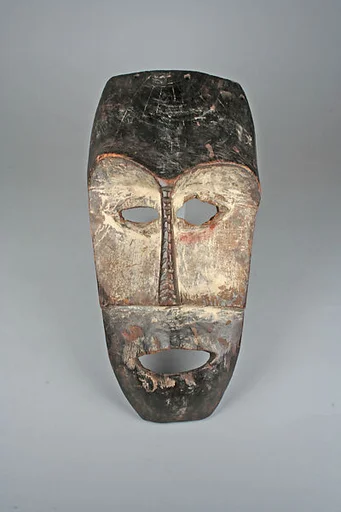
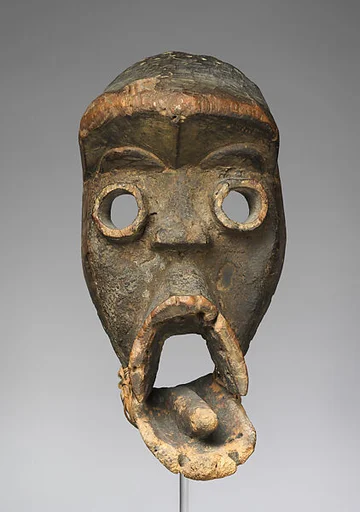
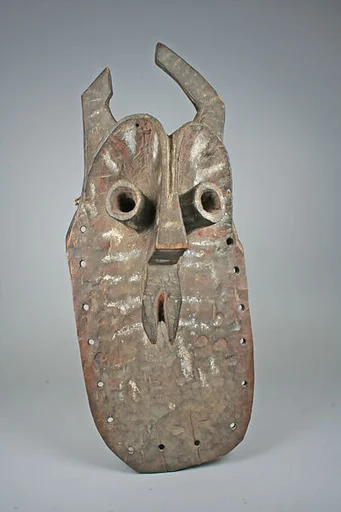
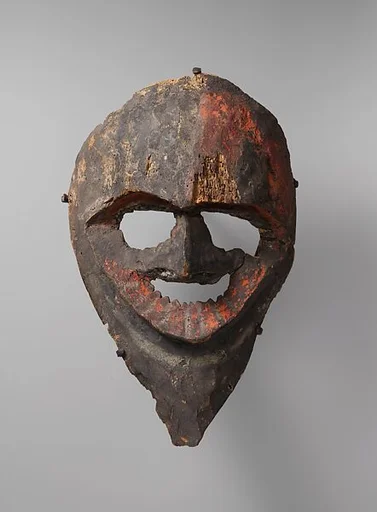
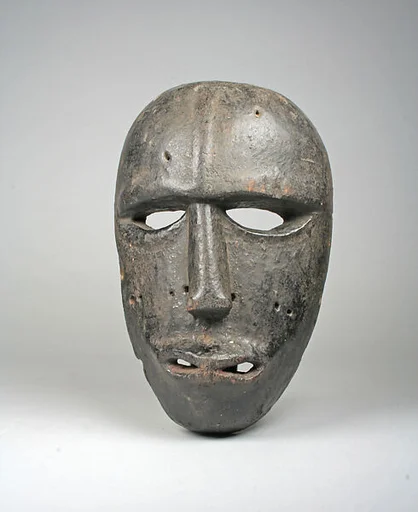
Mask (Wale or Ware)
Unknown
19th–early 20th century · Wood, paint · Arts of Africa, Oceania, and the Americas
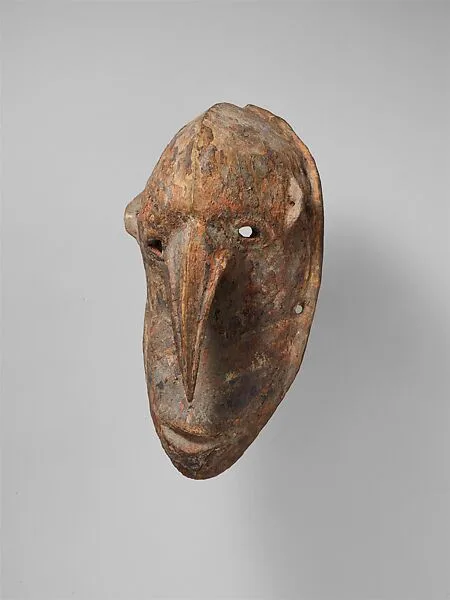
Coastal Boiken groups formerly created masks (wale or ware), representing a variety of male and female spirits. Used by men during ceremonial performances, most were not placed directly on the face but were attached to a basketry framework that covered the dancer's head and was worn with a knee-length grass skirt. When not in use, the masks were kept as sacred objects within the men's ceremonial house. According to oral tradition, masks originated when women heard the sounds of underwater spirits. The men, attempting to find the source of the sound, probed the water with poles. Eventually, one man, Pantjapong, dived in and saw the spirits, who were wearing large masks. When he returned, the other men asked him to create masks resembling those worn by the spirits, which became the first masks.
- Artist
- Unknown
- Date
- 19th–early 20th century
- Medium
- Wood, paint
- Culture
- coastal Boiken people
- Department
- Arts of Africa, Oceania, and the Americas
- Credit line
- Rogers Fund, 1977