Headdress: Janus
Unknown
19th century · Wood, pigment · Arts of Africa, Oceania, and the Americas
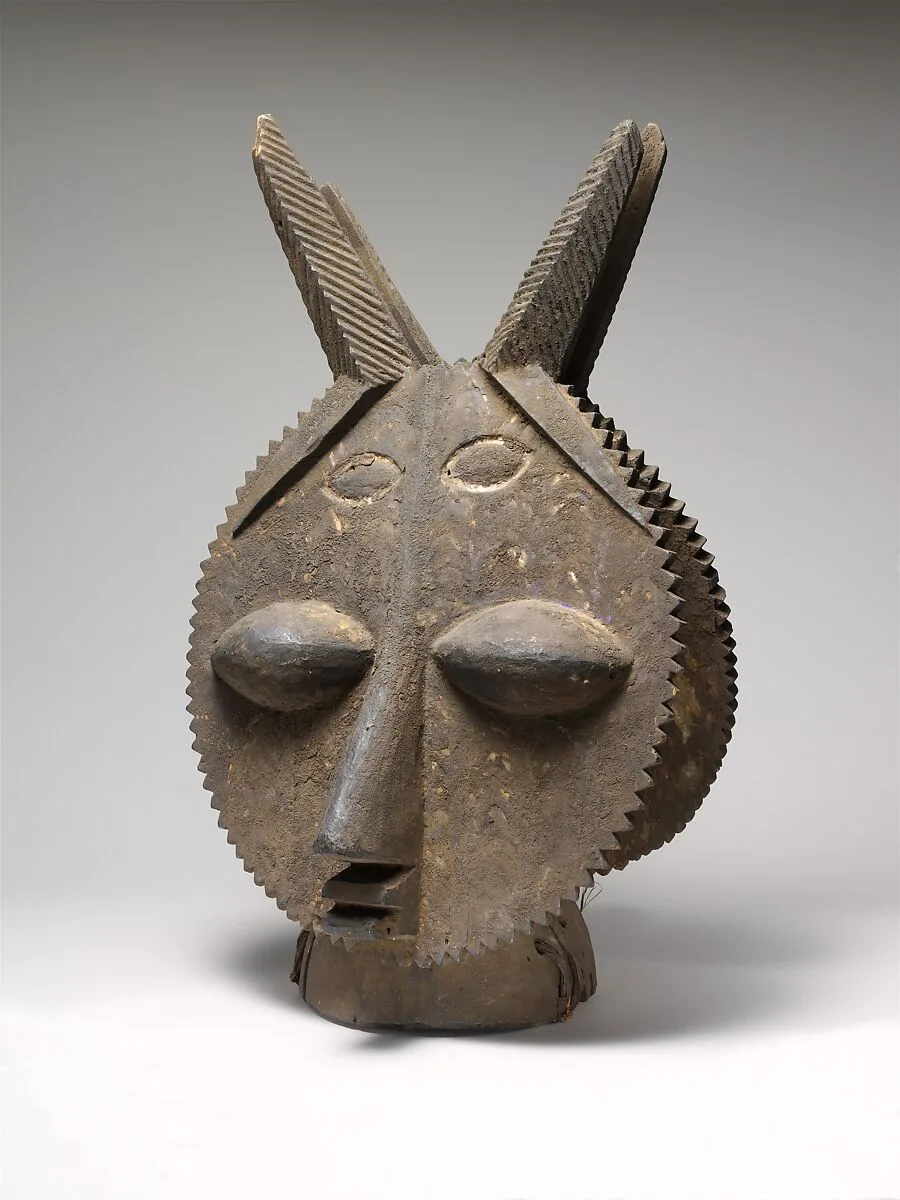
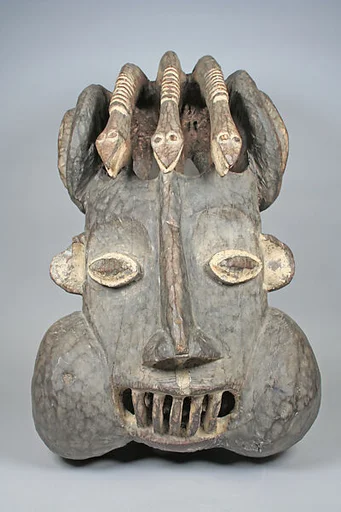
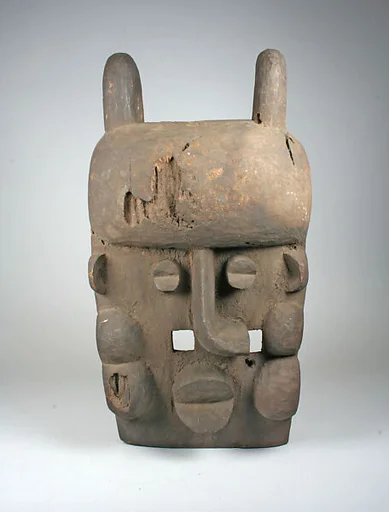
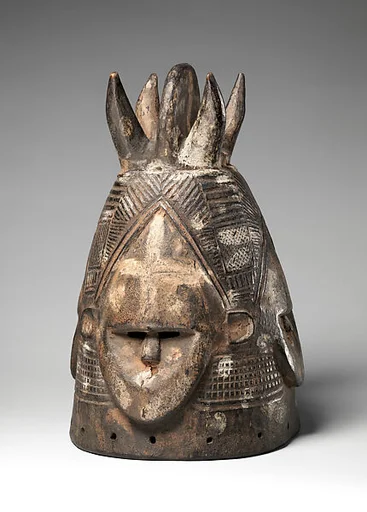
This dramatic headdress is more severe, geometric, and linear than most familiar Yoruba sculptures. With extraordinary mastery of carving from a single block of wood, the sculptor has created an expressive work built entirely out of geometric shapes. The face is a disk, the nose a triangle, the cap a hemisphere, and the lips two bars, combined to create a captivating, otherworldly visage. Overlying that face playfully and mysteriously is the long-nosed face of a horned animal that reuses elements of the larger face in a double entendre. Ijebu water-spirit masks such as this example are used in performances that are part of a festival known as Àgbó. This mask's two hornlike projections are braids that recall coiffures worn by Ijebu priests, queens, and elders. It was apparently worn by a performer, whose body was concealed by a costume attached around the top of the wooden cap, hiding it completely. Diverse masks refer to the spirit entities that are perceived to inhabit coastal lagoons. Ijebu's ports have historically served as sources of commercial prosperity and cultural exchange. Inspiration for this Ijebu art form has come from the masquerades of neighboring Ijo peoples, a powerful cultural influence. Though several similar headdresses are known, their use remains obscure.
- Artist
- Unknown
- Date
- 19th century
- Medium
- Wood, pigment
- Culture
- Yoruba peoples, Ijebu group
- Department
- Arts of Africa, Oceania, and the Americas
- Credit line
- Fletcher and Rogers Funds, 1976