Winged Object
Unknown
2nd–3rd century · Ivory (walrus) · Arts of Africa, Oceania, and the Americas
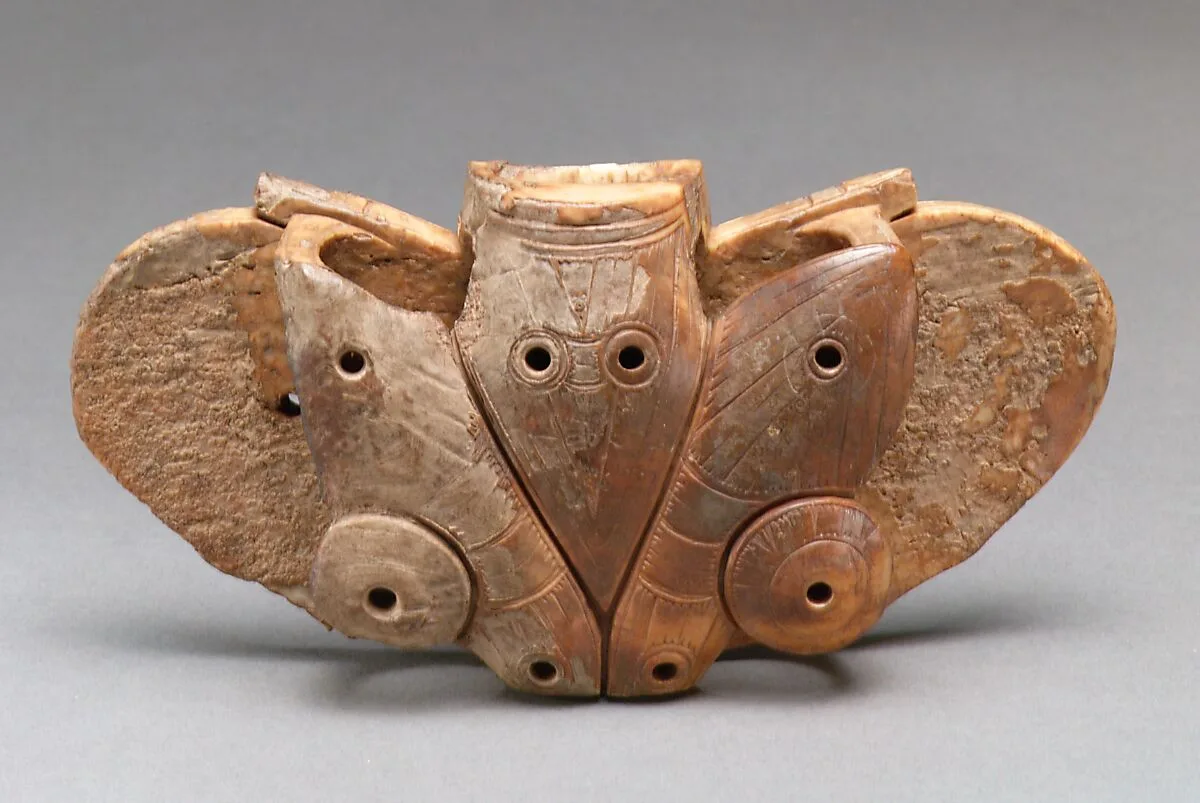
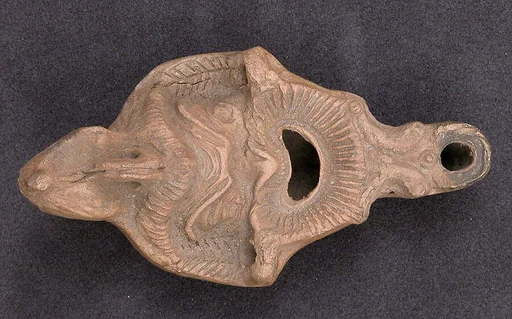
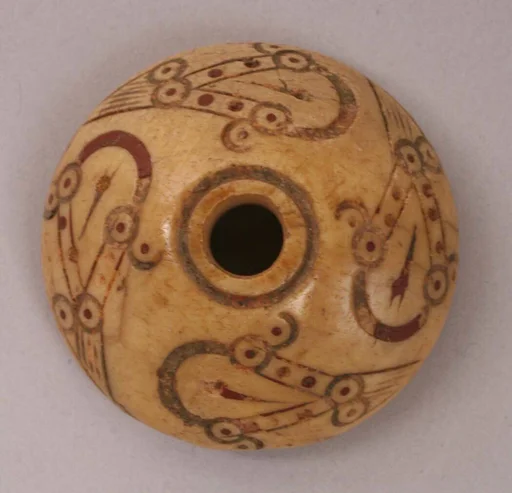
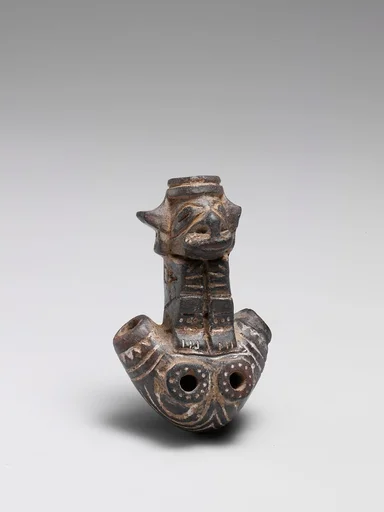
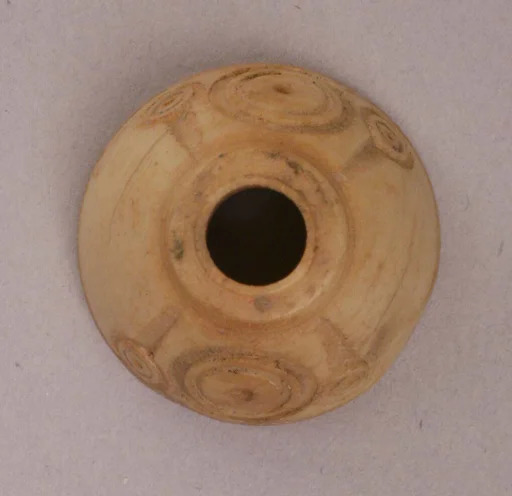
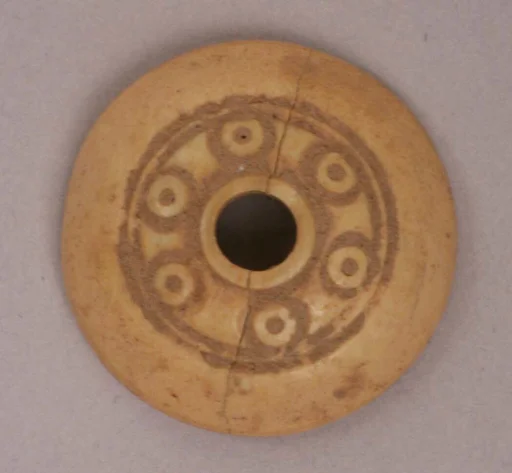
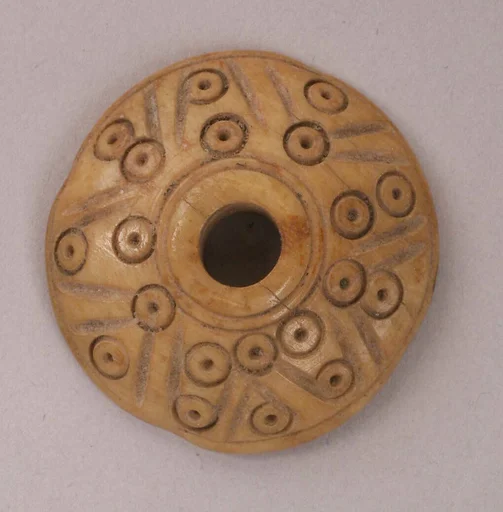
For many hundreds of years, the harpoon was essential to the lifeways of the peoples living on either side of the Bering Sea between Siberia and Alaska. As the basis for the hunting of sea mammals, the harpoon went through a long period of development, and the advent of the toggling harpoon in about 1500 BCE was particularly significant. Elements of these harpoons—head, foreshaft, socket piece, and counterweight—were made of walrus ivory, and over time their surfaces were elaborated with delicately incised images. Animal spirits—used to attract game to the hunter—and spirit helpers that added strength to the weapon itself were among the depictions. By the first half of the first millennium CE, the incised patterns had become both elegant and complex and often included "hidden" or difficult to read images. By the end of that millennium, the harpoon counterweights, also known as winged objects because of their shape, were no longer made in Alaska.
- Artist
- Unknown
- Date
- 2nd–3rd century
- Medium
- Ivory (walrus)
- Culture
- Old Bering Sea
- Department
- Arts of Africa, Oceania, and the Americas
- Credit line
- Purchase, The Houghton Foundation Inc. Gift, 1975