Tunic Fragment
Unknown
7th–9th century · Cotton, camelid hair · Arts of Africa, Oceania, and the Americas
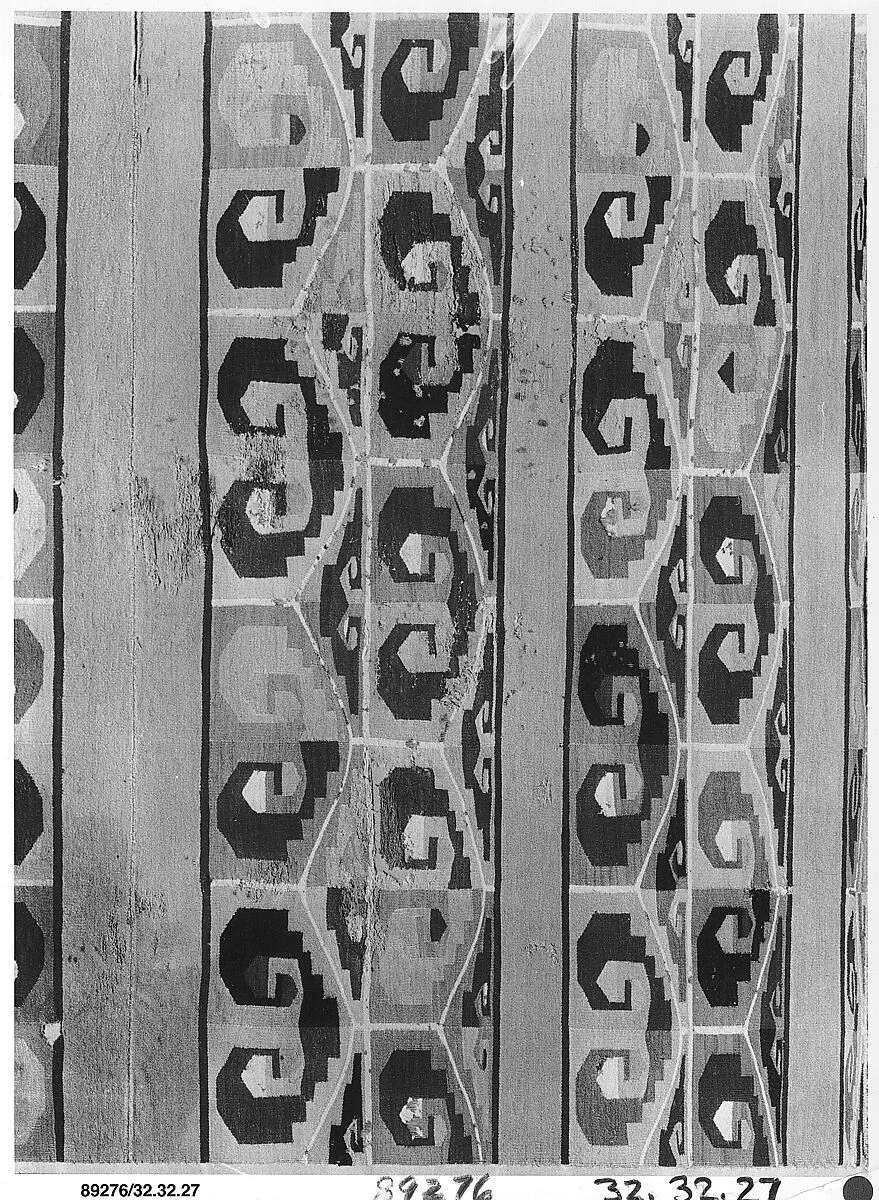
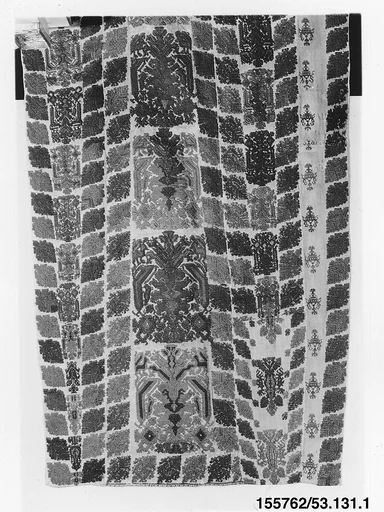
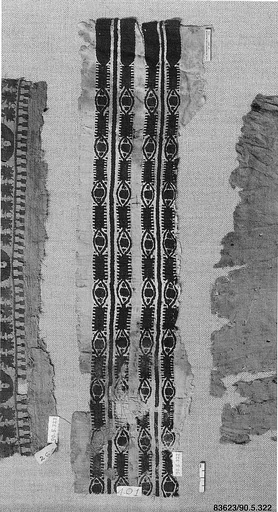
In the second half of the first millennium A.D., the Wari peoples of Peru exerted strong cultural and political influence over the southern coastal and highland regions from their capital city, also called Wari (a few miles northeast of present-day Ayacucho). They introduced a distinctive art style, found on fine polychrome ceramics, exquisite personal ornaments crafted of precious materials, expertly carved works in wood, shell, and stone, and especially on elaborate textiles. The elegant tapestry-woven tunics, thought to have been the most prestigious garments, were woven with up to eighteen miles of handspun camelid hair, probably from alpacas. The knee-length, mostly sleeveless tapestry tunics are standardized in size, format, color, and design, suggesting they were produced in state-sponsored workshops. The imagery, arranged in registers in vertical bands, is limited to a few repeated motifs—such as the stepped frets and profile faces with split eyes seen here—which are often abstracted, distorted, contracted, or expanded beyond recognition.
- Artist
- Unknown
- Date
- 7th–9th century
- Medium
- Cotton, camelid hair
- Culture
- Wari
- Department
- Arts of Africa, Oceania, and the Americas
- Credit line
- Gift of George D. Pratt, 1932