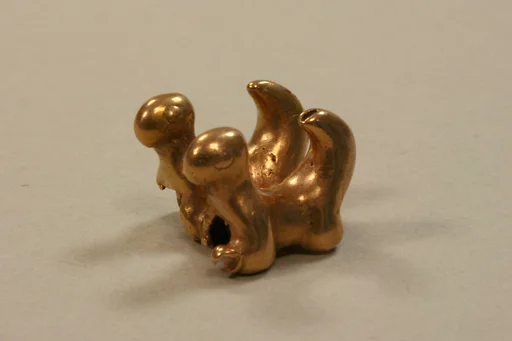
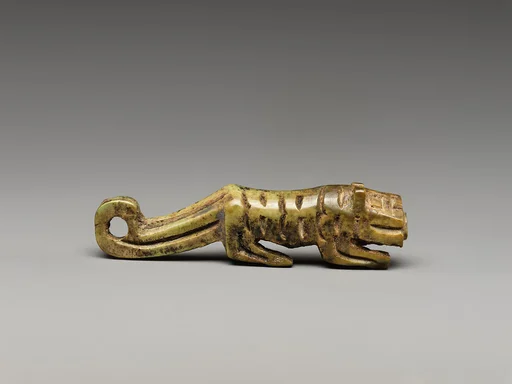
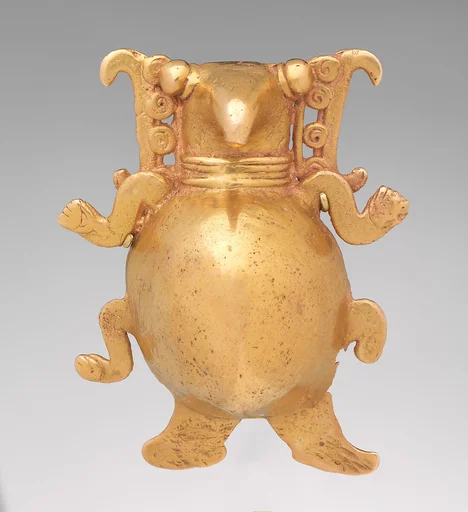
Curly-Tailed Animal Pendant
Unknown
4th–5th century · Gold · Arts of Africa, Oceania, and the Americas
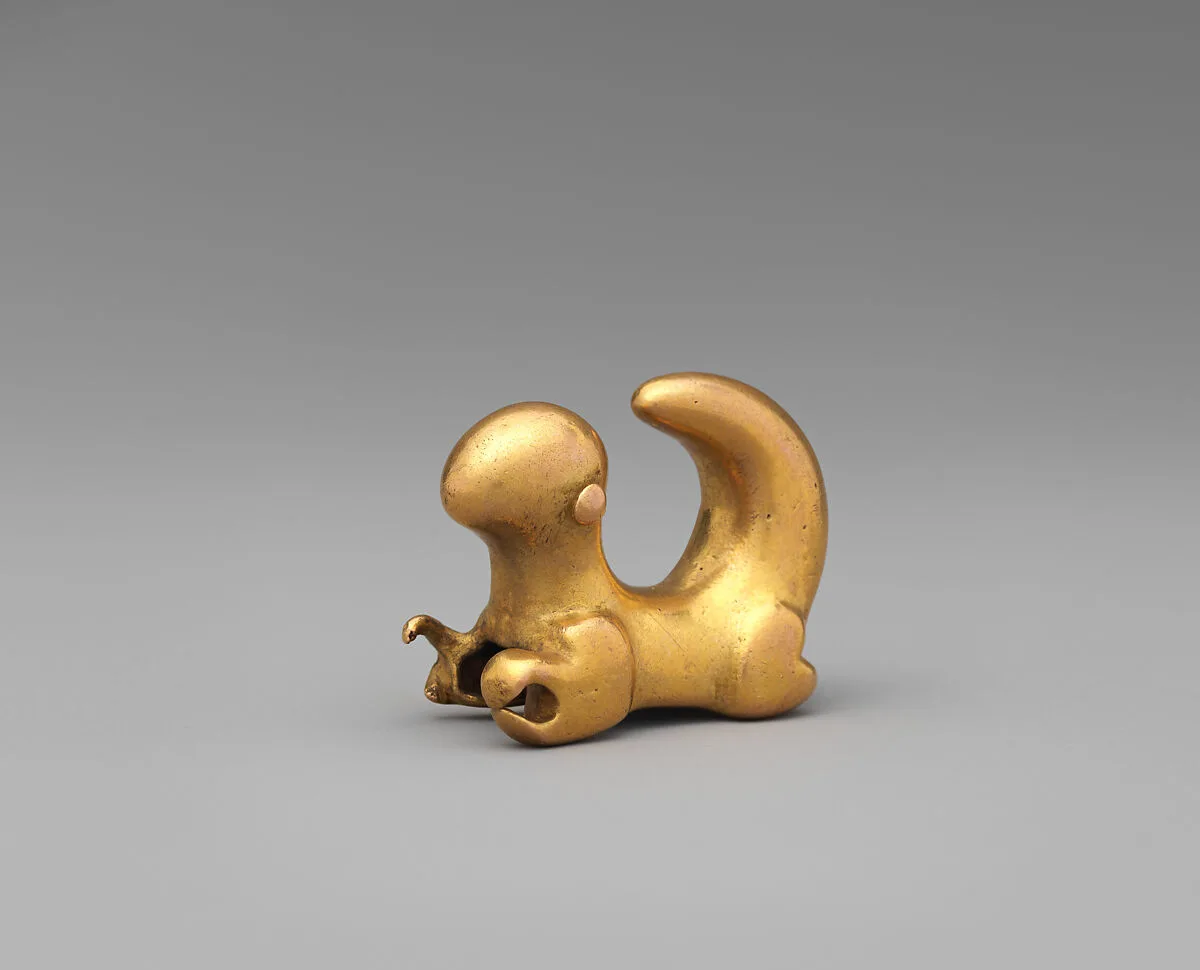
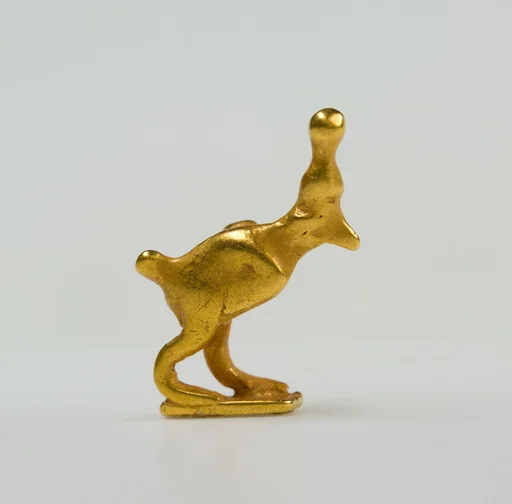
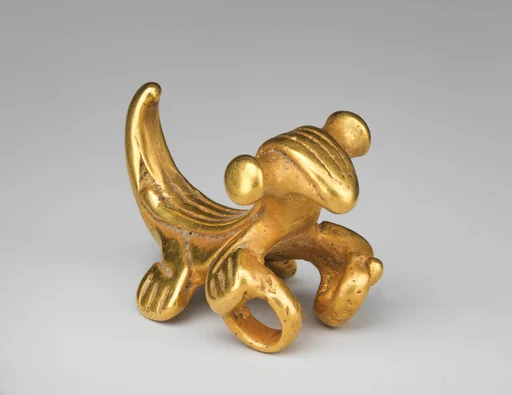
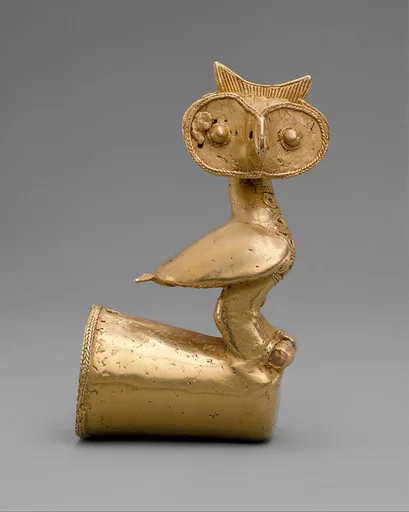
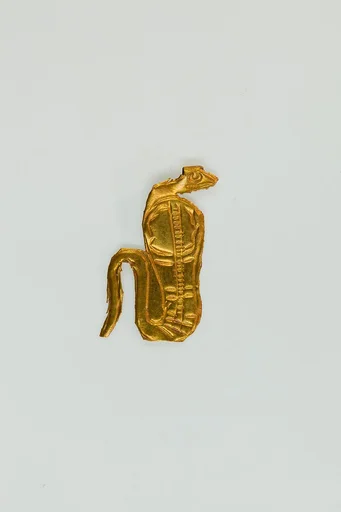
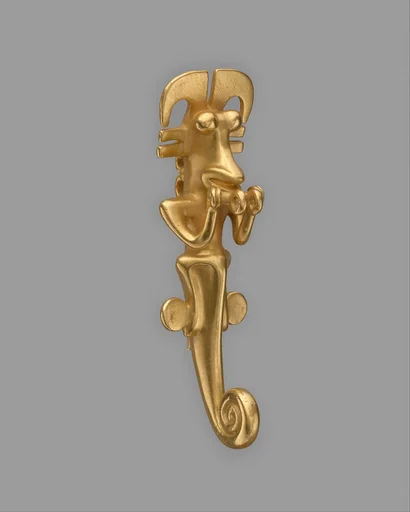
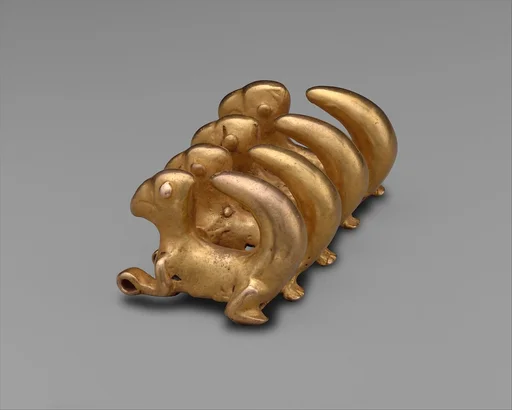
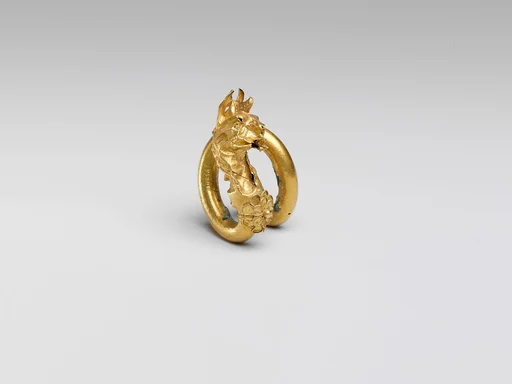
Gold ornaments in Central America date back to the mid-first millennium CE, and some of these early gold pieces were made in the same shapes as jade objects. This small pendant is such a piece. The type has been named "curly-tailed animal" by archaeologists, and while details of the animal head differ from object to object—some have birdlike crests, others have long animal snouts or smooth, round heads—the prominent tail curled up over the back is remarkably consistent in both gold and stone objects. This consistency across media signals the beginning of a significant change in Central America, when the use of jade for important personal ornaments gives way to gold. The introduction of goldworking technology from Colombia to the south may have coincided with the depletion of jade sources in Costa Rica, or gold came to be adopted so firmly as the high-status material of choice that jade and its sources were eventually forgotten.
- Artist
- Unknown
- Date
- 4th–5th century
- Medium
- Gold
- Culture
- Panama
- Department
- Arts of Africa, Oceania, and the Americas
- Credit line
- Edward C. Moore Collection, Bequest of Edward C. Moore, 1891