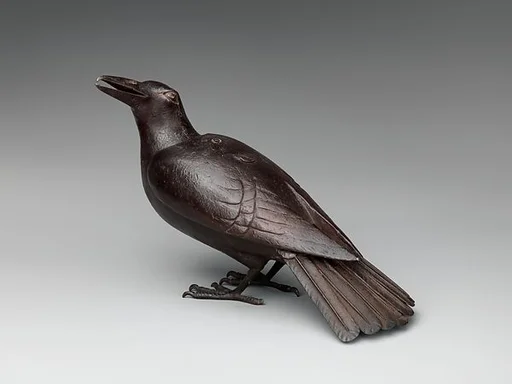
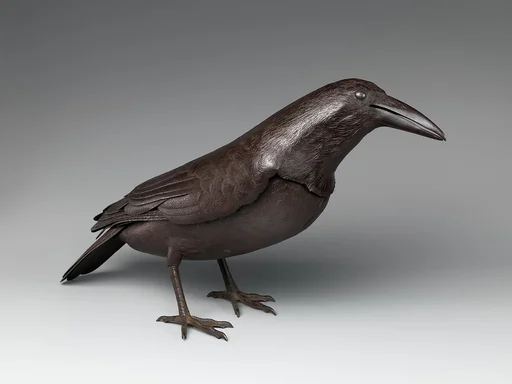
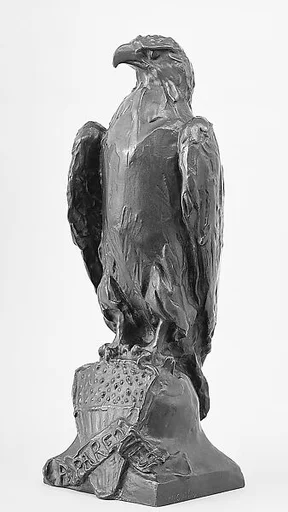
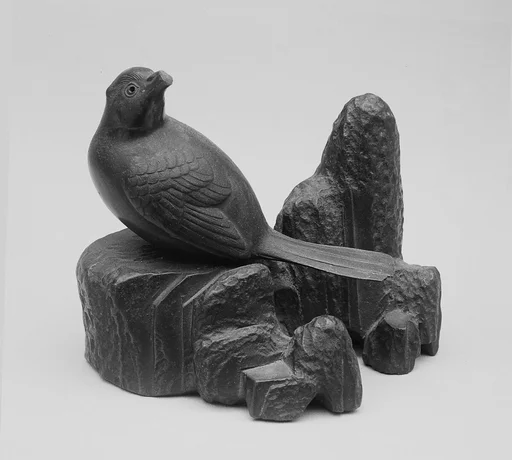
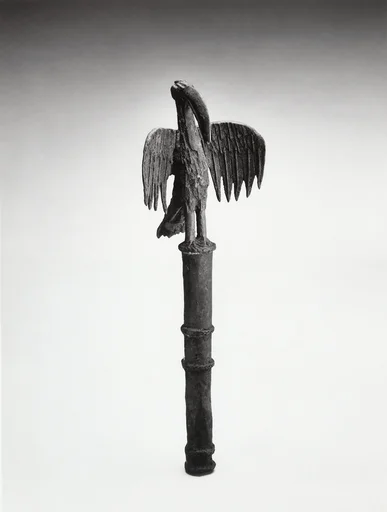
Eagle with Outstreched Wings
Suzuki Chōkichi
late 19th century · Iron, pigment, shakudo, shibuichi, wood · Arms and Armor
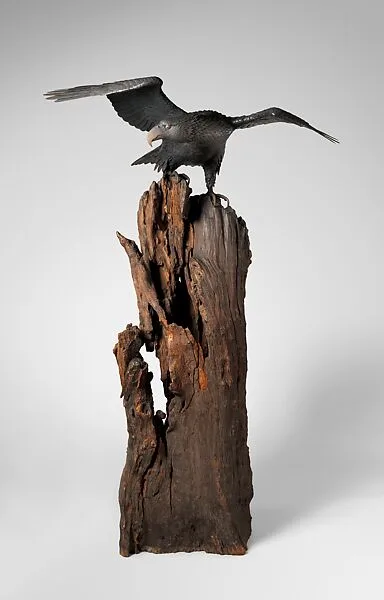
This life size eagle is dynamically posed on the stump of an old tree, with its head cocked to the side, its feet spread, and its wings outstretched. At the end of the nineteenth century, as westernization rapidly transformed traditional Japanese society, culture, and government, the eagle was emblematic of Japan asserting itself on the international stage. The head and talons, modeled in low relief, are cast iron. A tour de force of late nineteenth-century metalwork, the thin feathers that cover the body, wings, tail, and legs were individually forged, incised, and riveted to metal sheets that form an inner core. Though unsigned, the work is attributed to the sculptor Suzuki Chōkichi (1848–1919). According to James R. Steers, who donated the eagle and its base to the Museum in 1911, the sculpture was displayed at the Chicago International Exposition (also known as the World's Columbian Exposition) of 1893. Mr. Steers purchased it personally in Japan in 1903.
- Artist
- Suzuki Chōkichi
- Date
- late 19th century
- Medium
- Iron, pigment, shakudo, shibuichi, wood
- Culture
- Japanese
- Department
- Arms and Armor
- Credit line
- Gift of James R. Steers, 1911