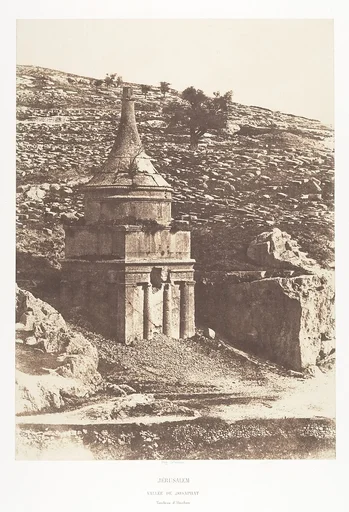
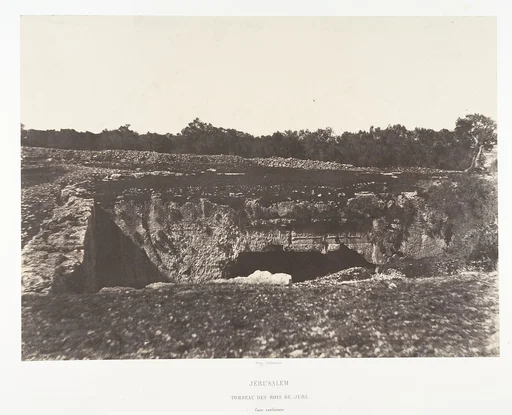
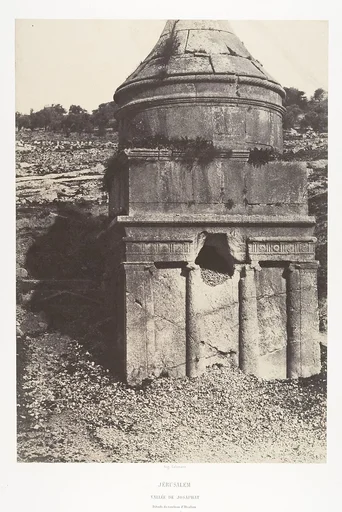
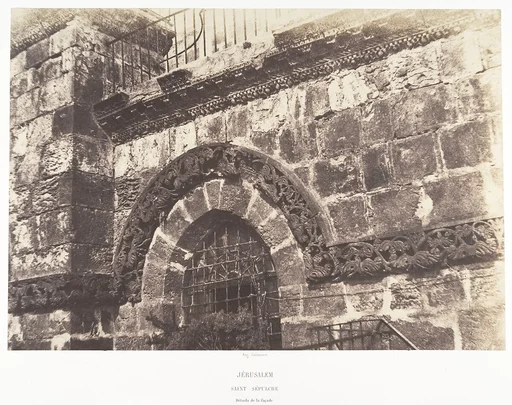
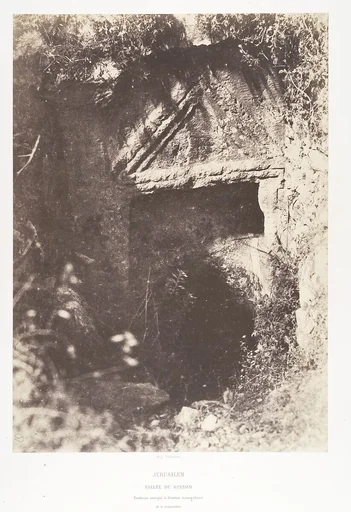
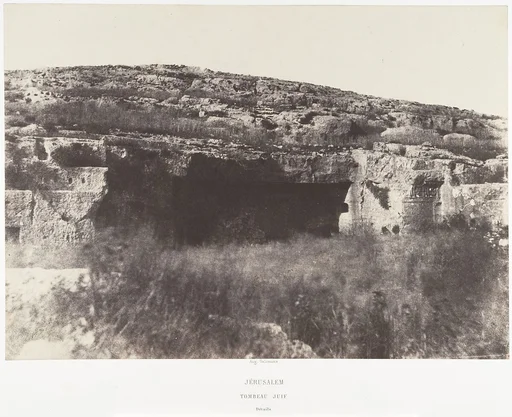
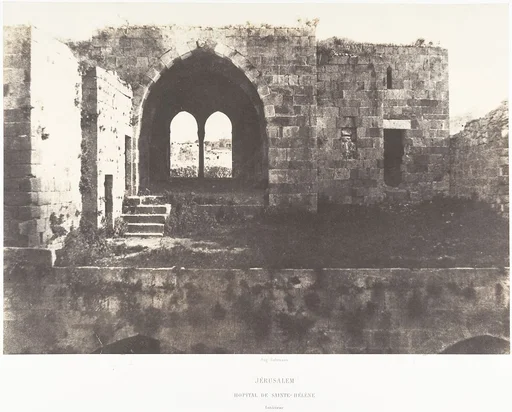
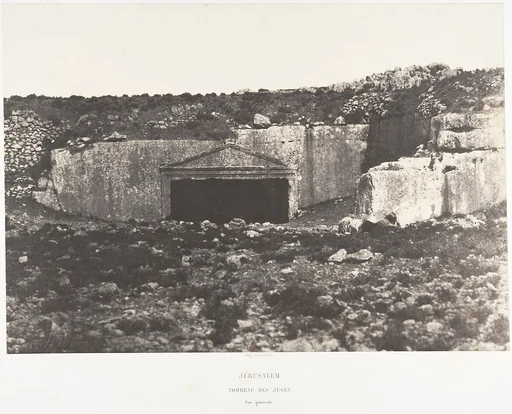
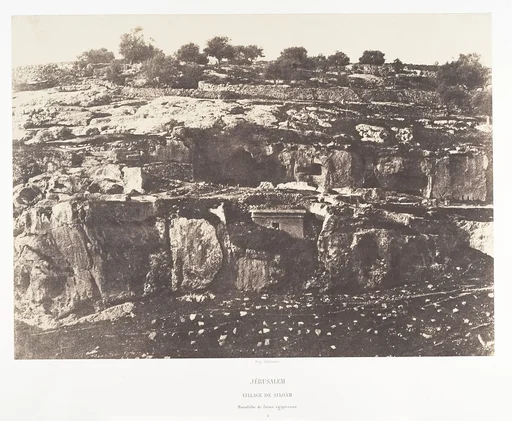
Jérusalem, Vallée de Josaphat, Tombeau de Zacharie
Imprimerie photographique de Blanquart-Évrard, à Lille|Auguste Salzmann
1854 · Salted paper print from paper negative · Photographs
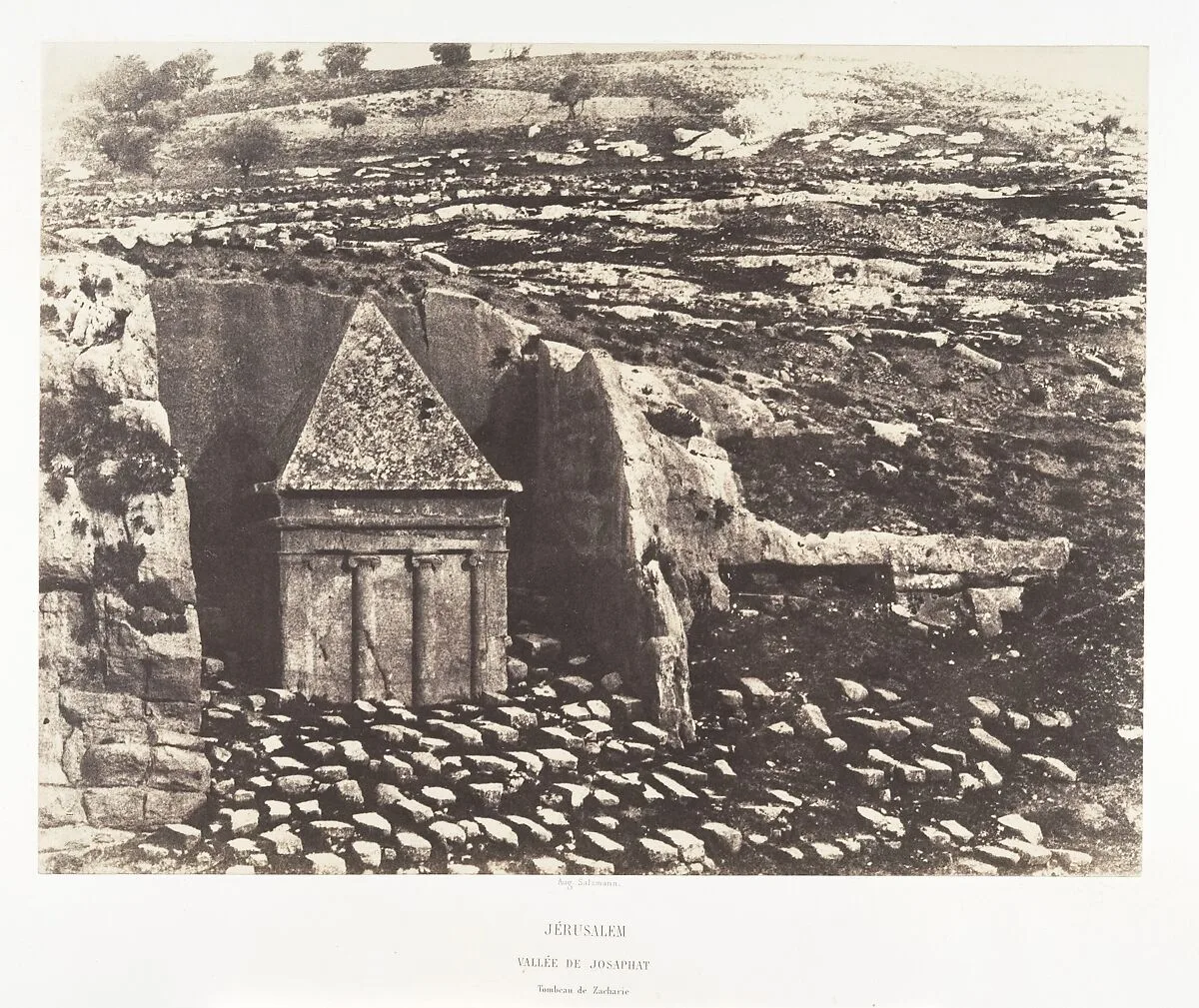
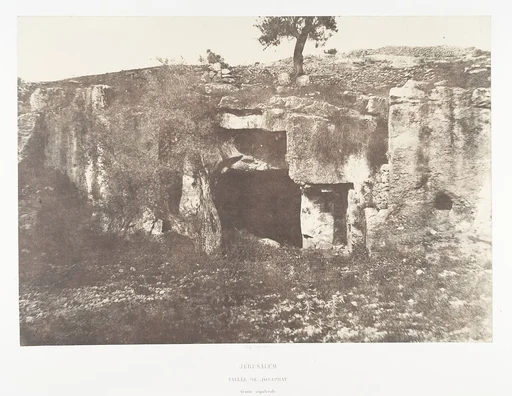
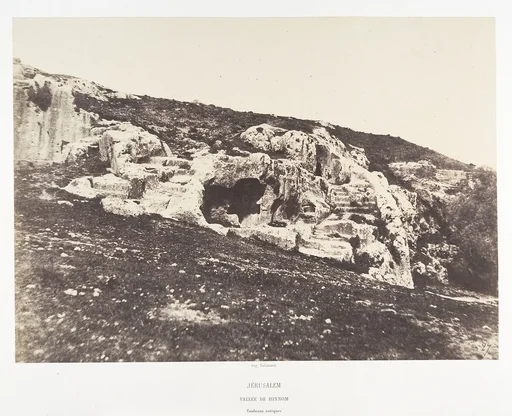
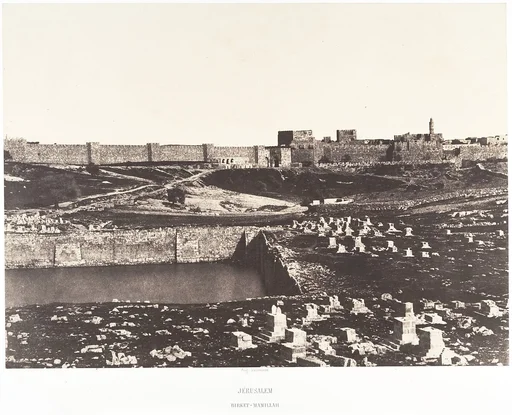
Salzmann’s photographs were widely considered to be "the rigorous translation of nature herself," free of human intervention. A common conception of photography in the mid-nineteenth century, this idea of objectivity held special significance in regard to representations of sites associated with the Bible—including the Tomb of Zechariah, father of Saint John the Baptist. The dormant tomb is activated by its affiliation with scripture. Salzmann’s works are entangled with notions of biblical infallibility and "geopiety," or the association of holy events with specific geographical sites. His personal religious faith, cultural biases, and inherited traditions all influenced the project.
- Artist
- Imprimerie photographique de Blanquart-Évrard, à Lille|Auguste Salzmann
- Date
- 1854
- Medium
- Salted paper print from paper negative
- Department
- Photographs
- Credit line
- Gilman Collection, Gift of The Howard Gilman Foundation, 2005