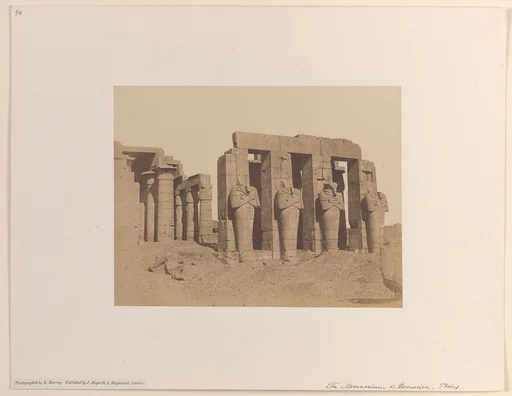
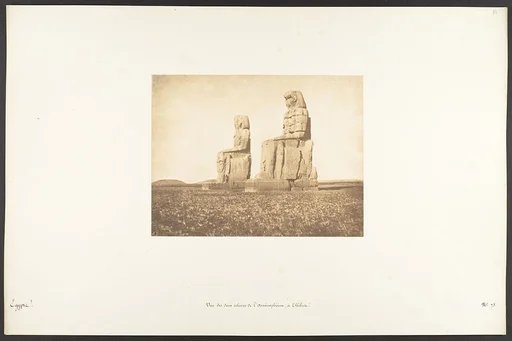
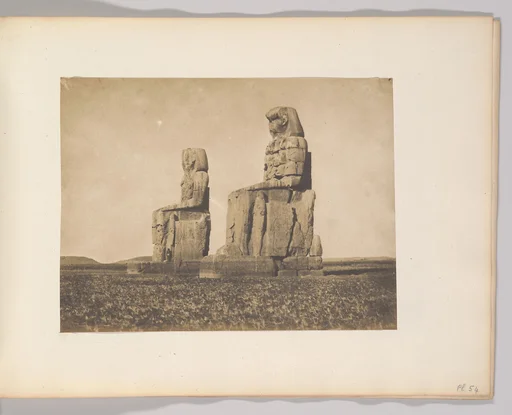
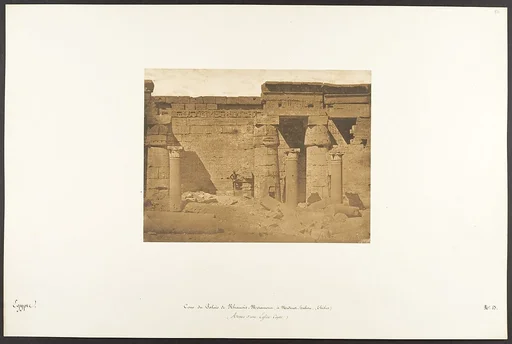
Colosses du Ramesséum
Maxime Du Camp
May 9, 1850 · Salted paper print from paper negative · Photographs
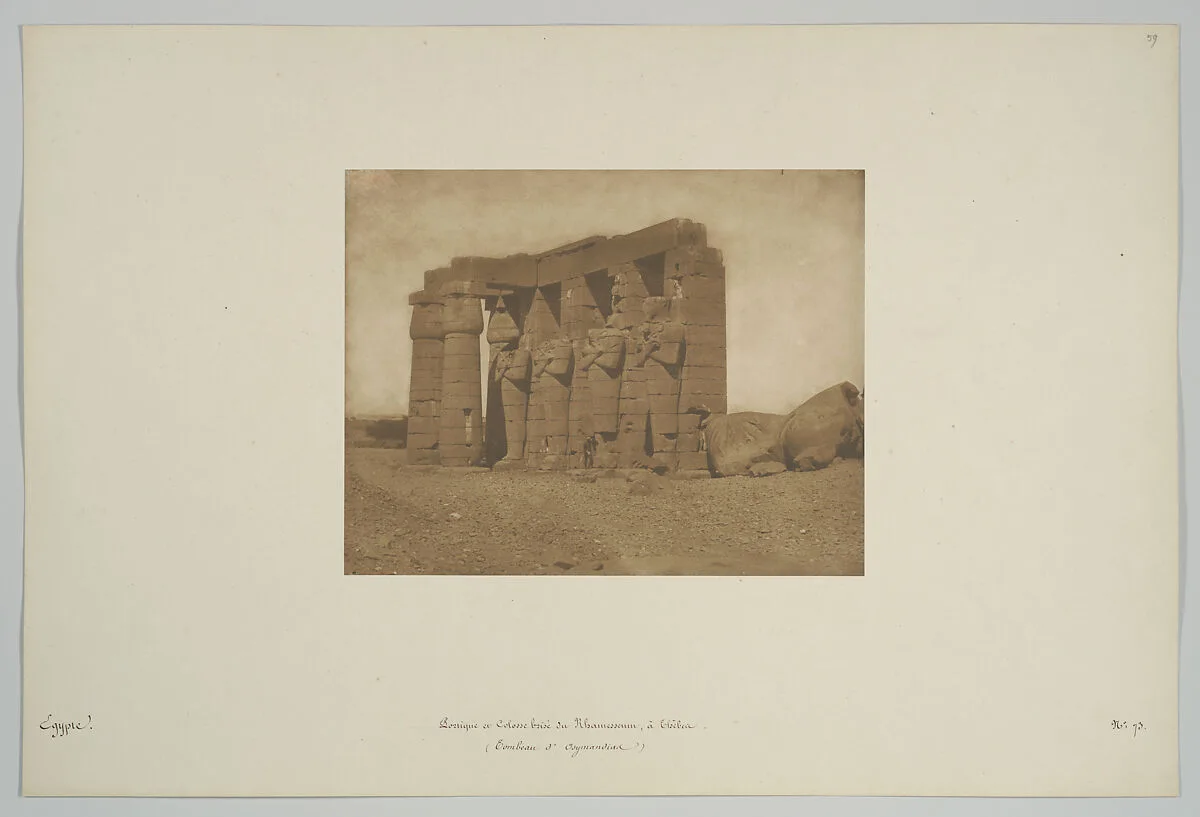
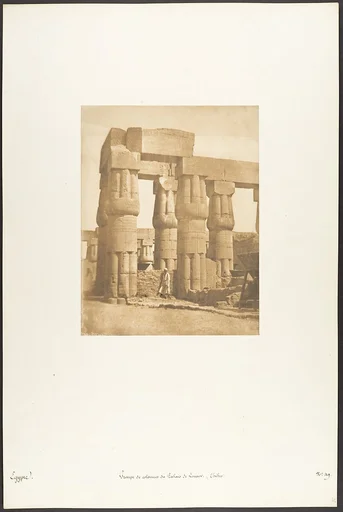
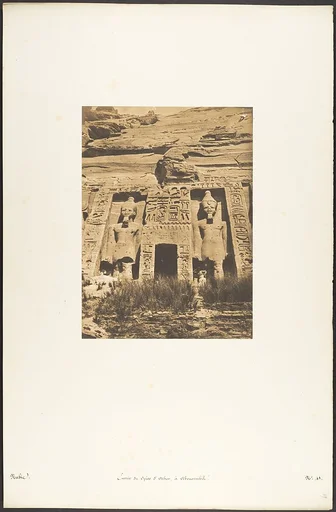
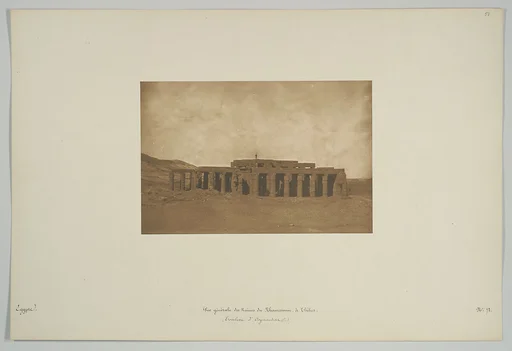
In 1849-50, Du Camp traveled to Egypt with the as-yet-unknown writer Gustave Flaubert, intent on producing clear and legible photographs of the ancient monuments. For them, as for all travelers before and since, the first sight of the temples and pyramids, the Sphinx, and the seemingly endless desert, was overwhelming. The Greeks called the ruined temple shown here the "Tomb of Ozymandias," their interpretation of Usermaetre, one of the names of Rameses II (r. 1327-1304 B.C.). Du Camp's view shows the temple's portico and a fragment of one of the two granite colossi that lie in the yard of the Second Court. The upper sections of the colossi had been removed in the earlier part of the century and sent to the British Museum. It was on the arrival of the bust of Rameses II in London that Percy Bysshe Shelley (1792-1822) wrote his famous sonnet "Ozymandias" (1818). Du Camp included this photograph in a unique, privately printed portfolio of 174 photographs that was once part of the collection of the architect Eugène Viollet-le-Duc.
- Artist
- Maxime Du Camp
- Date
- May 9, 1850
- Medium
- Salted paper print from paper negative
- Department
- Photographs
- Credit line
- Gilman Collection, Gift of The Howard Gilman Foundation, 2005