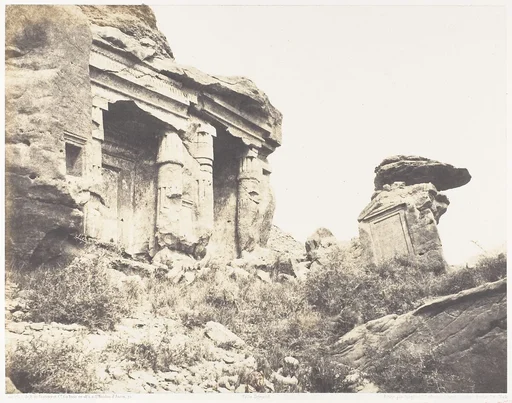
Jérusalem, Vallée de Josaphat, Tombeau de St. Jacques
Imprimerie photographique de Blanquart-Évrard, à Lille|Auguste Salzmann
1854 · Salted paper print from paper negative · Photographs
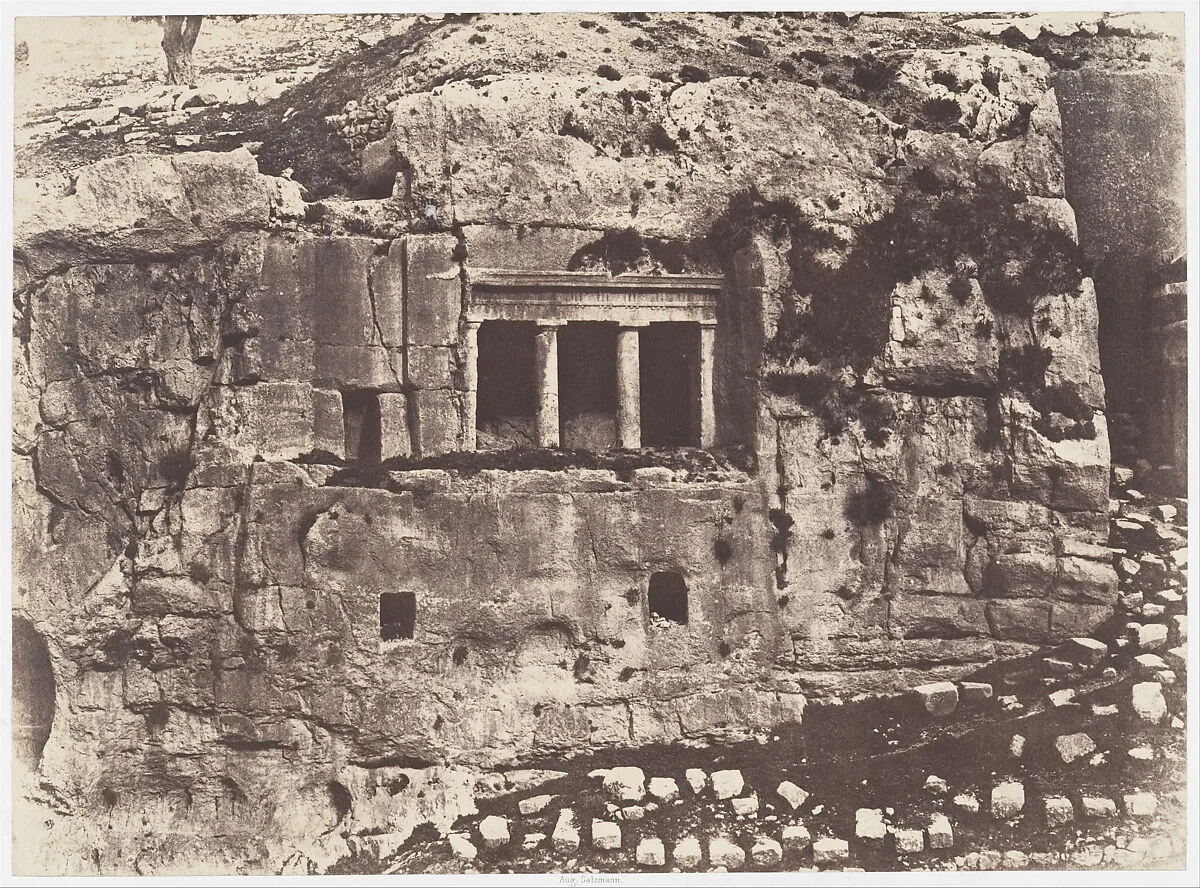
Ridiculed by fellow scholars for contending that many architectural fragments examined on an 1850 expedition to Jerusalem dated from the period of David and Solomon, archaeologist Félicien Caignart de Saulcy was further accused of having provided fanciful and inaccurate site drawings to support his thesis. Salzmann, an artist and archaeologist, entered this scholarly fray in late 1853, setting off for Jerusalem to study and photograph the disputed monuments; after four months' work, he returned to Paris with nearly 175 negatives, which he published as Jérusalem: Étude et reproduction photographique des monuments de la ville sainte depuis l'époque judaïque jusqu'à nos jours (1856). This view shows one of the three ancient tombs dating from the second to first century B.C. cut into bedrock on the eastern slope of the Kidron valley, also called the "Valley of Josaphat," near the Mount of Olives. The conclusive power of Salzmann's photographs was self-evident, and De Saulcy declared himself vindicated by the sun itself, "a most able draftsman, in truth, and one whose good faith would be difficult to question."
- Artist
- Imprimerie photographique de Blanquart-Évrard, à Lille|Auguste Salzmann
- Date
- 1854
- Medium
- Salted paper print from paper negative
- Department
- Photographs
- Credit line
- Gilman Collection, Gift of The Howard Gilman Foundation, 2005
![(11) [Naksh-i Rustam]](https://d2pvxr3eb77vb4.cloudfront.net/assets/v1/75/759847ba3b063f642951c1405d49a7b278b51efd7d3c85e27239a8212b2c0adf/graph.webp)
![[Acropolis, Athens, Greece]](https://d2pvxr3eb77vb4.cloudfront.net/assets/v1/bb/bb8bf19871286e5fa8cf72a76a57e23ac71eaeffa761ec23a0cc14b1d8740375/graph.webp)