Ariadne
Oscar Gustav Rejlander
1857 · Albumen silver print from glass negative · Photographs
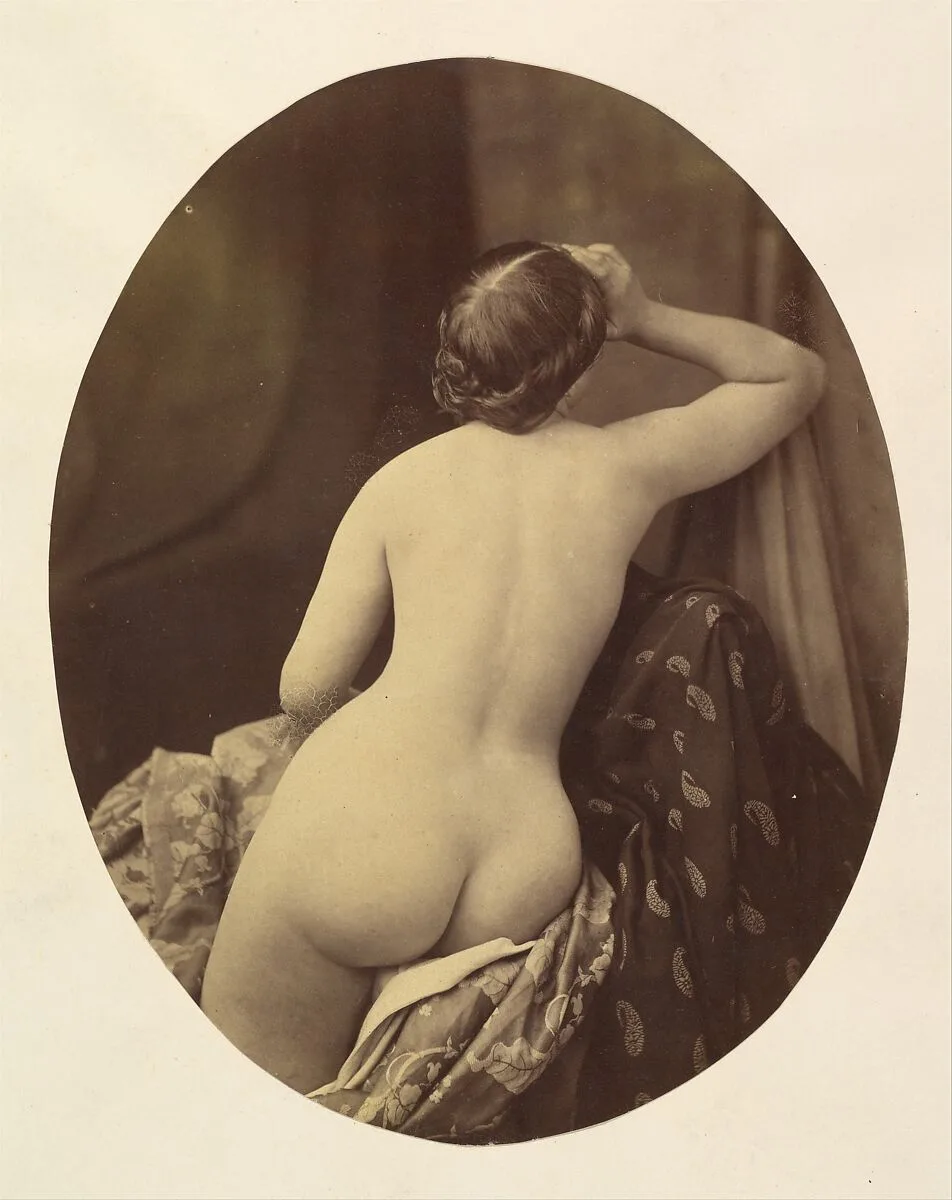
Working in a place—Victorian England—where any photographic nude was considered offensive because the process implied not only the "nastiness" of the artist and vendor, but also "the degradation of the person who serves as model on the occasion," Rejlander sought to ally his work with that of noted painters. This nude study is one of a series based on figures in the work of Raphael, Titian, Correggio, Rubens, Murillo, and Gainsborough; the precedent here is Titian’s Venus and Adonis, and Rejlander’s intention was to show how the painter adhered to or strayed from the ways a real body can twist and turn. Critic A. H. Wall defended the propriety of Rejlander’s Studies from the Nude, saying, "Refined and ennobled by art, real beauty, palpable flesh and blood, speaks of nothing but its own inherent loveliness." Such references to painting did not always afford adequate protection, however. Writing of Rejlander’s famous Two Ways of Life, photographer and critic Thomas Sutton wrote, "There is no impropriety in exhibiting such works of art as Etty's Bathers Surprised by a Swan or the Judgment of Paris but there is impropriety in allowing the public to see photographs of nude prostitutes, in flesh-and-blood truthfulness and minuteness of detail."
- Artist
- Oscar Gustav Rejlander
- Date
- 1857
- Medium
- Albumen silver print from glass negative
- Department
- Photographs
- Credit line
- Gilman Collection, Purchase, The Horace W. Goldsmith Foundation Gift, through Joyce and Robert Menschel, 2005
![[Standing Female Nude]](https://d2pvxr3eb77vb4.cloudfront.net/assets/v1/dc/dc8fee5a843e885811e173141010ce19037955d290cc217eb257968ad307453d/graph.webp)
![[Young Woman, Nude, From the Front with Hand Over Face]](https://d2pvxr3eb77vb4.cloudfront.net/assets/v1/84/842d8adbea05965dbf536dd8e3c2f6bd761e08bdb560076a032a3016951e02a0/graph.webp)
![[Standing Female Nude]](https://d2pvxr3eb77vb4.cloudfront.net/assets/v1/60/60c47d979ee98198ecc4326fd7c32a33ac1cef68ec11f5efe2a4ccb5c3366a5c/graph.webp)
![[Nude Woman with Hat in Studio]](https://d2pvxr3eb77vb4.cloudfront.net/assets/v1/4c/4c5ad016fe8d8c5d9e9d5b28dddcaef275881d1a2395979d35c50432a2a53fd1/graph.webp)
![[Nude Before a Mirror]](https://d2pvxr3eb77vb4.cloudfront.net/assets/v1/ea/eacf9464d868aa42e786ebd06634c762358664834097267c9a8db60dea9492da/graph.webp)
![[Reclining Female Nude]](https://d2pvxr3eb77vb4.cloudfront.net/assets/v1/cd/cd19161b7bf9bdf7ec714844870c4418040c18daead0b17b42b74e0af2ff1b9f/graph.webp)
![[Seated Female Nude]](https://d2pvxr3eb77vb4.cloudfront.net/assets/v1/2d/2d0f3dd8828b6d2592387d5b9e9ea8196a9f6555ab720bed7a6ddd3233ebd324/graph.webp)
![[Female Nude from the Back]](https://d2pvxr3eb77vb4.cloudfront.net/assets/v1/7f/7f173e7bb6e6aba7258777cb9bad1234b8a03d3e4c73af10c30a349de11d2628/graph.webp)
![[Nude Study: Woman from Behind, Young Man, Sicily, Italy]](https://d2pvxr3eb77vb4.cloudfront.net/assets/v1/4f/4f1442859d178ef60985424b33e22dcef69e82661248f34b70edaa8c696c6f5f/graph.webp)