Central Museum Madras: Group 27
Linnaeus Tripe
May–June 1858 · Albumen silver print from dry collodion on glass negative · Photographs
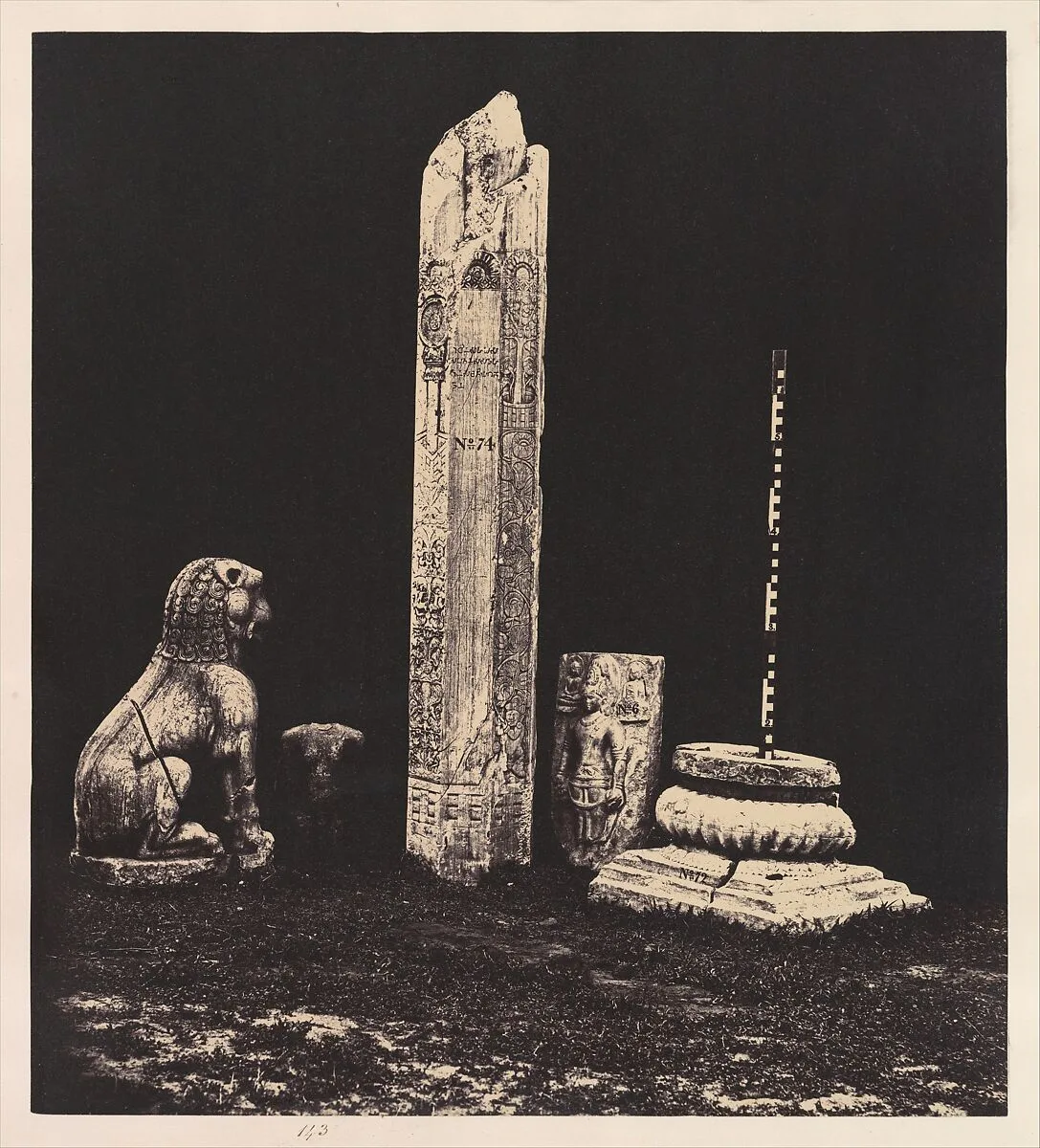
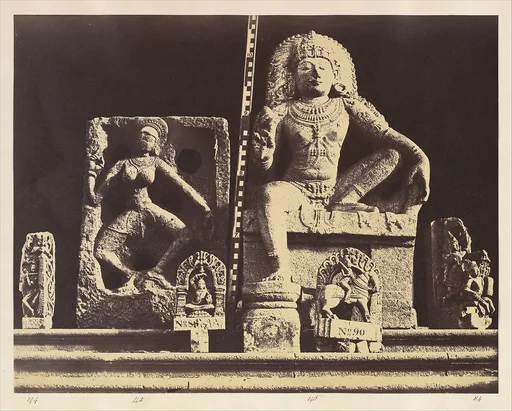
These extraordinary ancient sculptures originally adorned the Great Stupa at Amaravati, one of the finest monuments in the Buddhist world. The pillar at the center comes from a first-century B.C. phase of construction, and illustrates the major events in the life of the Buddha; the monumental lion and column base (note their huge scale in relation to the meter stick) come from the gateway to the second-century A.D. structure. The large figure in relief is the bodhisattva Avalokiteshvara and belongs to a later phase of activity at Amaravati. When the British colonial government learned of the site's significance in 1797, the structure was being mined for its stone. Through the efforts of Walter Elliot and others, the remaining pieces were saved and entrusted to the Madras Museum; those excavated by the time this photograph was made were later transferred to the British Museum. Tripe, a career military officer and official photographer to the Government of Madras, photographed this group of "Elliot Marbles" as though they had come together in a playful-even surreal-dialogue.
- Artist
- Linnaeus Tripe
- Date
- May–June 1858
- Medium
- Albumen silver print from dry collodion on glass negative
- Department
- Photographs
- Credit line
- The Rubel Collection, Purchase, Lila Acheson Wallace and Richard and Ronay Menschel Gifts, 1997