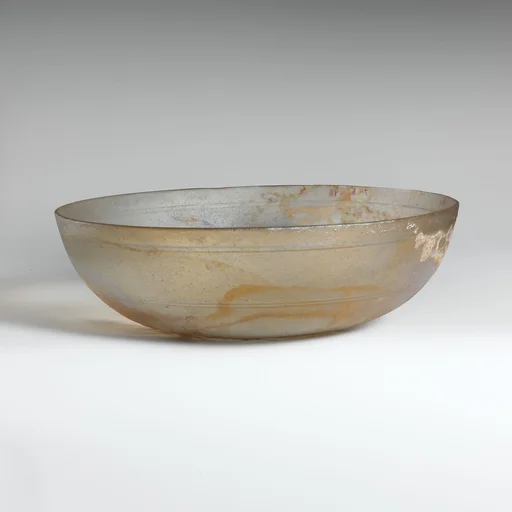
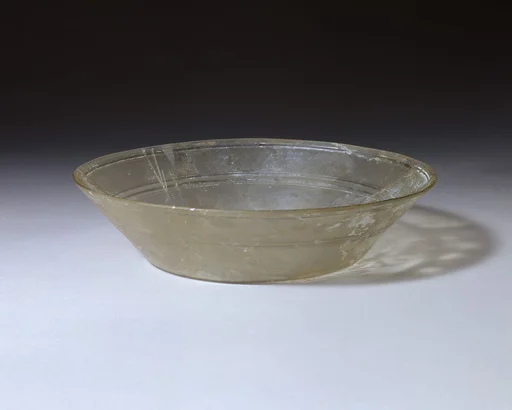
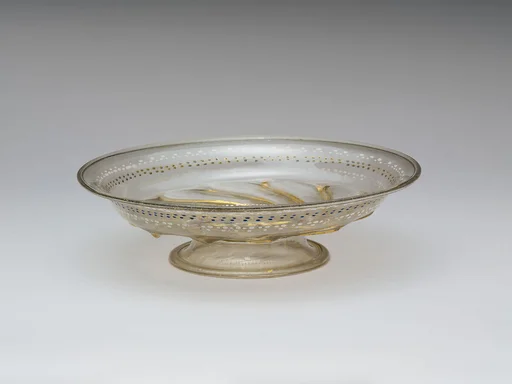
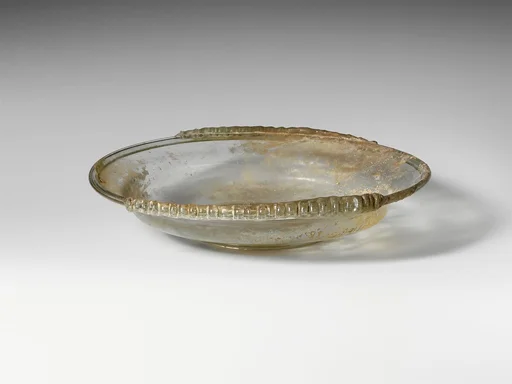
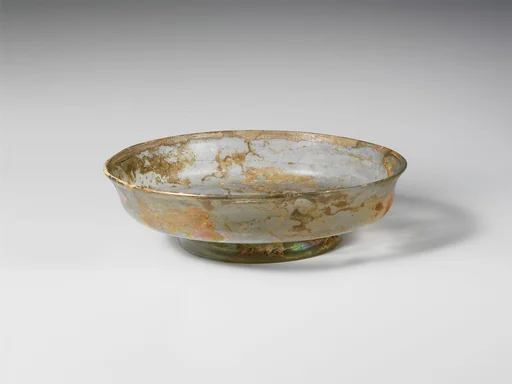
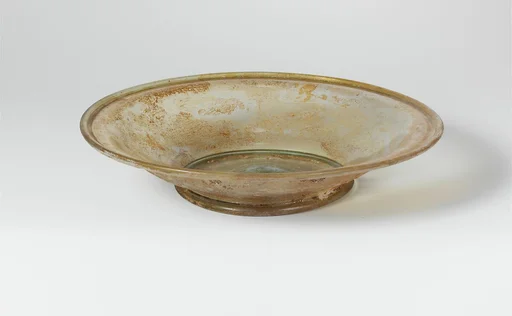
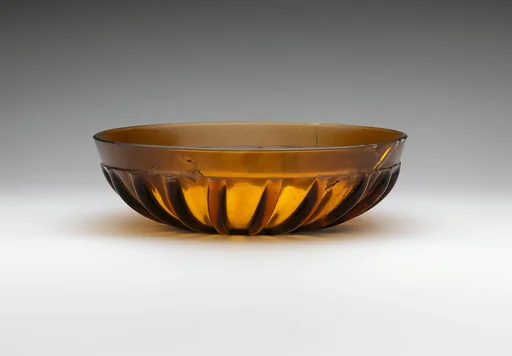
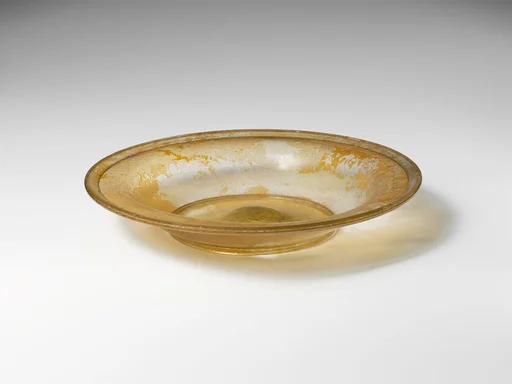
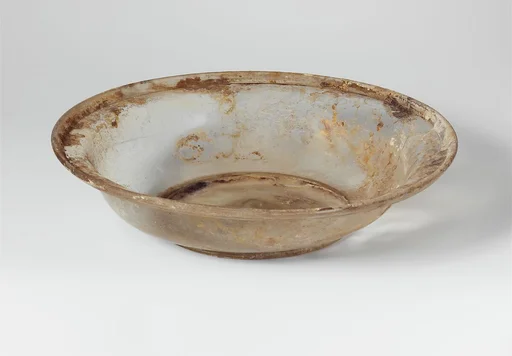
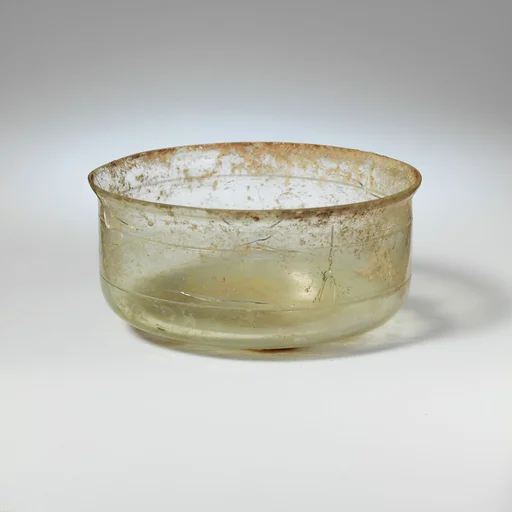
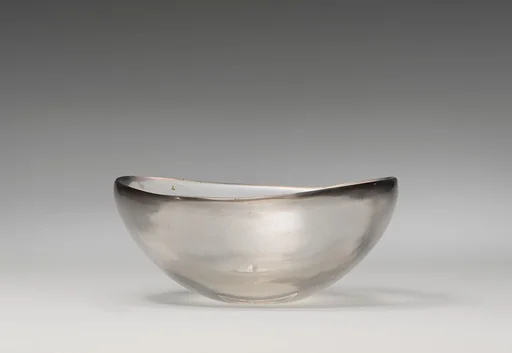
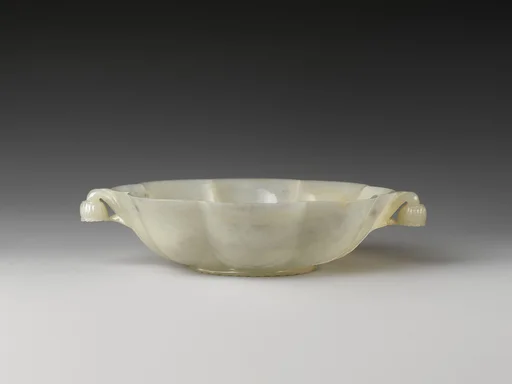
Glass bowl in the form of a shell
Unknown
1st half of 4th century CE · Glass · Greek and Roman Art
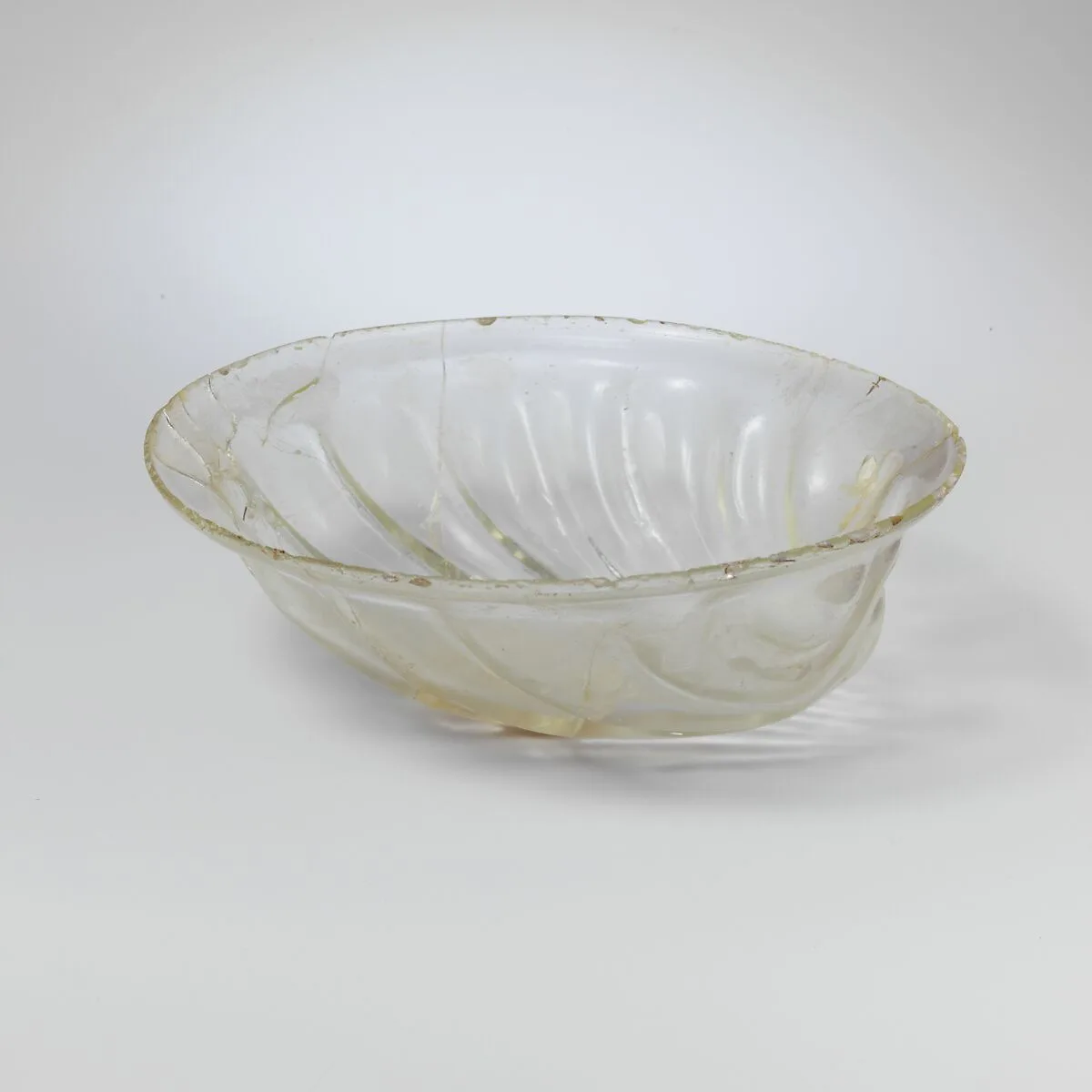
Colorless with pale green tinge. Flaring, knocked-off rim with shallow S-shaped collar below; body with circular circumference and rounded bottom. Body formed into the shape of a marine bivalve mollusc (scallop) in relief with eleven ribs radiating from a deep ocellus or umbone in a fan pattern ; ribs become broader and have rounded ends below collar around rim; the ocellus is flanked to either side by a hemispherical bulge. Below the rim is a faint wheel-abraded line. Broken and repaired, with some internal cracks; pinprick and larger bubbles; faint weathering and iridescence. Bowls made in in silver, bronze, and semiprecious stone and shaped to resemble a large seashell became popular in the Hellenistic period. Glass examples were also produced in early Roman imperial times, some cast and others mold-blown. This bowl belongs to a group found mainly on the Rhine and Danube frontiers that is dated to the fourth century A.D.
- Artist
- Unknown
- Date
- 1st half of 4th century CE
- Medium
- Glass
- Culture
- Roman
- Department
- Greek and Roman Art
- Credit line
- Purchase, Patricia and Marietta Fried Gift, 2007