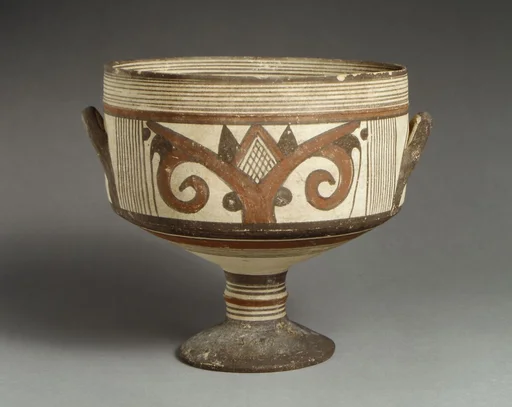
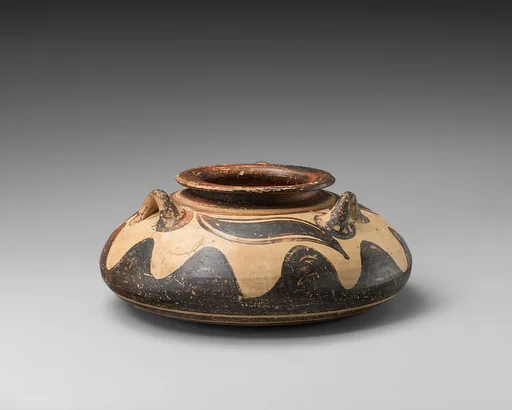
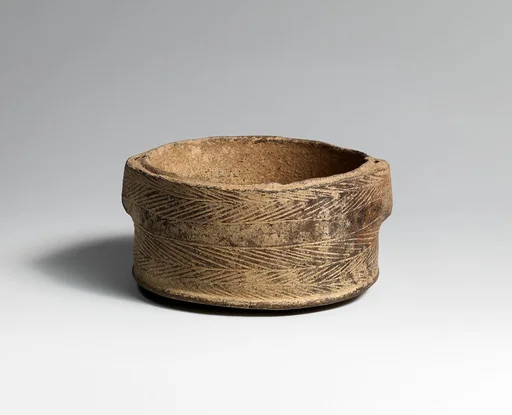
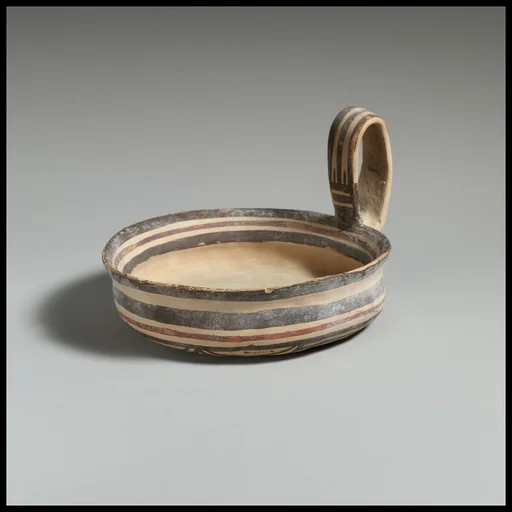
Terracotta pyxis (cylindrical box)
Unknown
ca. 1400–1100 BCE · Terracotta · Greek and Roman Art
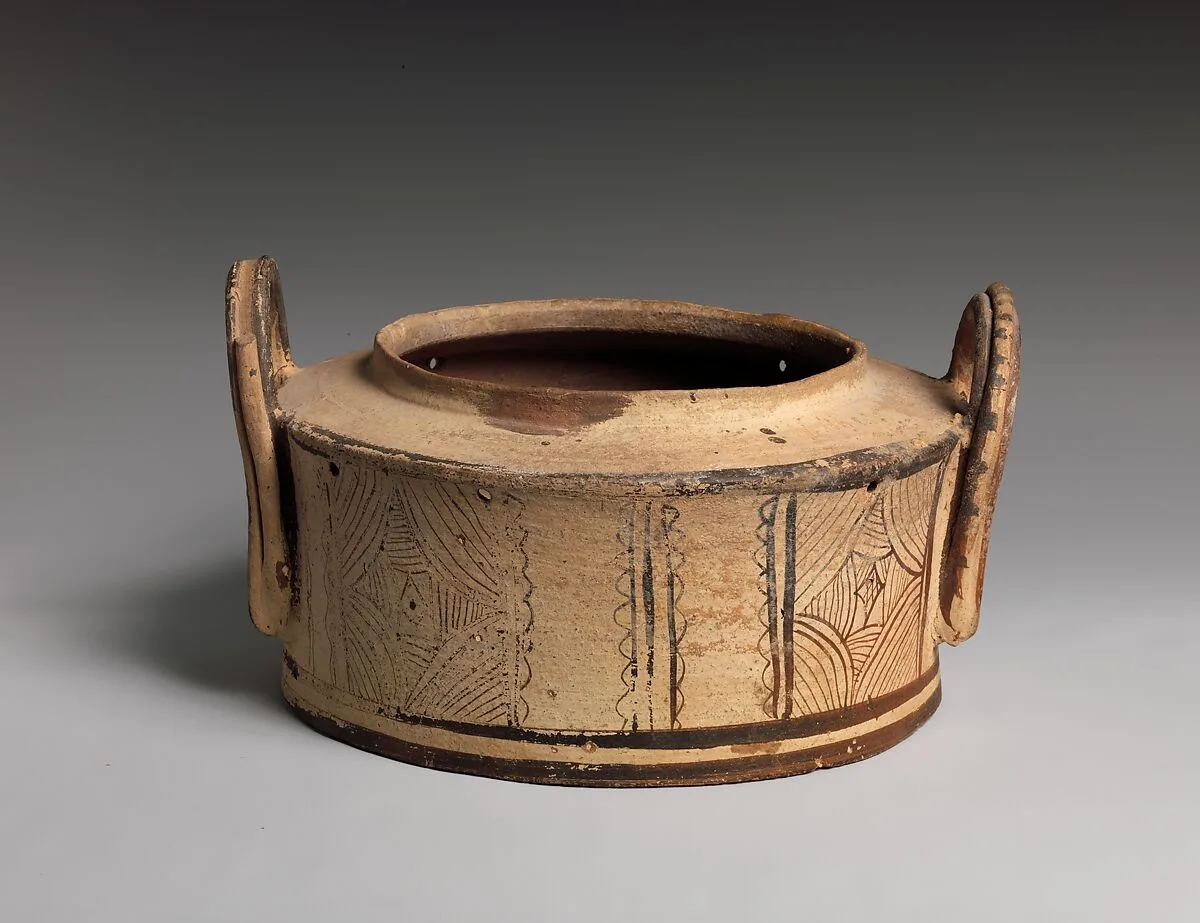
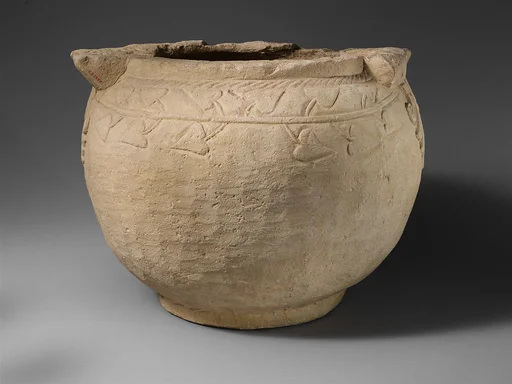
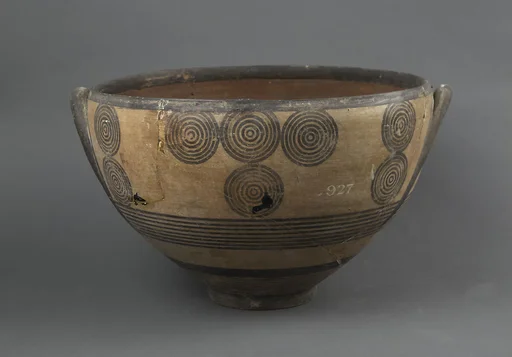
Most of the Minoan palace centers on Crete were destroyed around 1450 bce, marking the end of the Minoan influence on arts and crafts throughout the Aegean region. These sites were later occupied and rebuilt by Mycenaeans from mainland Greece, and pottery produced on Crete during this period reflects the introduction of new artistic styles and vessel shapes. While the painted decoration on pottery of Postpalatial Crete is not as fine as the earlier works produced in the palace workshops, the quality of potting and the pyrotechnology reached a high point. This pyxis is a variation of the characteristic Minoan type, which typically has a taller cylindrical body.
- Artist
- Unknown
- Date
- ca. 1400–1100 BCE
- Medium
- Terracotta
- Culture
- Minoan
- Department
- Greek and Roman Art
- Credit line
- Gift of Alexander and Helene Abraham, in honor of Carlos A. Picón, 1999