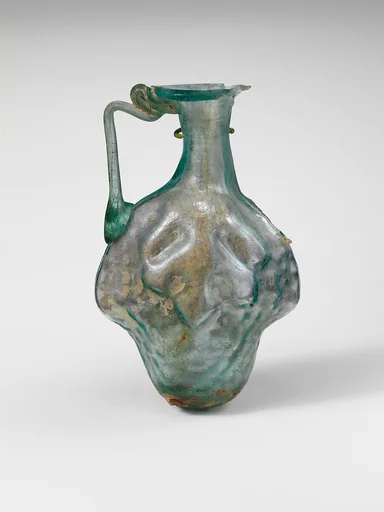
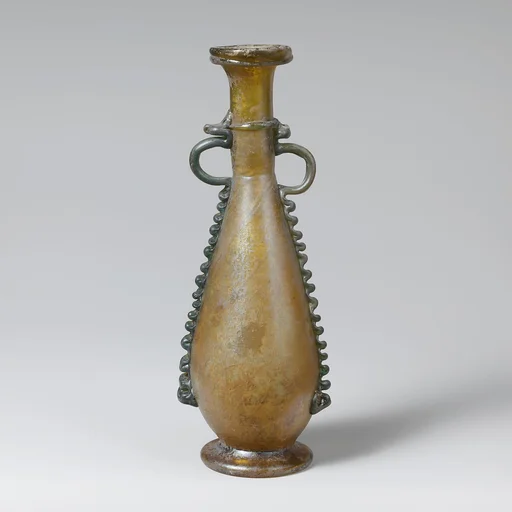
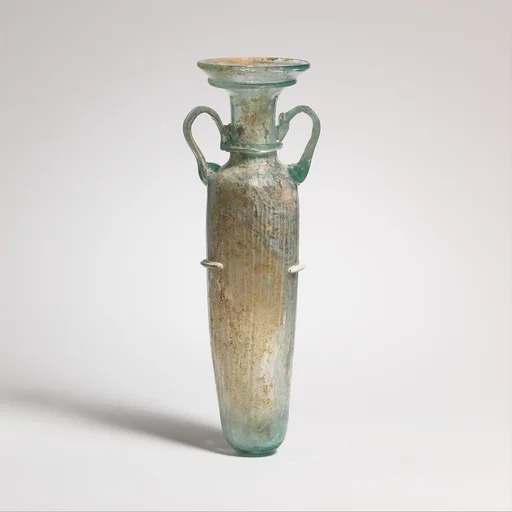
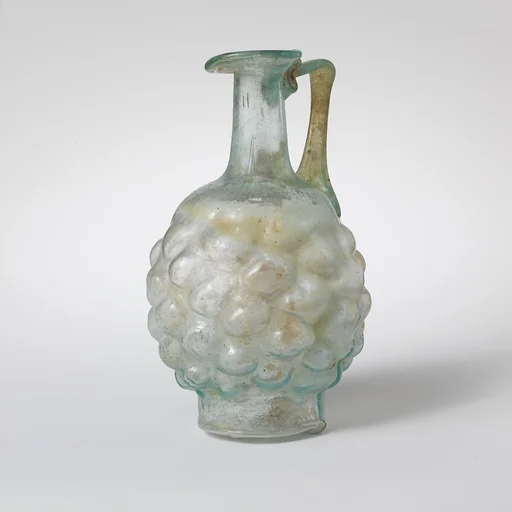
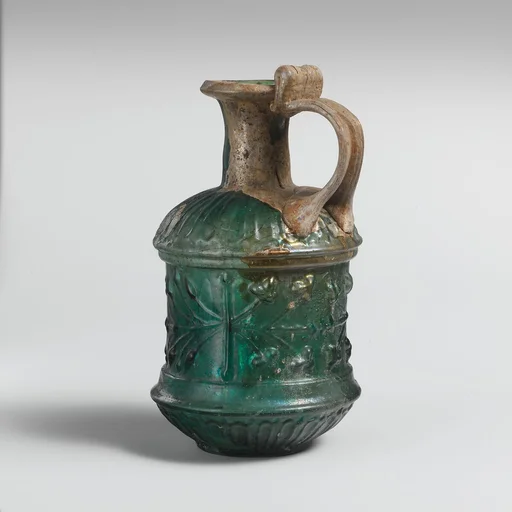
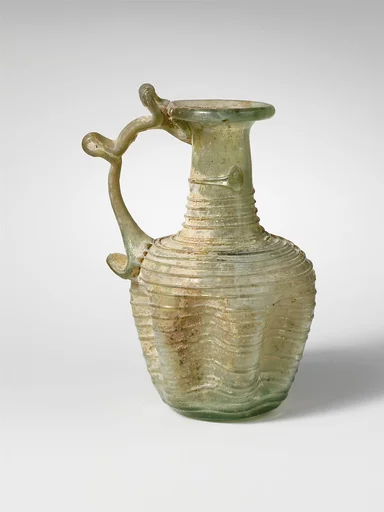
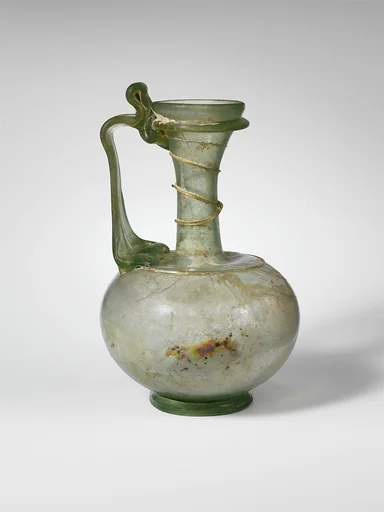
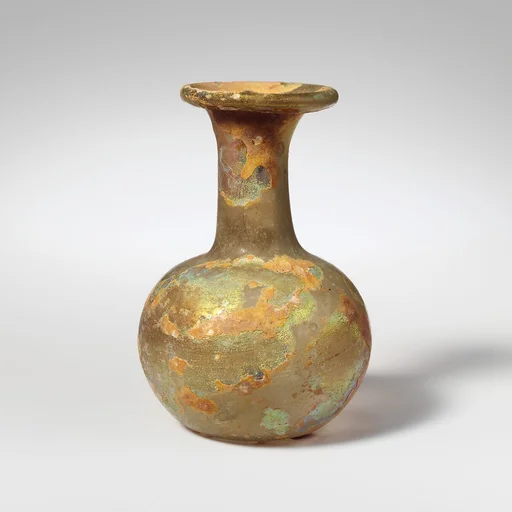
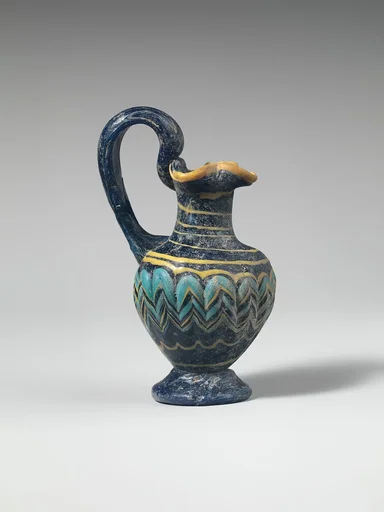
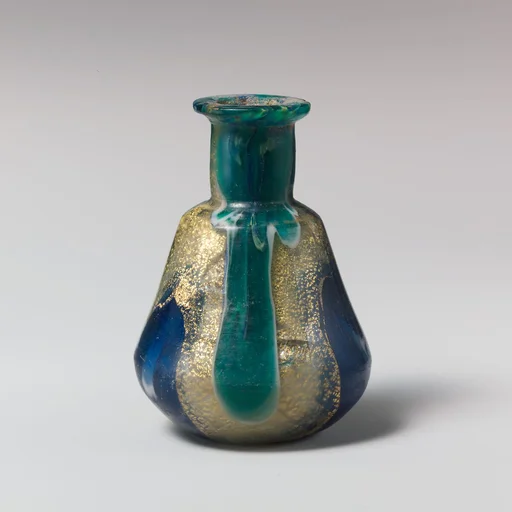
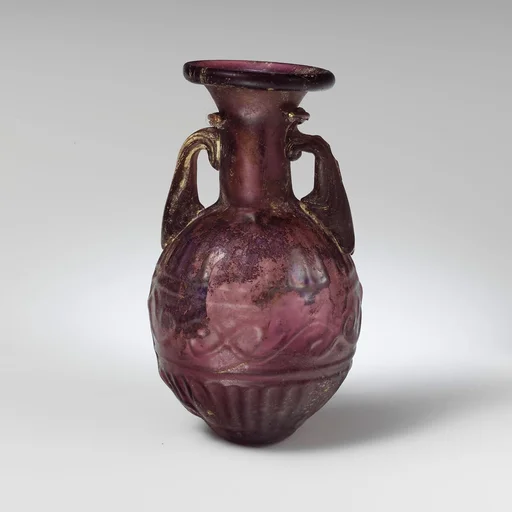
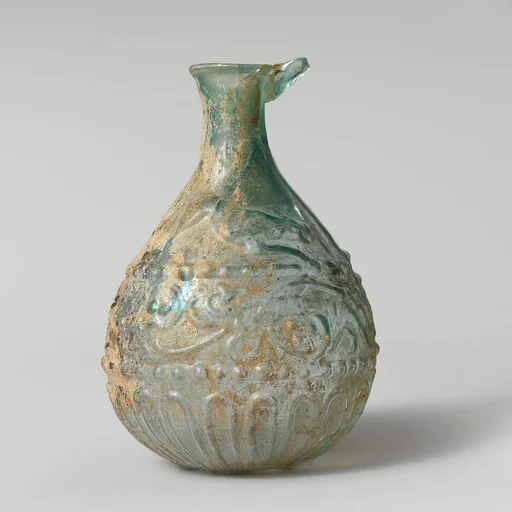
Glass bottle with handles
Unknown
4th–5th century CE · Glass · Greek and Roman Art
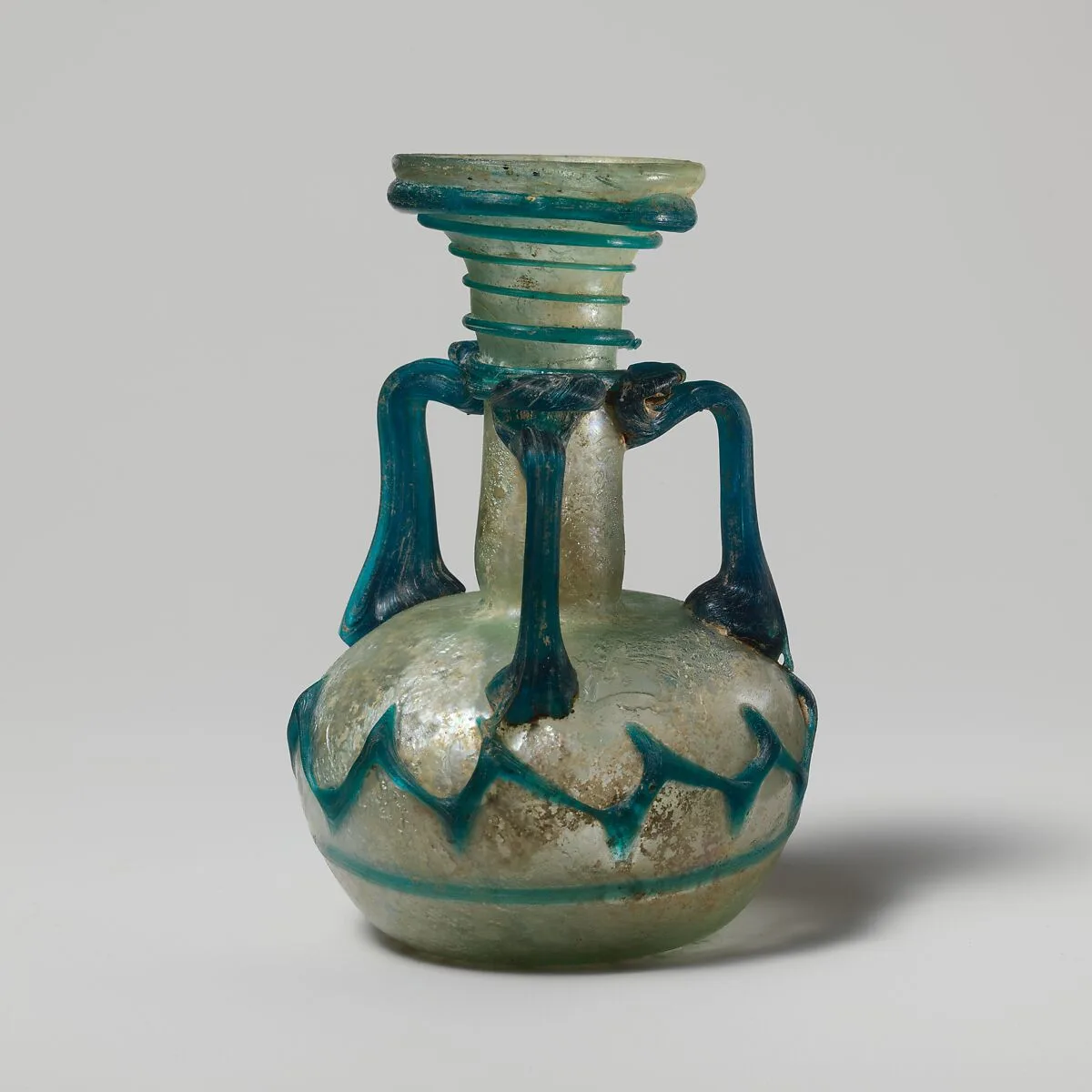
Colorless with greenish tinge; handles and trails in bright turquoise blue. Rounded, slightly inverted, rim; flaring mouth; tall cylindrical neck with horizontal tooling indent around base; slightly pushed-in, horizontal shoulder; squat bulbous body; kick in bottom with pontil scar and traces of turquoise glass from pontil; three rod handles, applied in pads to top of body, drawn vertically upwards, turned in, and pressed onto neck over bottom of trail decoration, with projecting pinched pads above. One trail applied on underside of mouth, wound round once horizontally and then down in a spiral six times, ending halfway down neck; another trail applied below one handle, drawn round body in an irregular zigzag and then wound once round horizontally below. Complete, but internal cracks in rim, around middle of neck, and on bottom, and with one chip in trail below rim; many pinprick and elongated bubbles, and with a few black impurities; dulling, pitting, and iridescent weathering. The shape of this bottle, together with the color and style of the trailed decoration, indicate that it was probably made in Roman Palestine. The economy of the region was given a great boost by the adoption of Christianity in A.D. 312, which brought imperial patronage and increased tourism to the Holy Land. As a result, the local glass industry prospered and survived long enough to pass on its traditions to the Islamic world.
- Artist
- Unknown
- Date
- 4th–5th century CE
- Medium
- Glass
- Culture
- Roman
- Department
- Greek and Roman Art
- Credit line
- Museum Accession