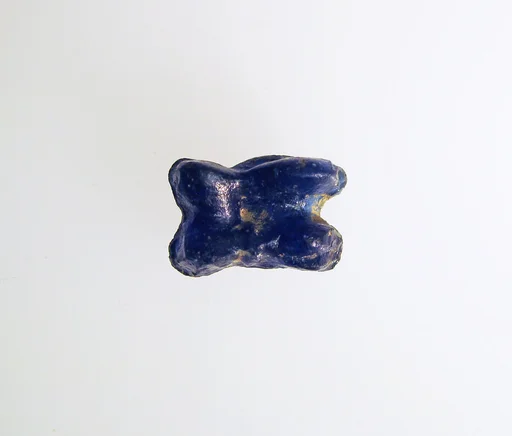
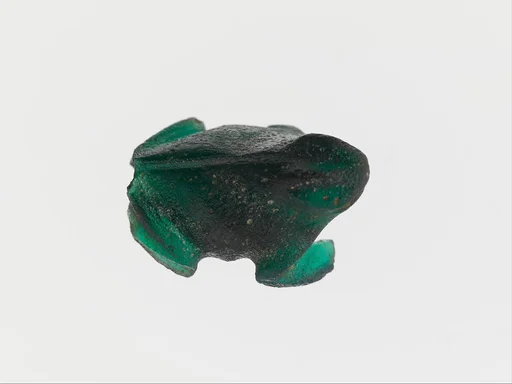
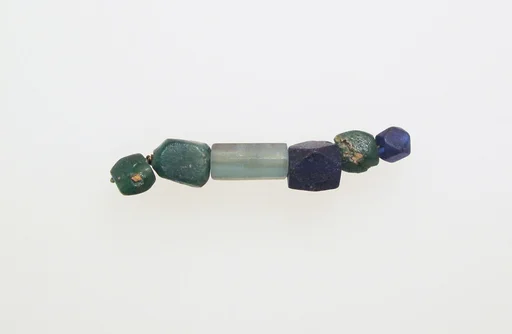
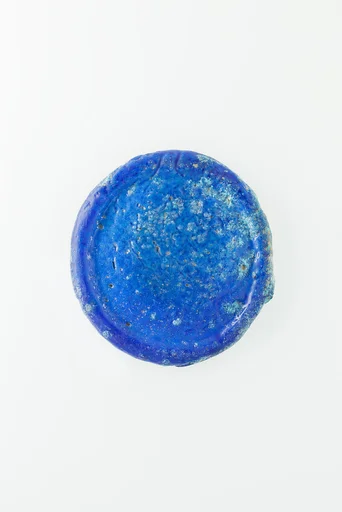
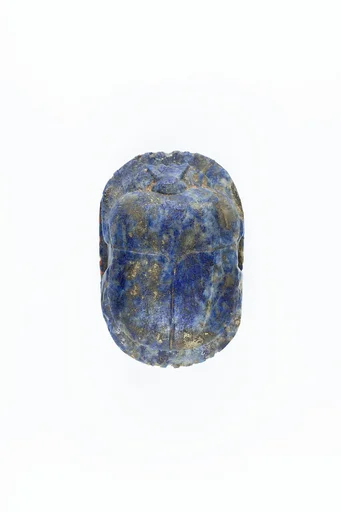
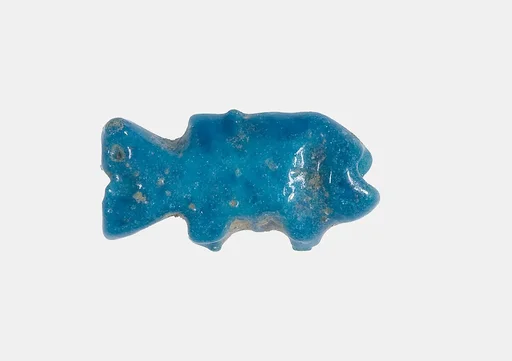
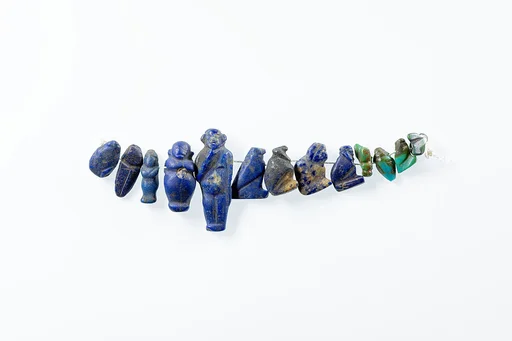
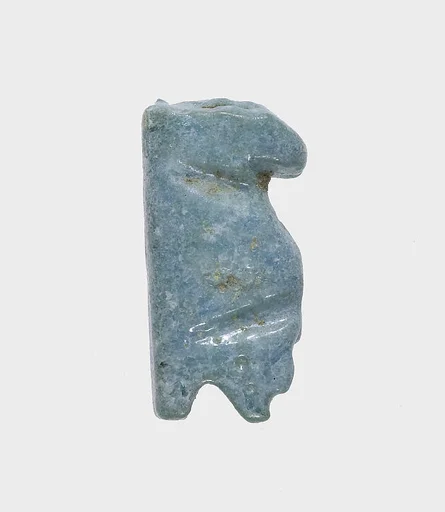
Group of eight glass astragali (knucklebones)
Unknown
3rd–2nd century BCE · Glass · Greek and Roman Art
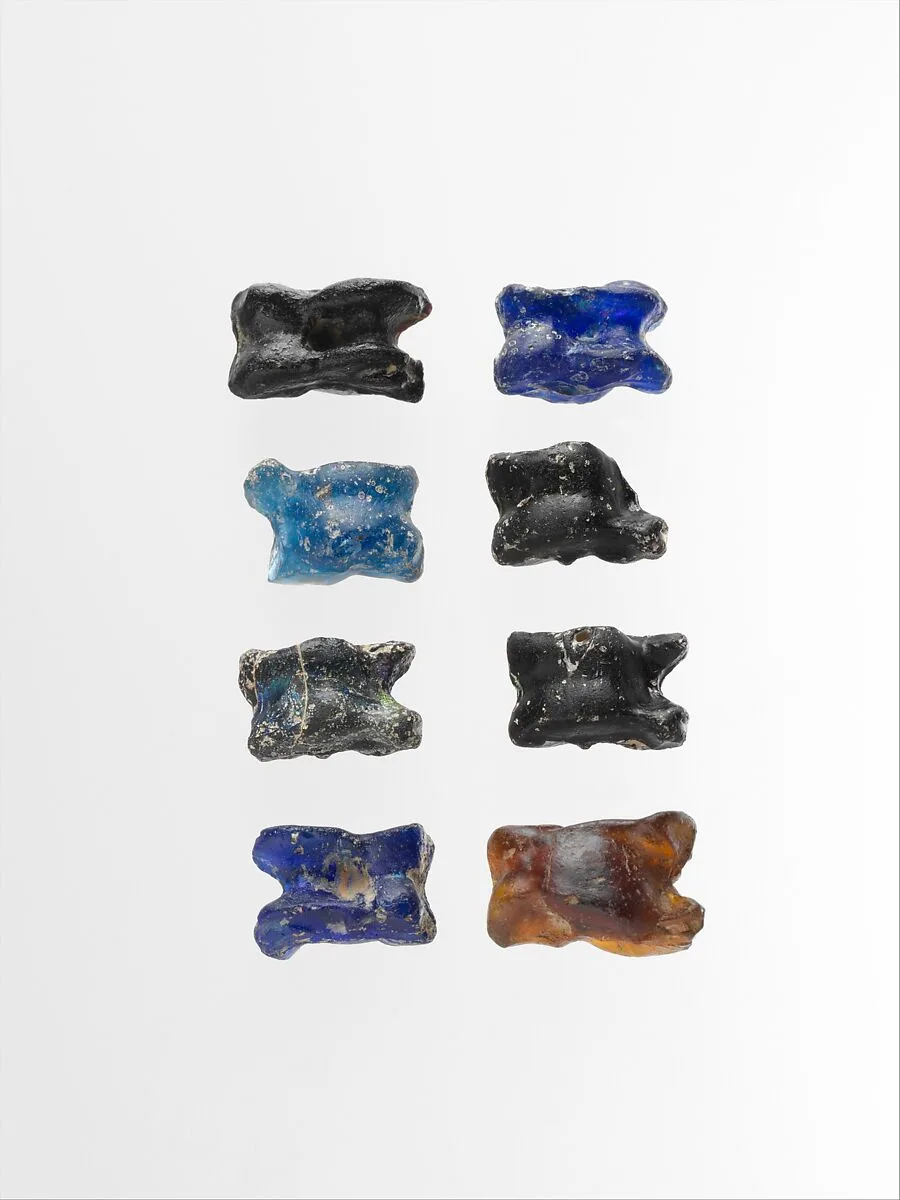
1992.266.3: Translucent deep purple. Shaped like the knucklebone of a sheep or goat. Solid with continuous mold seam along sides and ends. Chipped and broken at one end; one deep area of pitting, dulling, and faint weathering. 1992.266.4: Translucent cobalt blue Shaped like the knucklebone of a sheep or goat. Solid with continuous mold seam along sides and ends. Intact; dulling, slight pitting, patches of black weathering, and iridescence. 1992.266.5: Translucent blue Shaped like the knucklebone of a sheep or goat. Solid with continuous mold seam along sides and ends. Broken off at one end; pinprick bubbles; dulling, slight pitting, and iridescent weathering. 1992.266.6: Translucent deep purple. Shaped like the knucklebone of a sheep or goat. Solid with continuous mold seam along sides and ends. Broken off at one end; dulling, black weathering, and iridescence. 1992.266.7: Translucent deep purple. Shaped like the knucklebone of a sheep or goat. Solid with continuous mold seam along sides and ends. Intact; pitting, black weathering, and iridescence. 1992.266.8: Translucent deep purple. Shaped like the knucklebone of a sheep or goat. Solid with continuous mold seam along sides and ends. Intact; pitting, black weathering, and iridescence. 1992.266.9: Translucent cobalt blue. Shaped like the knucklebone of a sheep or goat. Solid with continuous mold seam along sides and ends. Intact; pinprick bubbles; slight pitting, black weathering, and iridescence. 1992.266.10: Translucent amber brown. Shaped like the knucklebone of a sheep or goat. Solid with continuous mold seam along sides and ends. Intact; pinprick bubbles; dulling, slight pitting, and faint iridescent weathering. Astragali were gaming pieces used in antiquity like dice or jacks, thrown in the air and caught on the back of the hand. Most commonly, they were made from the anklebones of sheep and goats (hence the name knucklebones), but examples made of bronze, stone, terracotta, as well as glass are also known.
- Artist
- Unknown
- Date
- 3rd–2nd century BCE
- Medium
- Glass
- Culture
- Greek
- Department
- Greek and Roman Art
- Credit line
- Gift of Mr. and Mrs. Jonathan P. Rosen, 1992