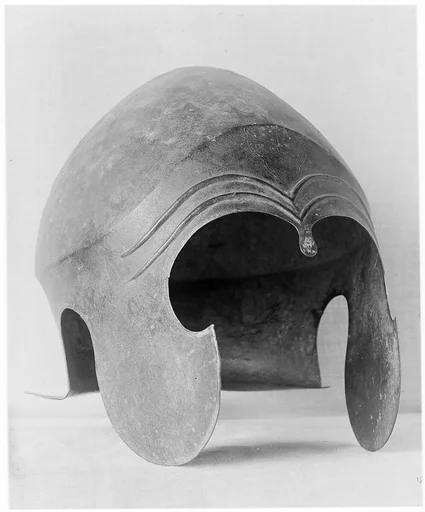
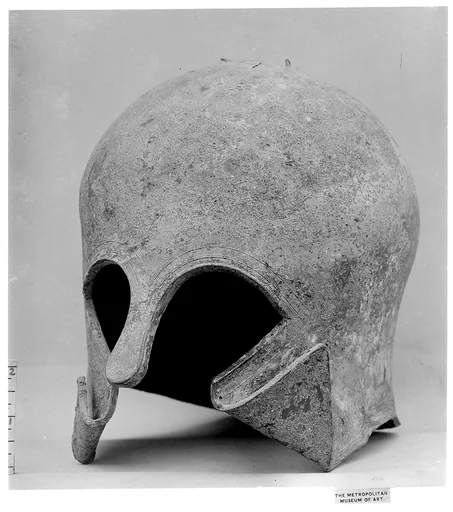
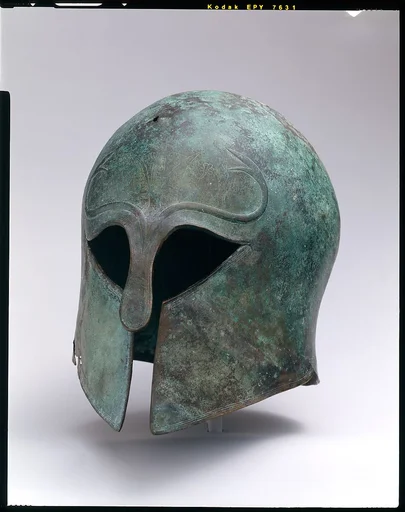
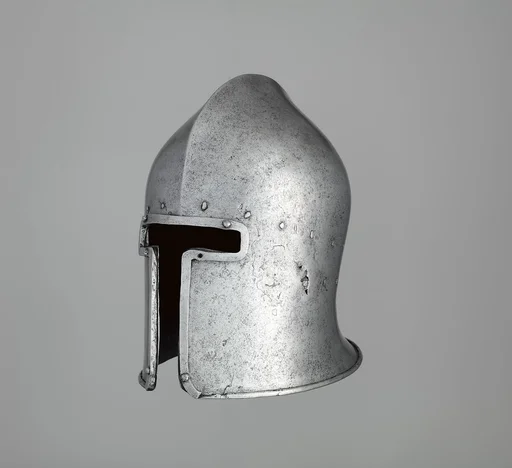
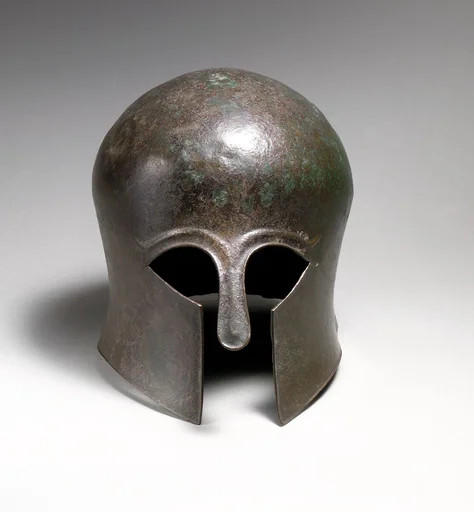
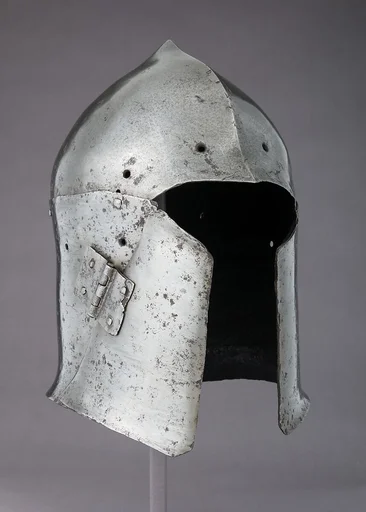
Bronze helmet of Corinthian type
Unknown
late 6th century BCE · Bronze · Greek and Roman Art
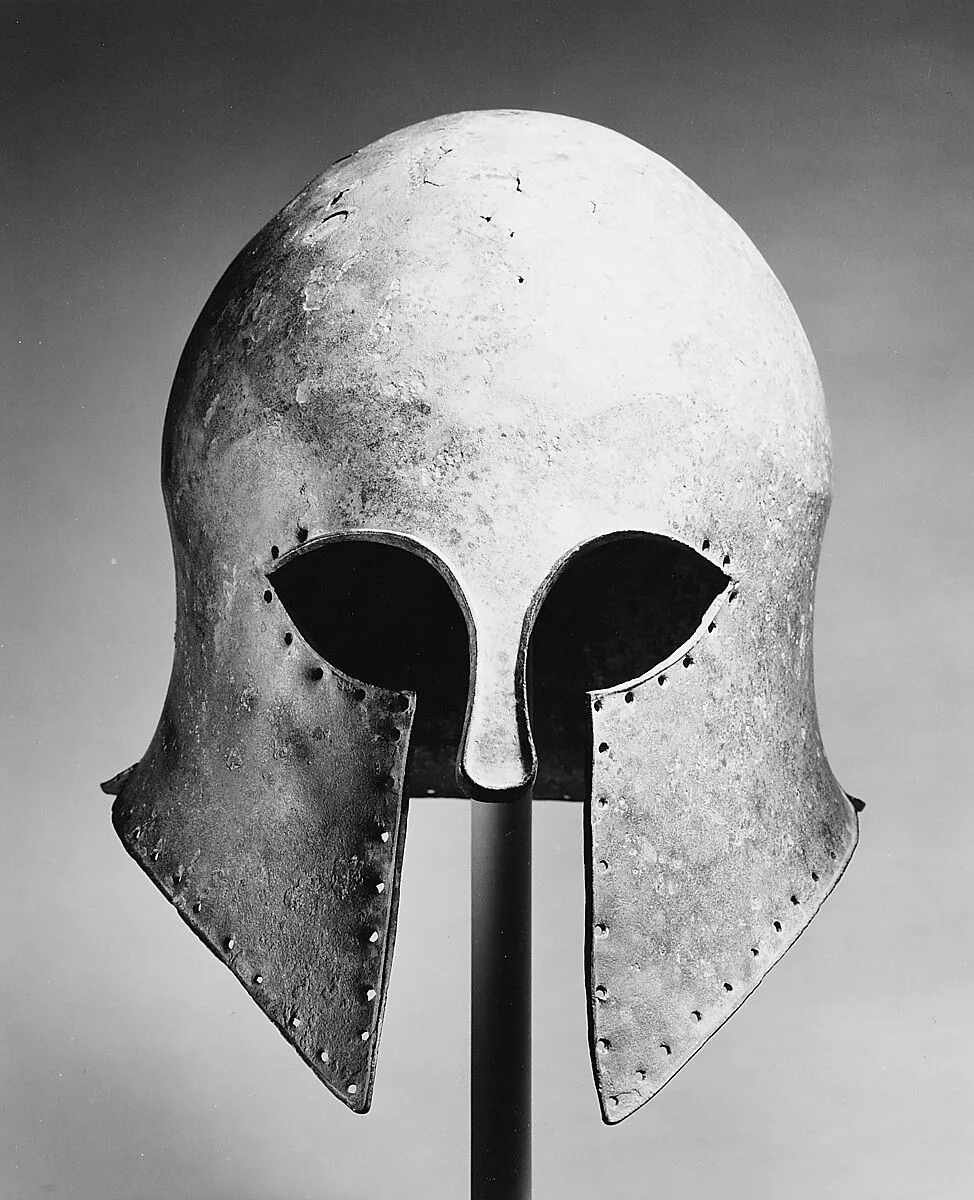
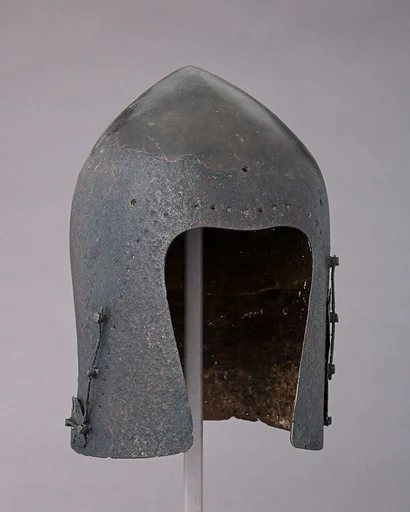
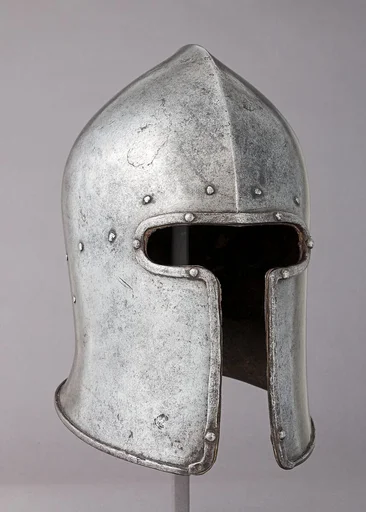
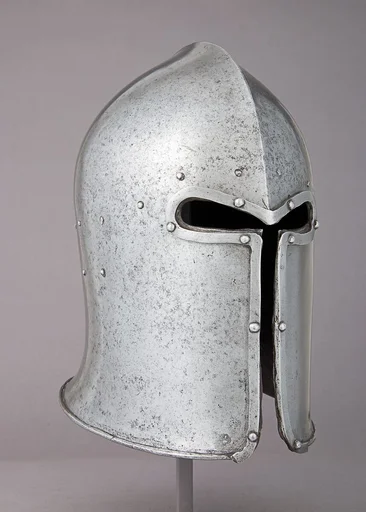
The most characteristic Greek helmet is that of Corinthian type. It is distinguished by the cutouts for the eyes, the narrow nose piece, and the small opening for the lips and chin. The holes around the edges are for the attachment of a lining. It began to be used about 700 B.C., and there is significant evidence to substantiate its origin in Corinth. This type of helmet evolved in shape and was executed with great artistry.
- Artist
- Unknown
- Date
- late 6th century BCE
- Medium
- Bronze
- Culture
- Greek
- Department
- Greek and Roman Art
- Credit line
- Gift of Estée Lauder Inc., 1992