Mosaic floor panel
Unknown
2nd century CE · Stone, tile, and glass · Greek and Roman Art
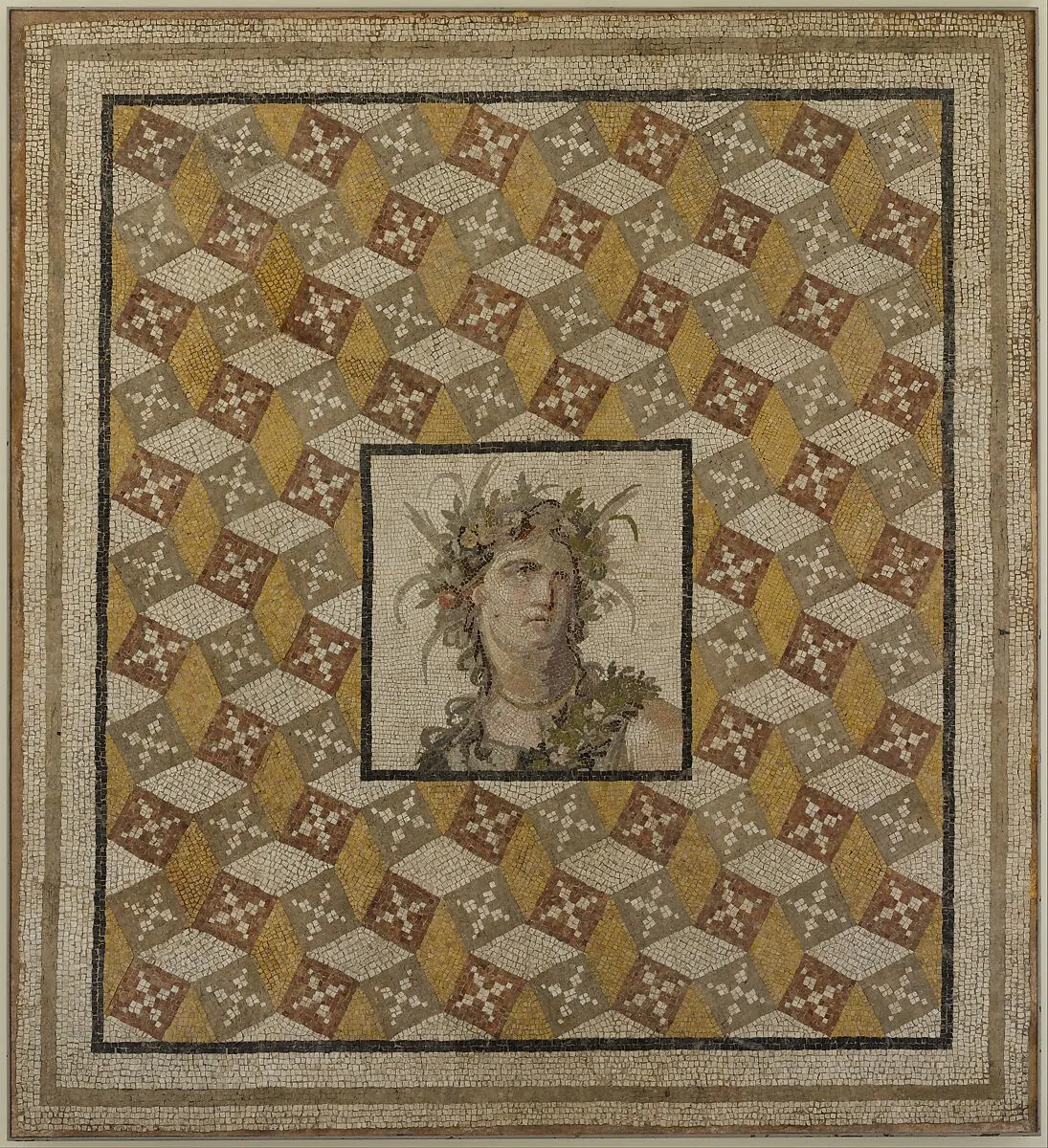
The rectangular panel represents the entire decorated area of a floor and was found together with another mosaic (now in the Baltimore Museum of Art) in an olive grove at Daphne-Harbiye in 1937. In Roman times, Daphne was a popular holiday resort, used by the wealthy citizens and residents of Antioch as a place of rest and refuge from the heat and noise of the city. American excavations at Daphne in the late 1930s uncovered the remains of several well-appointed houses and villas, including the one that contained this mosaic. At its center is a panel (emblema) with the bust of a woman, decked out with a wreath of flowers around her head and a floral garland over her left shoulder. Traditionally identified as Spring, the figure is probably the representation of a more generic personification of abundance and good living, well suited to the luxurious atmosphere created at Daphne by its rich patrons.
- Artist
- Unknown
- Date
- 2nd century CE
- Medium
- Stone, tile, and glass
- Culture
- Roman
- Department
- Greek and Roman Art
- Credit line
- Purchase, Joseph Pulitzer Bequest, 1938