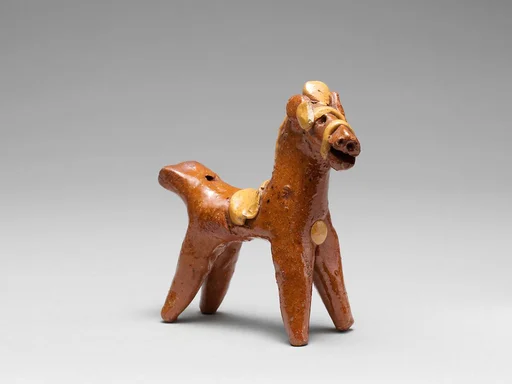
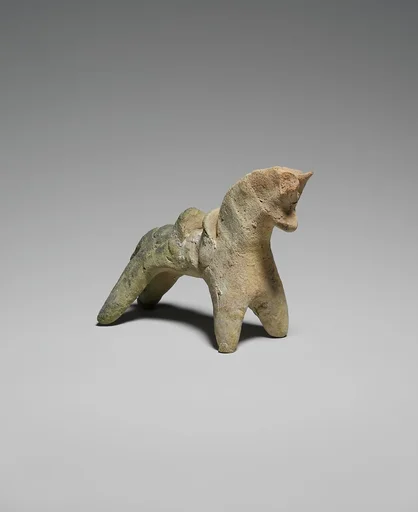
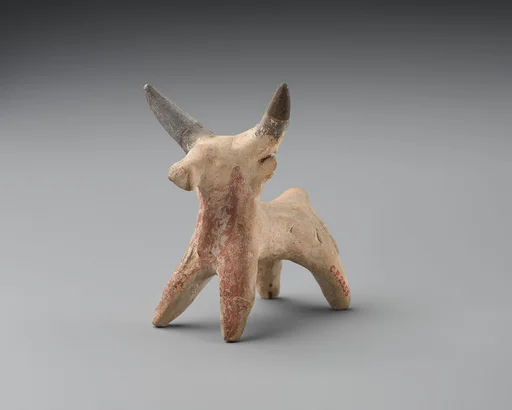
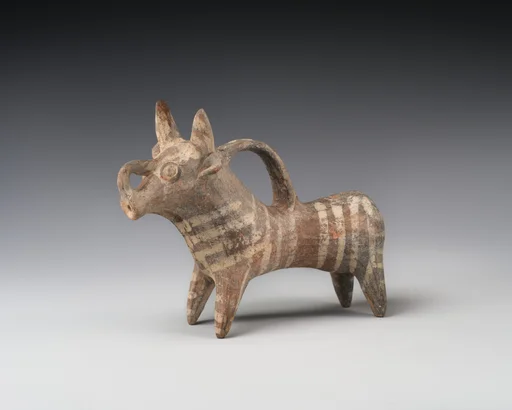
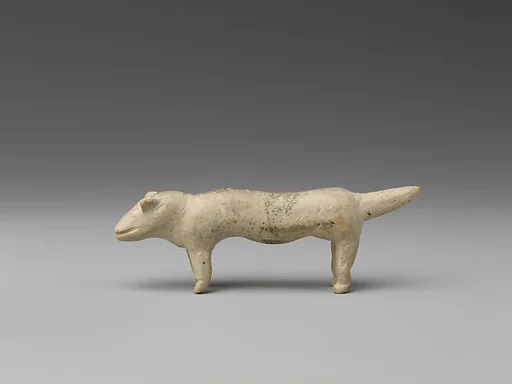
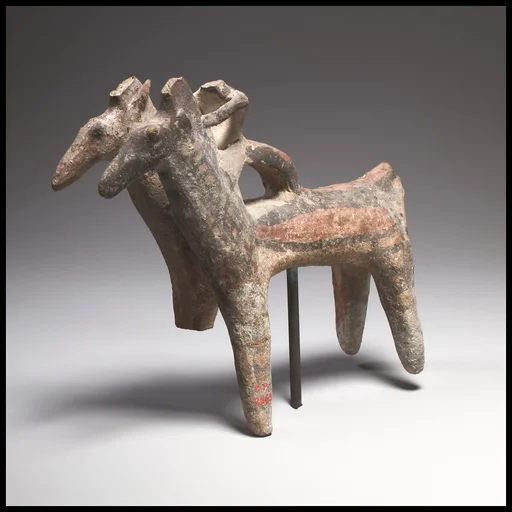
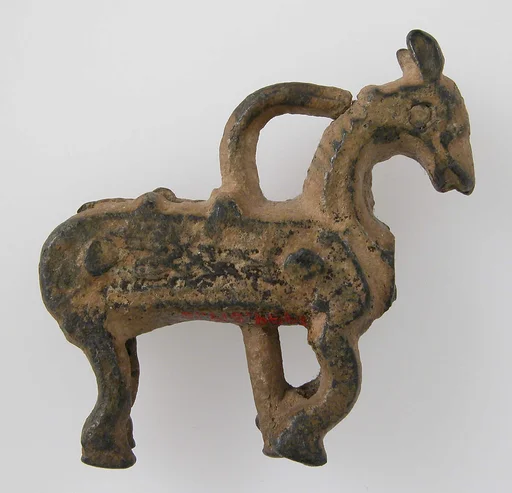
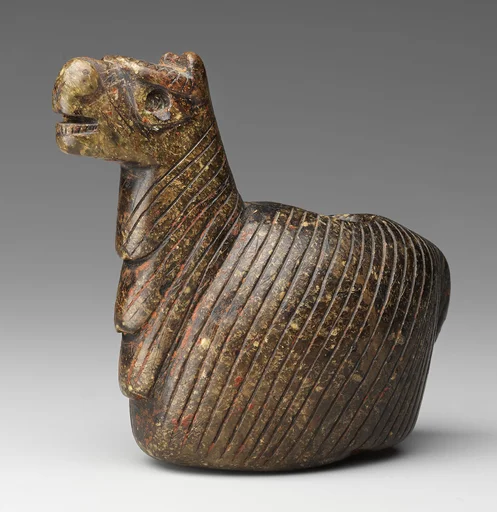
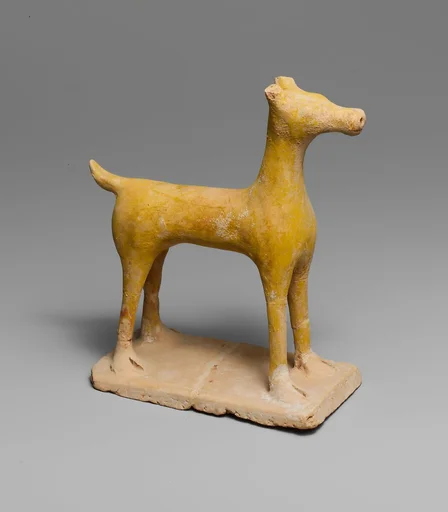
Terracotta bull
Unknown
ca. 1400–1300 BCE · Terracotta · Greek and Roman Art
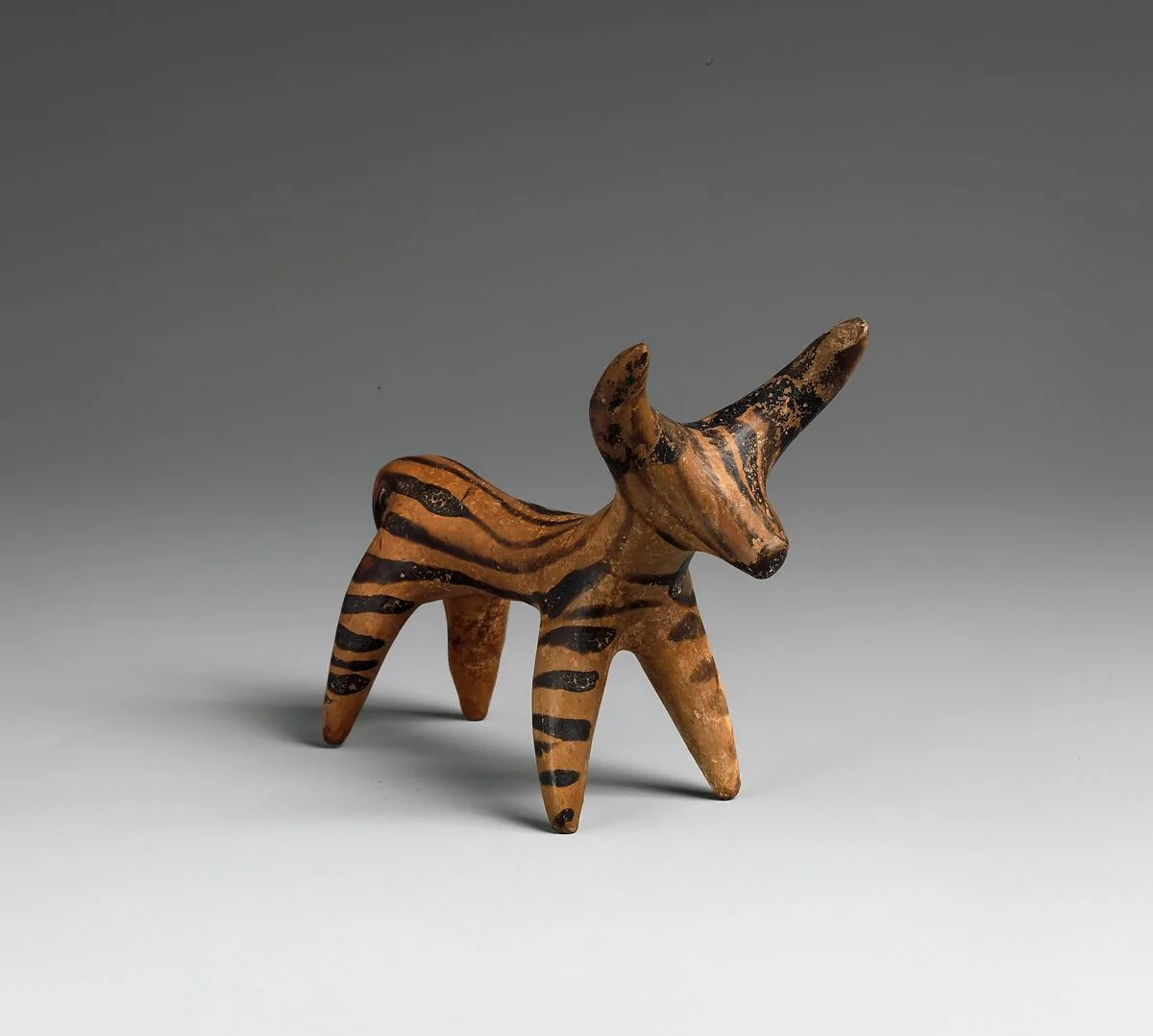
Bulls were especially prominent among the animals represented in Mycenaean terracotta sculpture. Formidable beasts that were also a valuable source of meat, they embodied strength, fertility, and divine power. They were prized for their use in agriculture and played an important role in Mycenaean religion. Bull statuettes frequently served as votive offerings to a deity, reflecting a desire to communicate with the divine through a prestigious, if symbolic, gift.
- Artist
- Unknown
- Date
- ca. 1400–1300 BCE
- Medium
- Terracotta
- Culture
- Helladic, Mycenaean
- Department
- Greek and Roman Art
- Credit line
- Fletcher Fund, 1936