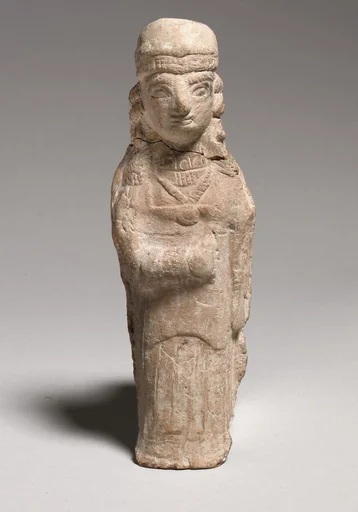
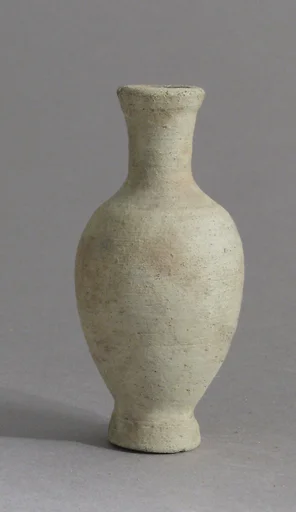
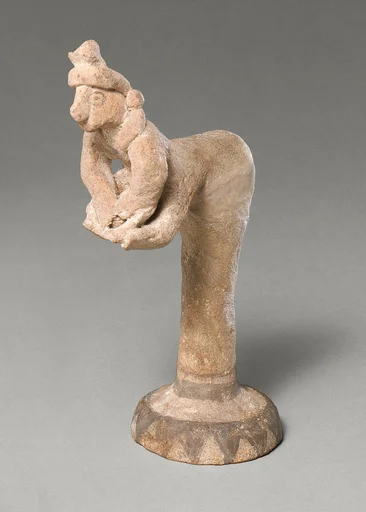
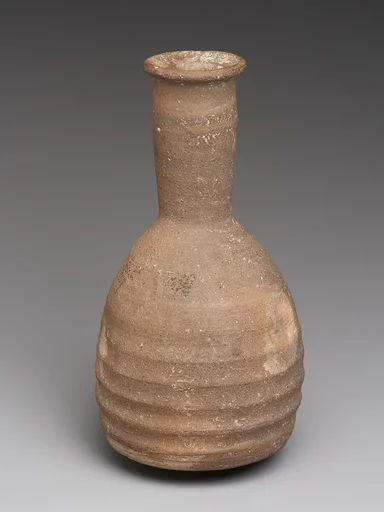
Terracotta female figure
Unknown
ca. 1400–1300 BCE · Terracotta · Greek and Roman Art
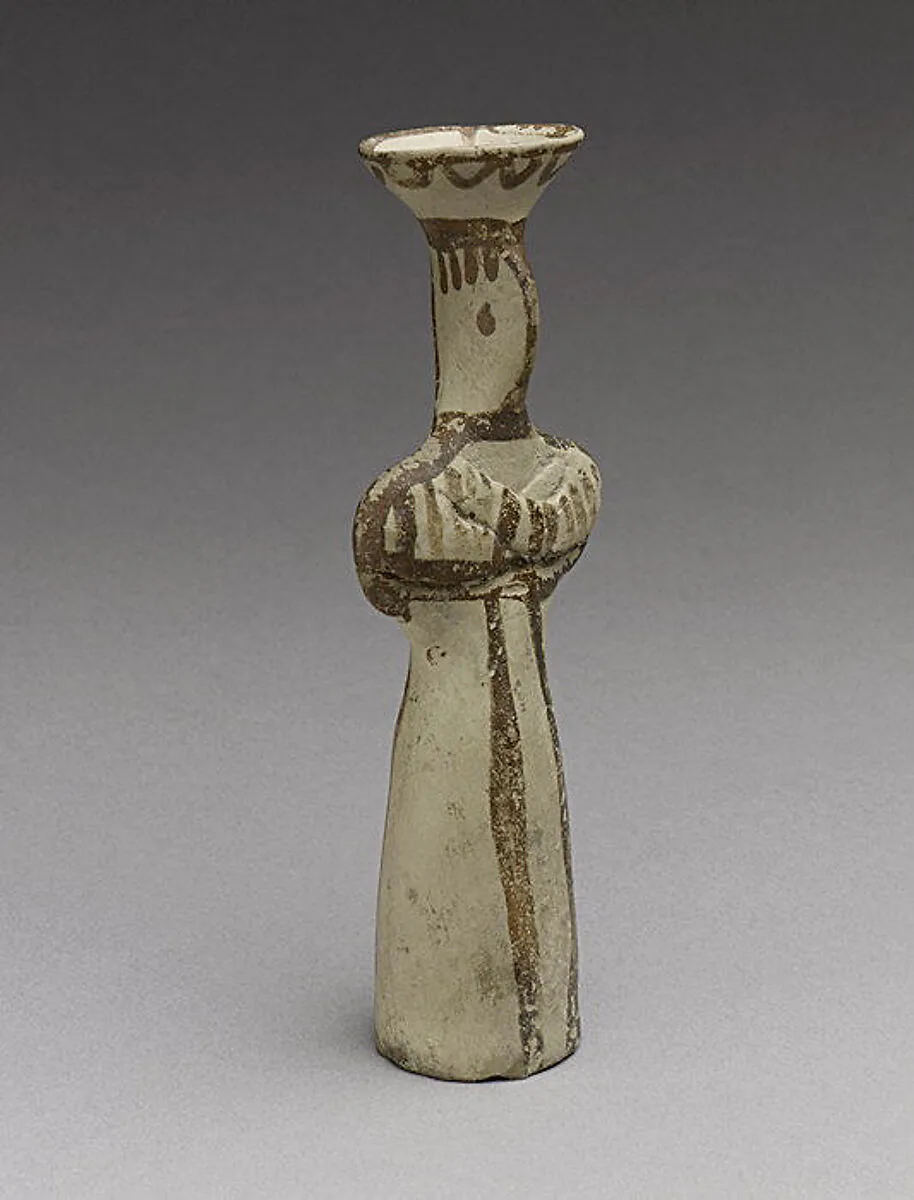
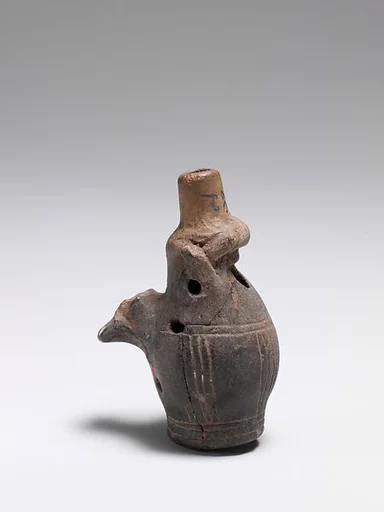
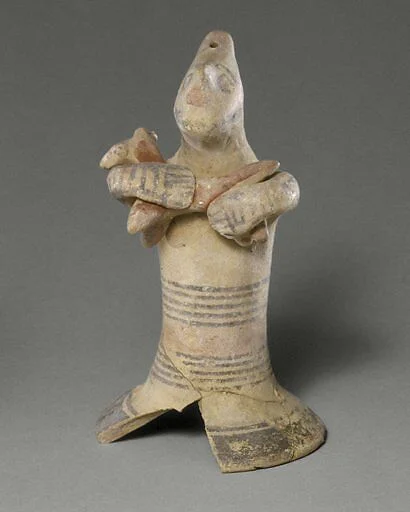
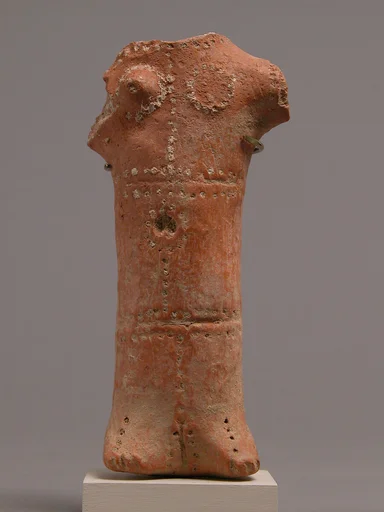
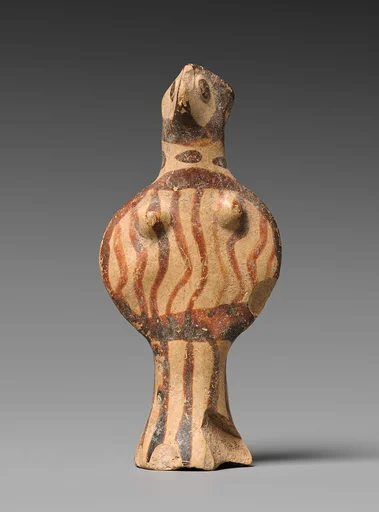
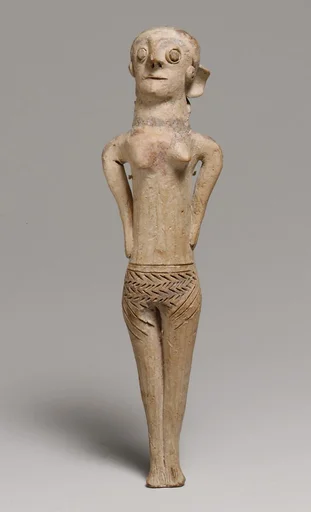
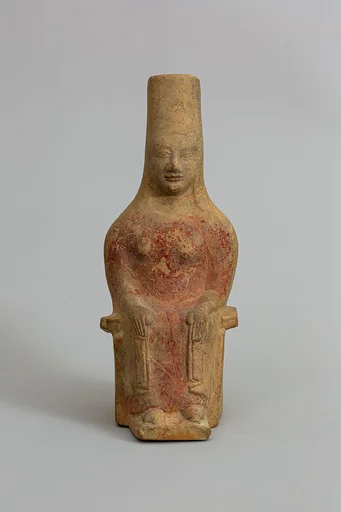
This tau-type (named for its resemblance to the shape of the Greek letter tau) figurine has the conventional hollow, columnar stem with the head rendered somewhat larger in proportion to the body. Characteristically, the figure is high waisted with arms, rendered as singly applied strips of clay, folded neatly over the breasts. She wears a long garment, simply decorated with two vertical lines down the front and back. The figurine's coiffure is particularly distinct, with a plait that is rendered over the top of the headdress and down the back of the neck. A fringe of hair peeks out from under the edge of an elaborately festooned polos. Most of the clay human figures made on the Greek mainland in the fourteenth and thirteenth centuries bce are female and stand in conventional poses with their arms raised, crossed, or held at the sides. Produced in great numbers, such miniature statuettes have been discovered in graves, sanctuaries, and domestic shrines. In general, scholars associate them with the cult of a female deity, and believe they represent either goddesses or worshippers.
- Artist
- Unknown
- Date
- ca. 1400–1300 BCE
- Medium
- Terracotta
- Culture
- Helladic, Mycenaean
- Department
- Greek and Roman Art
- Credit line
- Fletcher Fund, 1935