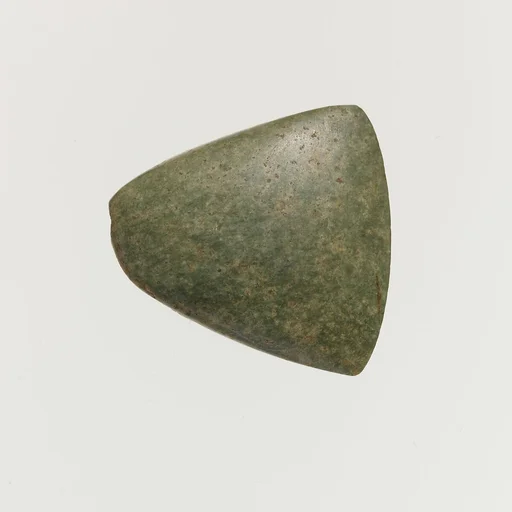
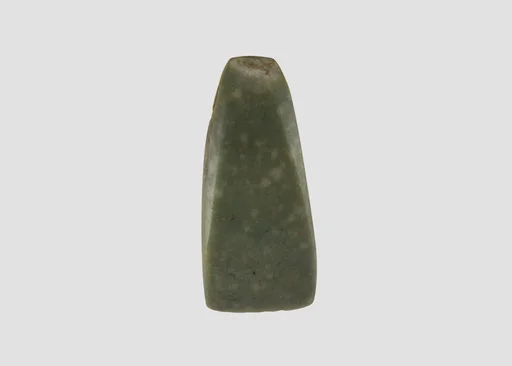
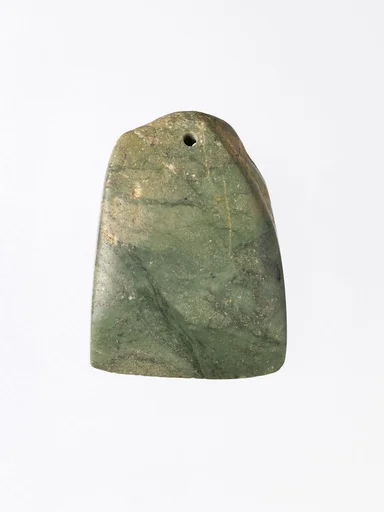
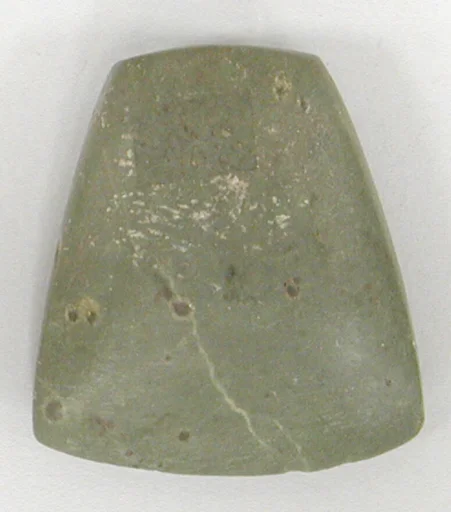
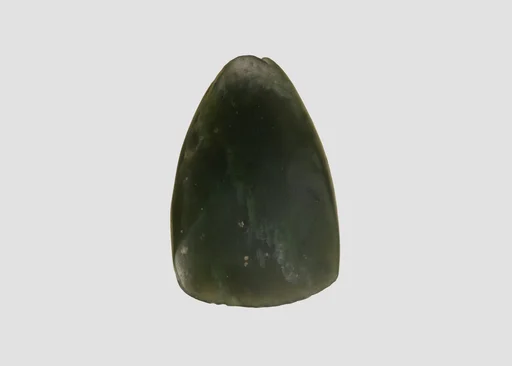
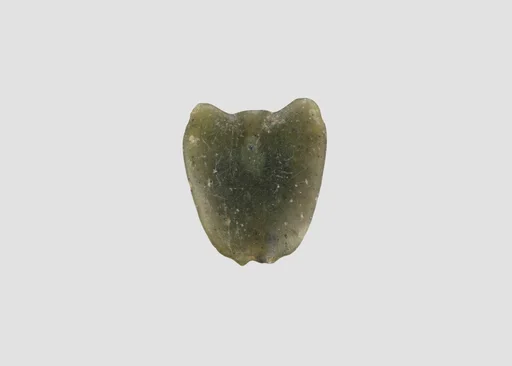
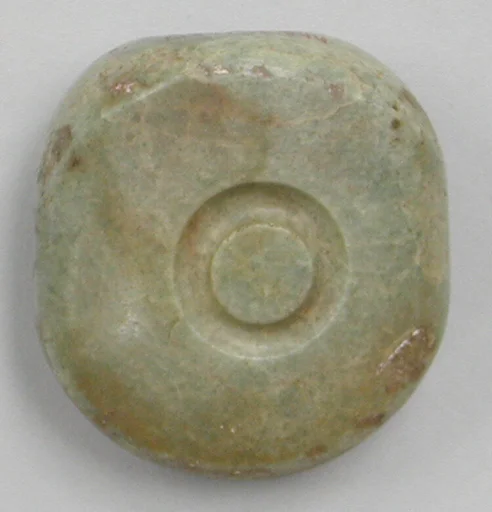
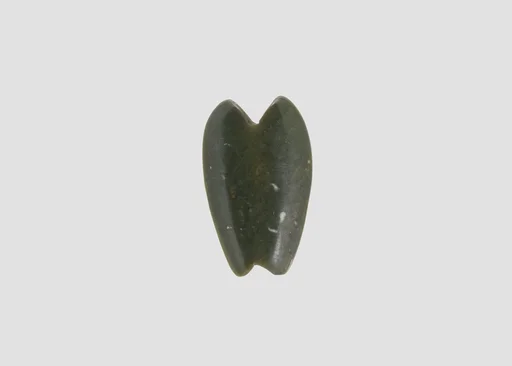
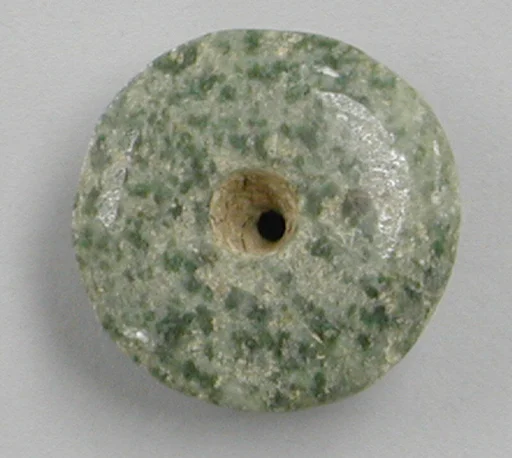
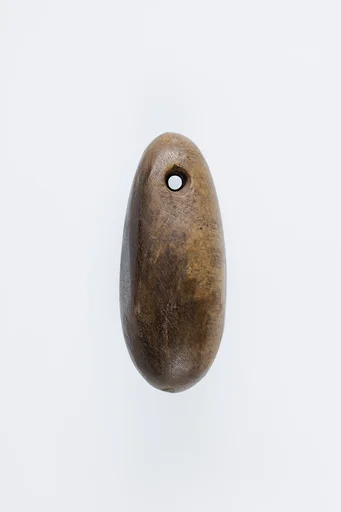
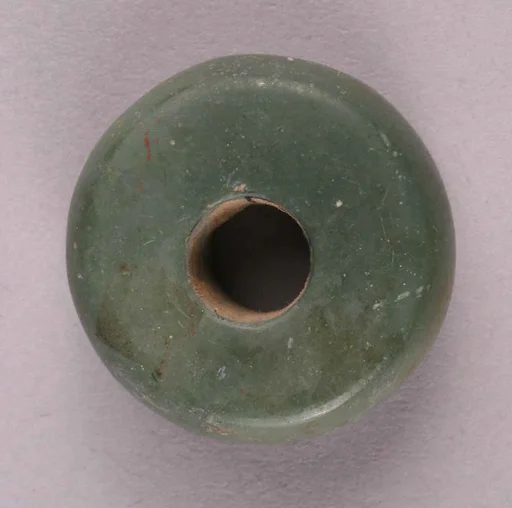
Small jadeitite axe
Unknown
5th–4th millennium BCE · Steatite, green · Greek and Roman Art
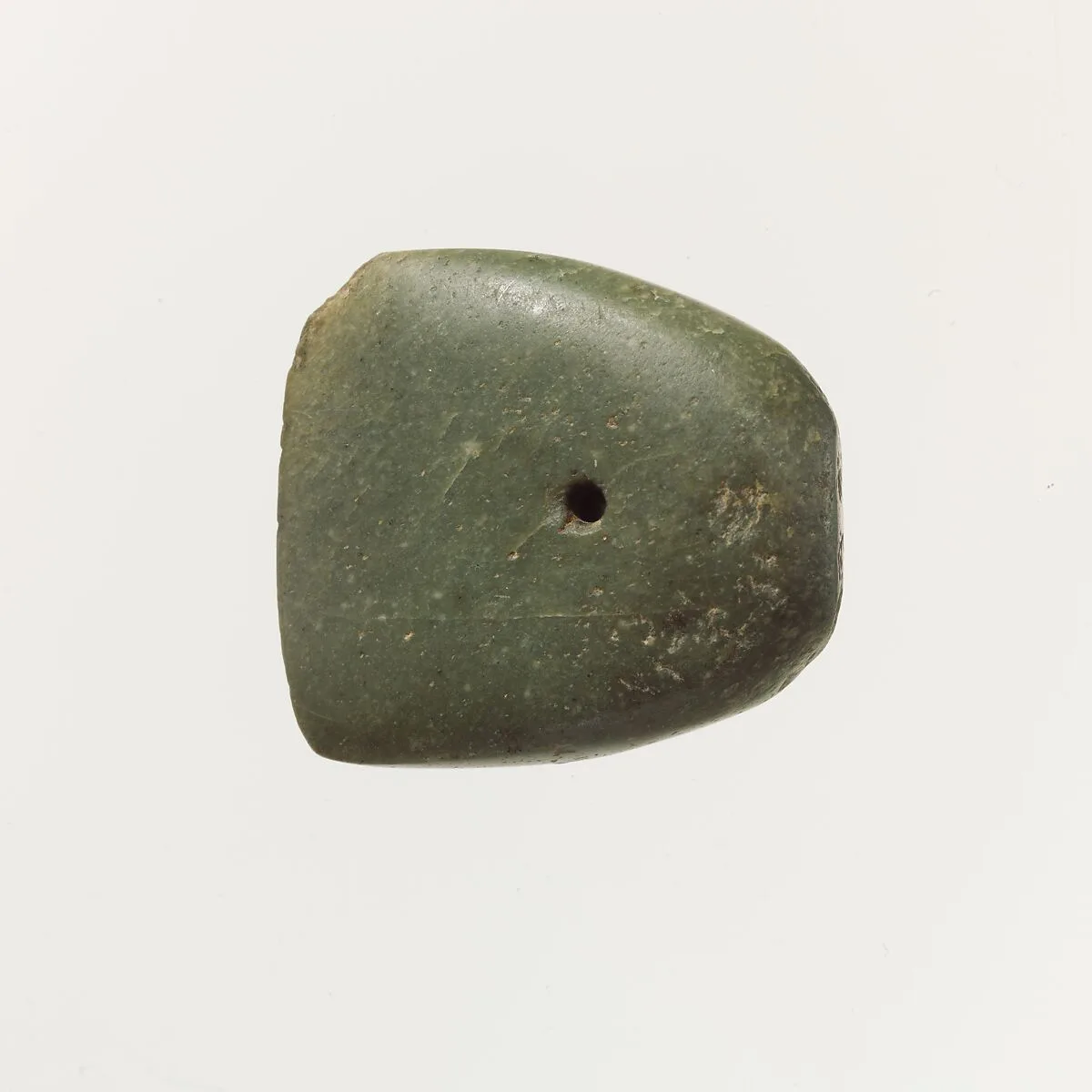
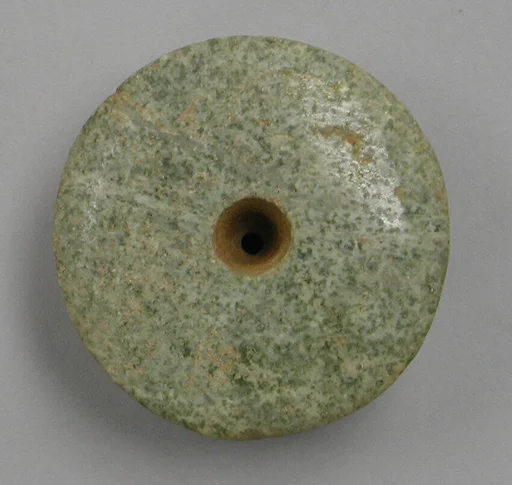
The circular hole is a later, possibly Bronze Age or ancient Greek, addition. This axe may have served as a votive after its initial utilitarian use in the Stone Age. Such axes were known as thunderstones in ancient Greek times and were believed to be physical manifestations left by the lightning bolts of Zeus, the thunder god.
- Artist
- Unknown
- Date
- 5th–4th millennium BCE
- Medium
- Steatite, green
- Culture
- Cretan
- Department
- Greek and Roman Art
- Credit line
- Bequest of Richard B. Seager, 1926