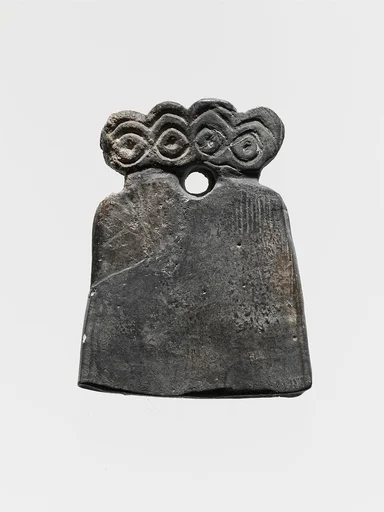
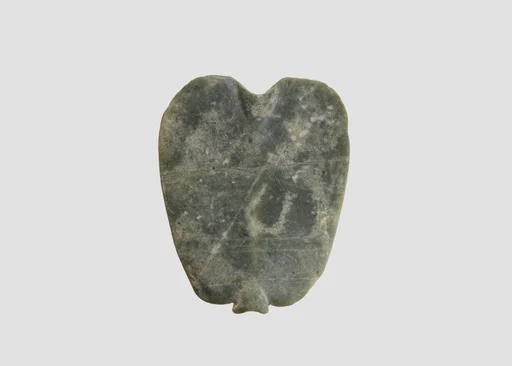
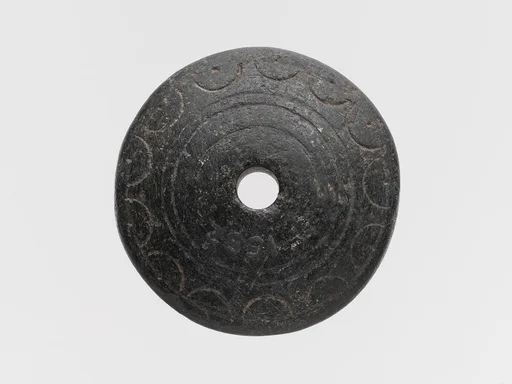
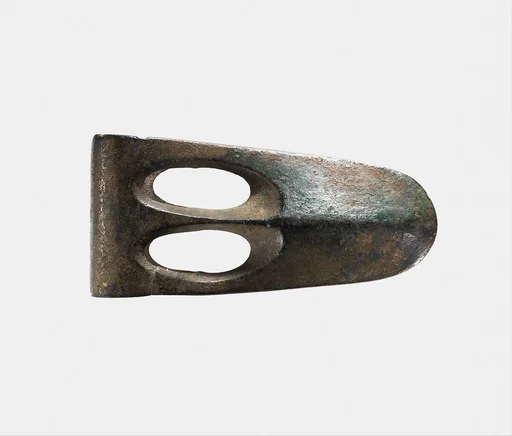
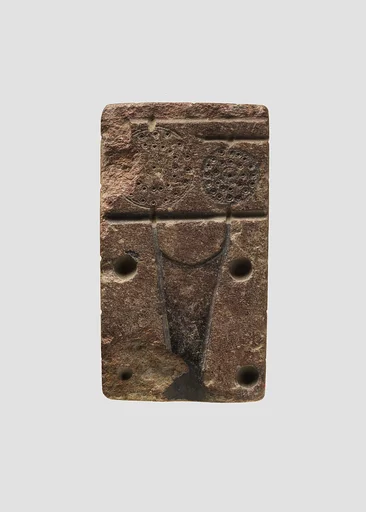
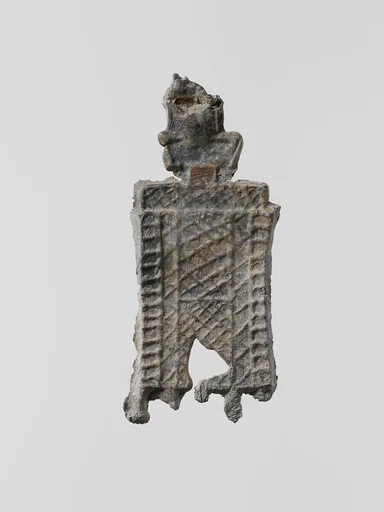
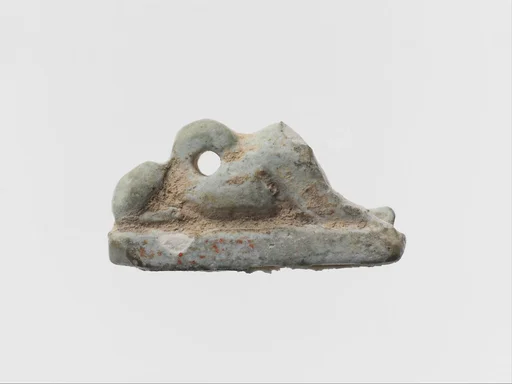
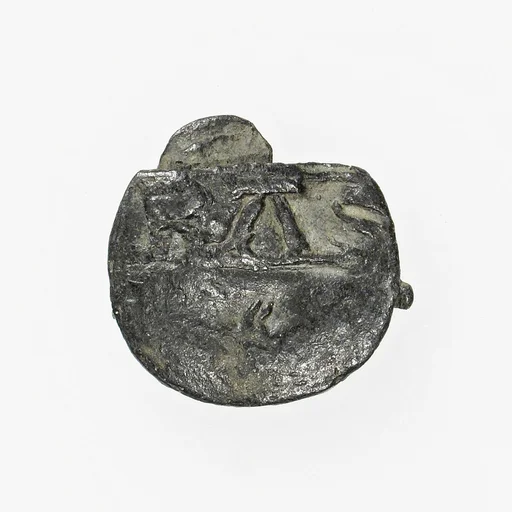
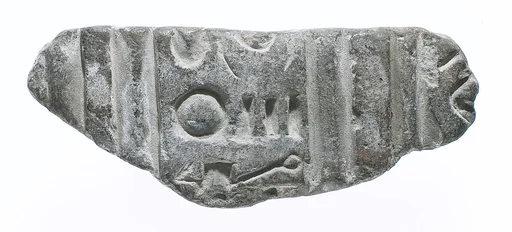
Serpentine mold for casting bead pendants
Unknown
ca. 1600–1400 BCE · Serpentine · Greek and Roman Art
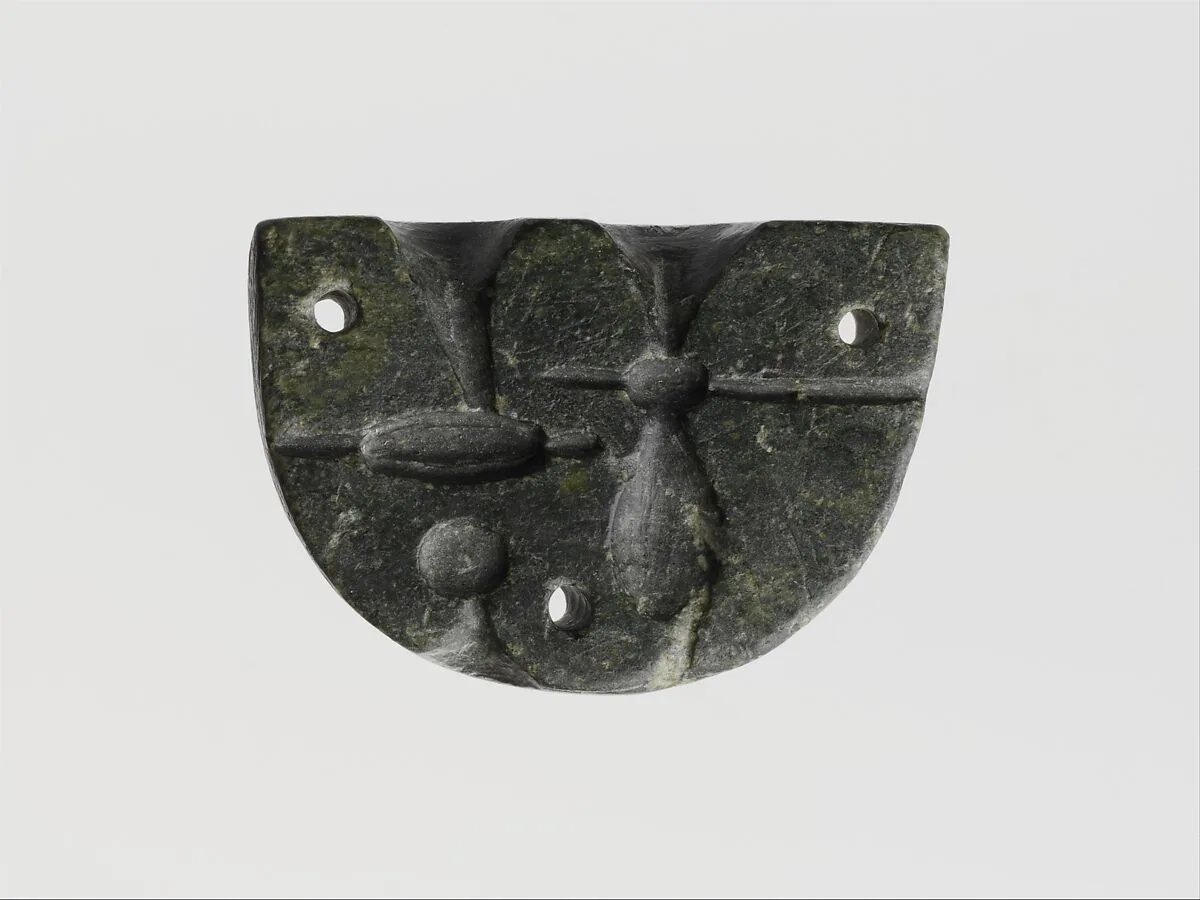
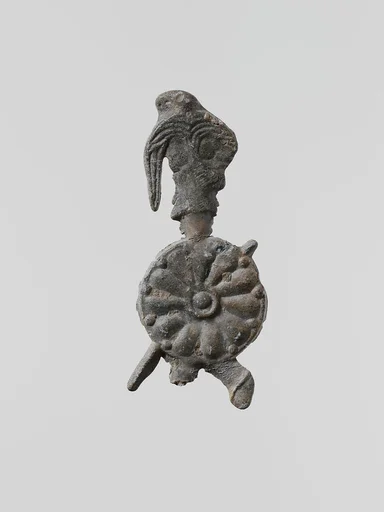
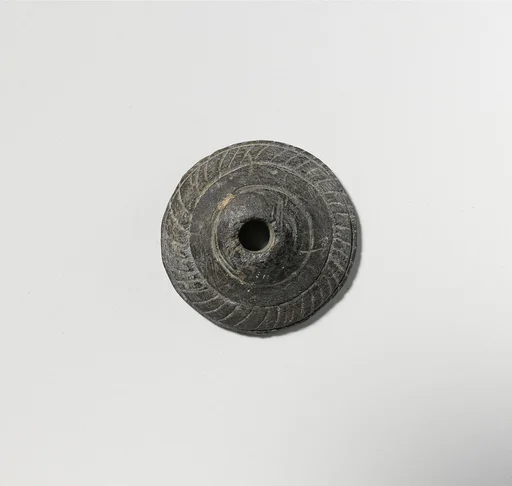
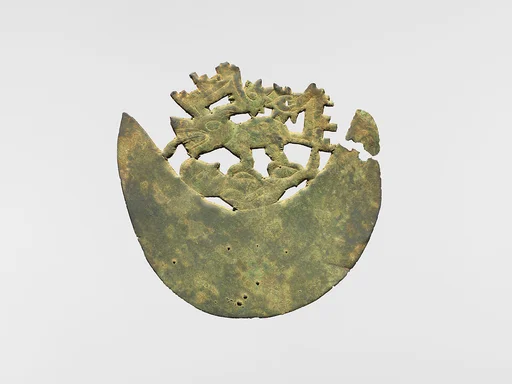
This serpentine carved object is half of a two-part mold that was used to cast gold beads. The two parts were attached by the three holes, visible at the top and bottom. The funnel-shaped cuttings along the straight edge are the sprues through which the liquid metal was poured into the mold. Minoan goldsmiths used sophisticated techniques to create elaborate jewelry, headdresses, and ornaments for hair and clothing, often in the form of naturalistic motifs such as plants, flowers, and marine life. The objects in the collection represent different gold-working methods. Many of the ornaments were cut from gold hammered into thin sheets, some decorated with patterns raised in relief from the back. Gold was also melted and poured into molds. Imported primarily from Egypt, gold was extremely rare. Only the very wealthy could afford such adornments.
- Artist
- Unknown
- Date
- ca. 1600–1400 BCE
- Medium
- Serpentine
- Culture
- Minoan
- Department
- Greek and Roman Art
- Credit line
- Bequest of Richard B. Seager, 1926