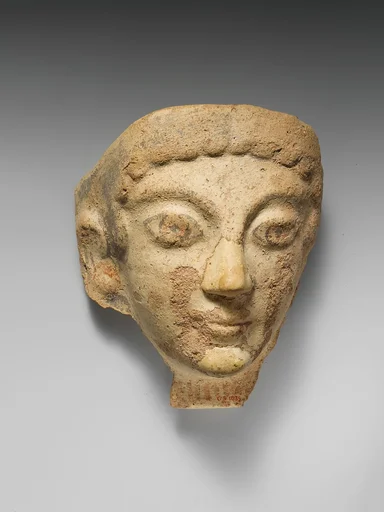
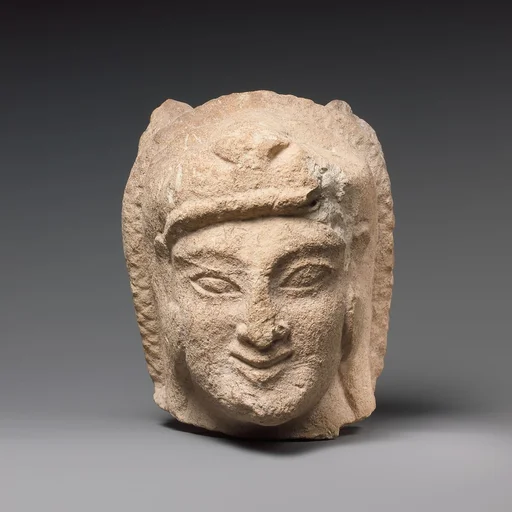
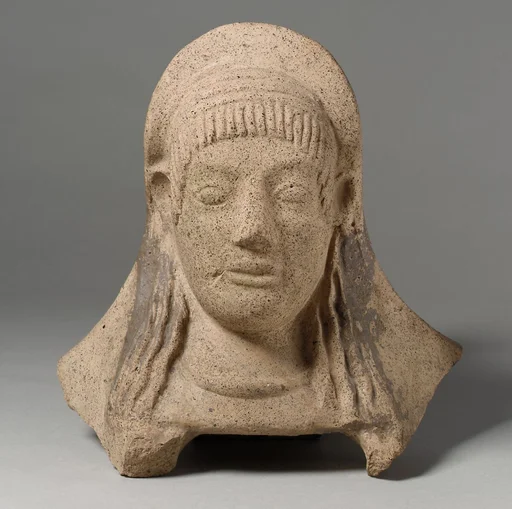
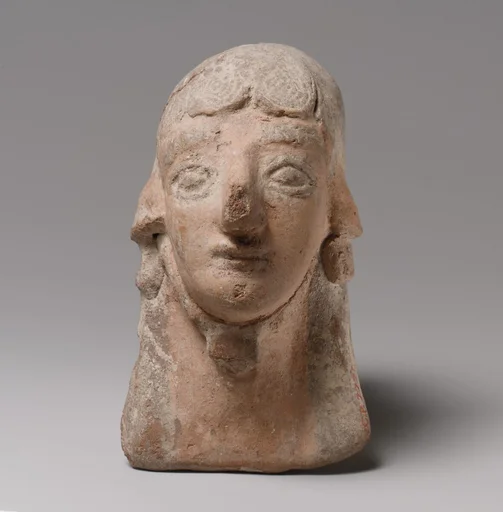
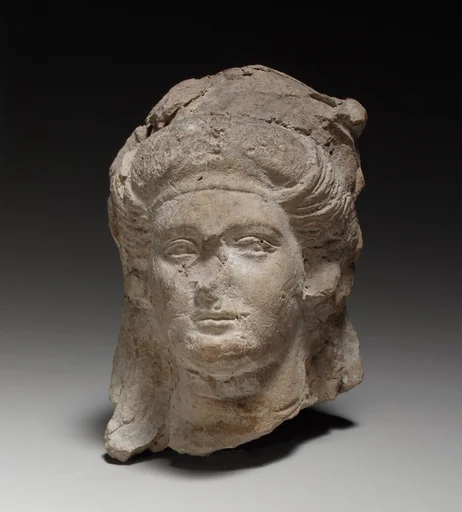
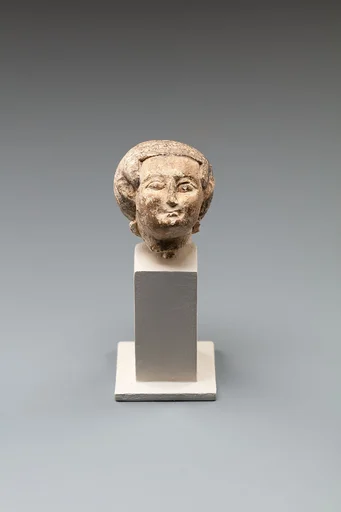
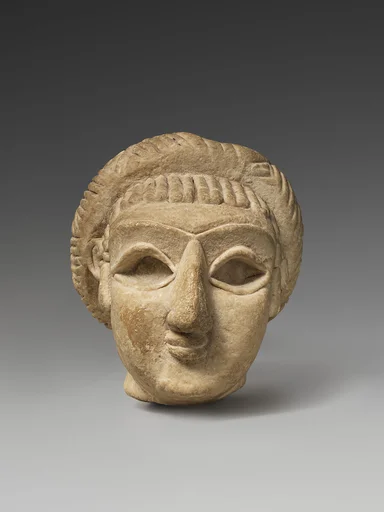
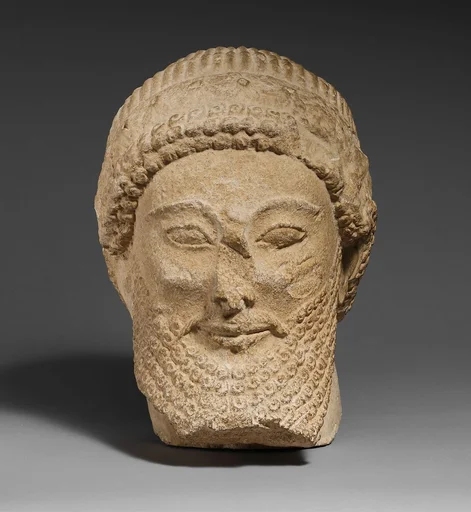
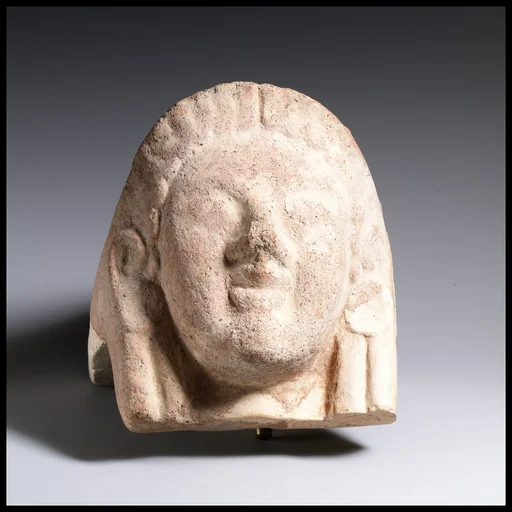
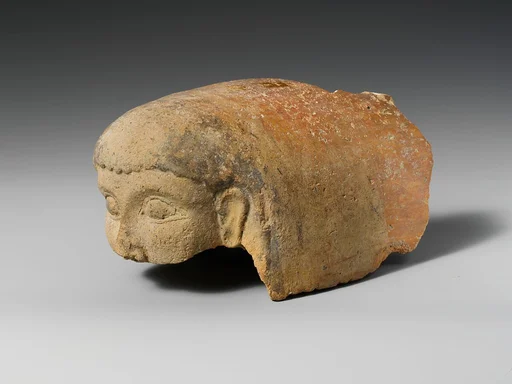
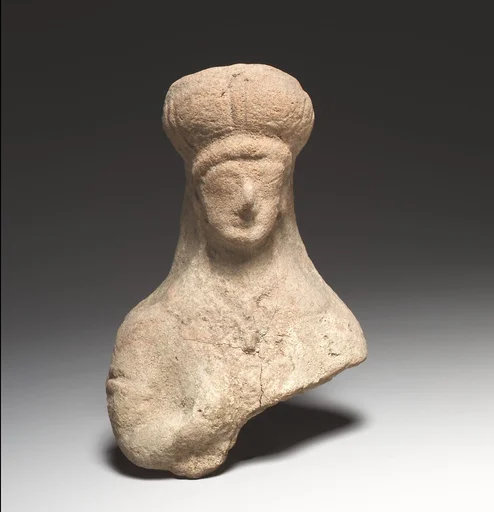
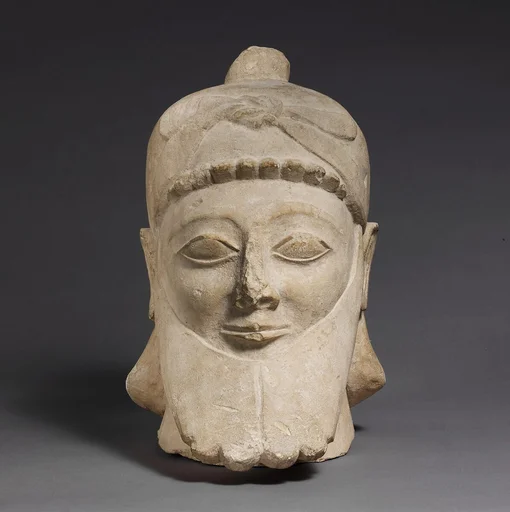
Tufa head of sphinx or siren
Unknown
ca. 550–525 BCE · Tufa · Greek and Roman Art
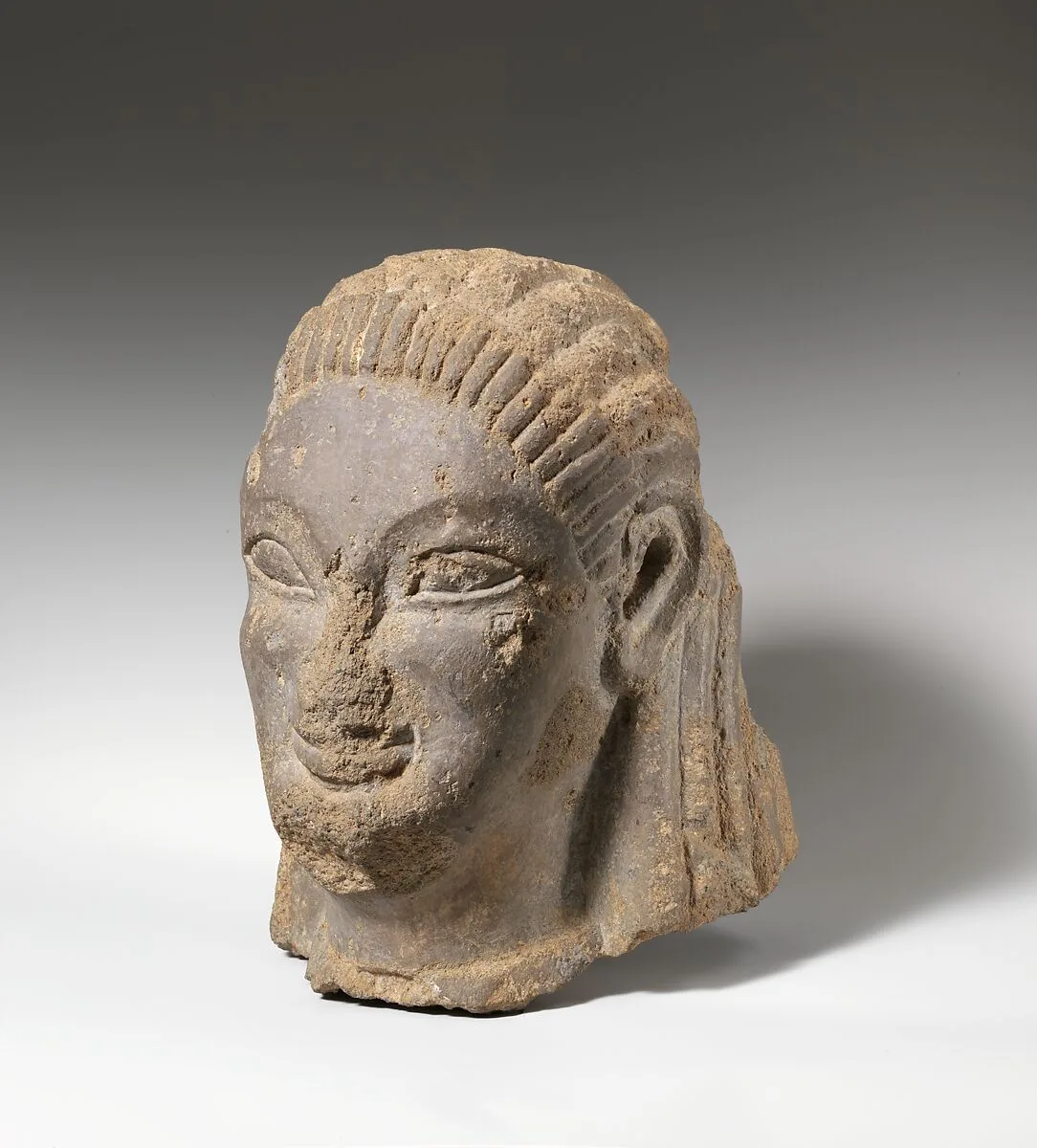
This large head, made of volcanic stone, probably represents a sphinx or siren. Statues of both mythical creatures, usually depicted by the ancients with human female heads and winged animal or bird bodies, were often placed as guardians near the entrances to Etruscan tombs. The large winged lion on display in this gallery is a better preserved example of this type of stone sculpture. The style of this female head, with its almond-shaped eyes, Archaic smile, and wig-like hair arrangement is strongly reminiscent of Greek, especially Ionian examples. A number of related sculptures, all associated with ancient tombs at Vulci, are in other collections. One of the closest parallels for the Museum's head is in the Ny Carlsberg Glyptotek, Copenhagen.
- Artist
- Unknown
- Date
- ca. 550–525 BCE
- Medium
- Tufa
- Culture
- Etruscan, probably Vulcian
- Department
- Greek and Roman Art
- Credit line
- Fletcher Fund, 1924