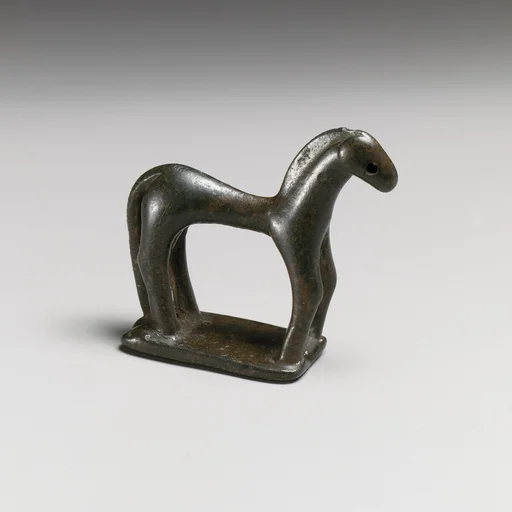
Bronze horse
Unknown
8th century BCE · Bronze · Greek and Roman Art
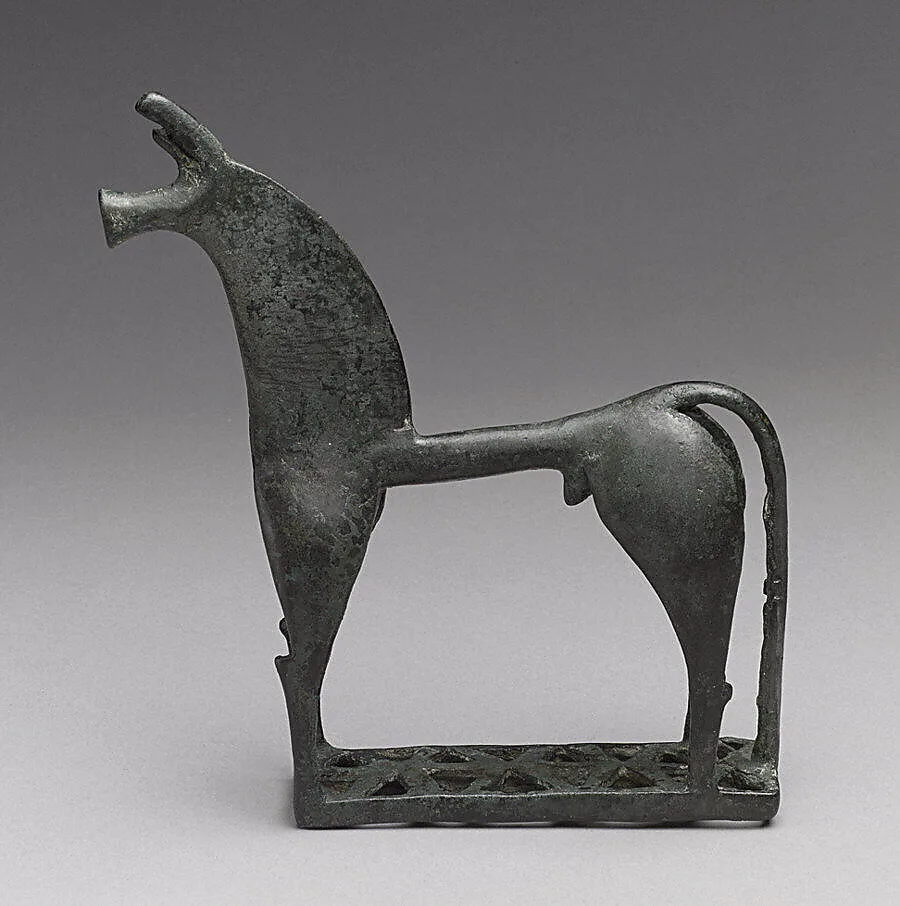
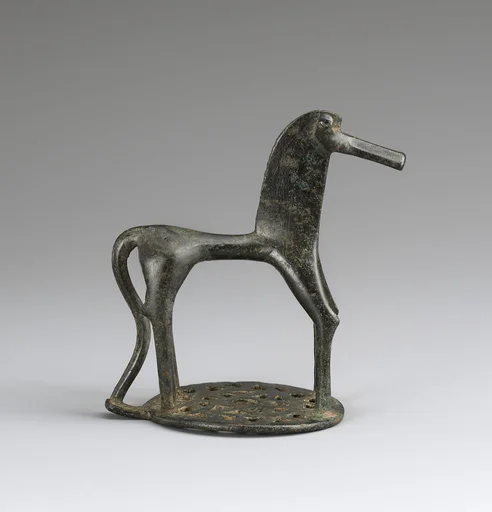
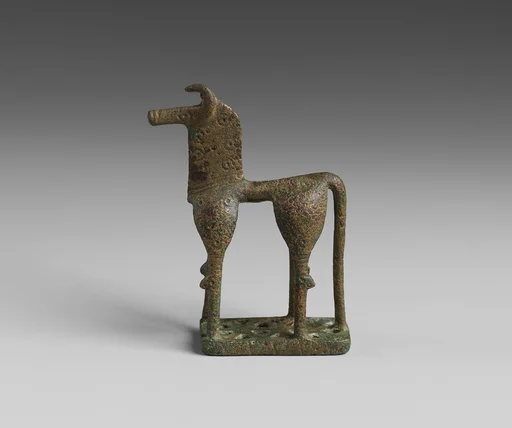
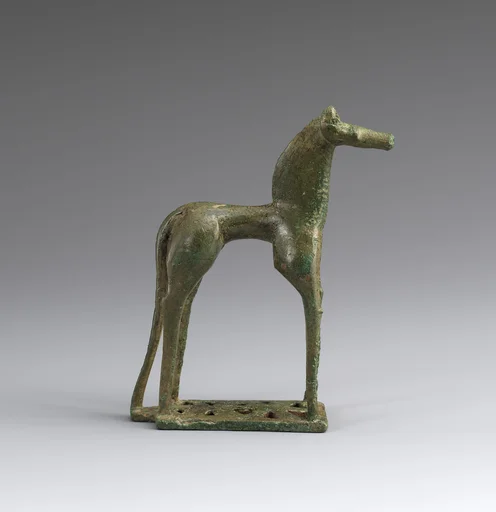
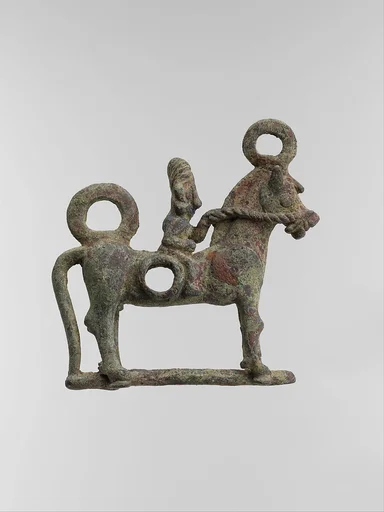
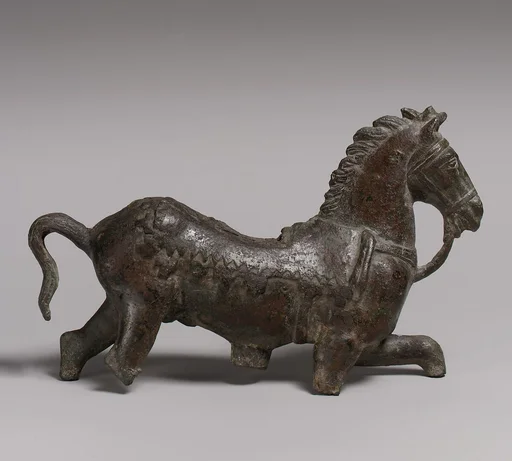
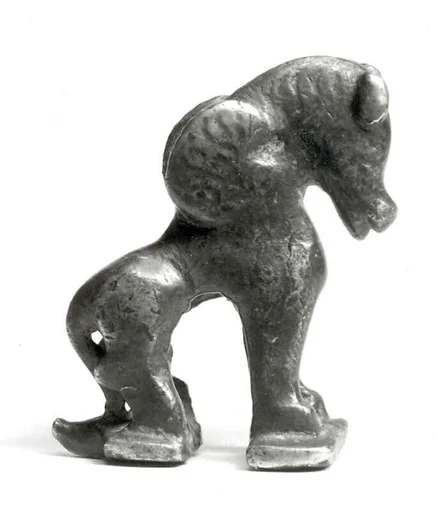
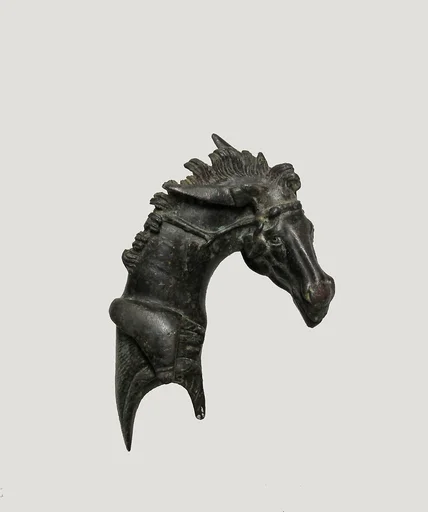
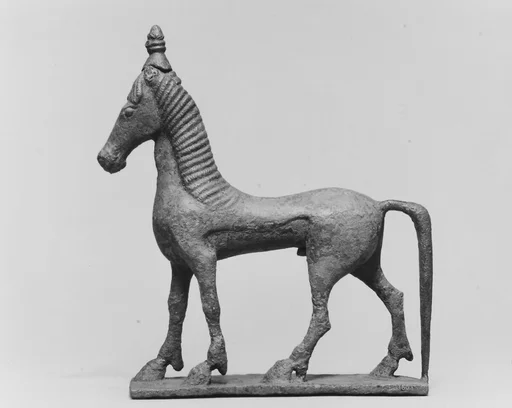
The clarity and elegance of form in Greek Geometric art is as effective in three-dimensional sculpture as it is in vase painting. Small-scale bronzes, such as this horse, were produced in workshops throughout the Greek mainland and represent the most innovative sculptural achievements of the period. This solid-cast bronze horse, probably made in Corinth, exemplifies Geometric art at its best. The flat parts of the neck and legs are carefully integrated with the cylindrical muzzle and body of the animal. The base, articulated with triangular patterns suggesting a rocky terrain, further contributes a sense of volume and lends definition to the space occupied by the figure. Decorated base-plates—with perforated or relief geometric patterns—are typical of such statuettes during the later part of the eighth century BCE. This feature served as a stand but might also have been used as some kind of early stamp or seal. All over the Greek world, Geometric bronze horse statuettes as this one have been found at sanctuaries in great quantities, where they were deposited as votive offerings to the gods. Though other animals, and more rarely humans, were also represented, horses largely outnumber all other types of solid cast statuettes. Ownership of horses was a status symbol for aristocrats, who used these animals in warfare and in the competitive sphere of horse and chariot races, often held at sanctuaries.
- Artist
- Unknown
- Date
- 8th century BCE
- Medium
- Bronze
- Culture
- Greek
- Department
- Greek and Roman Art
- Credit line
- Rogers Fund, 1921