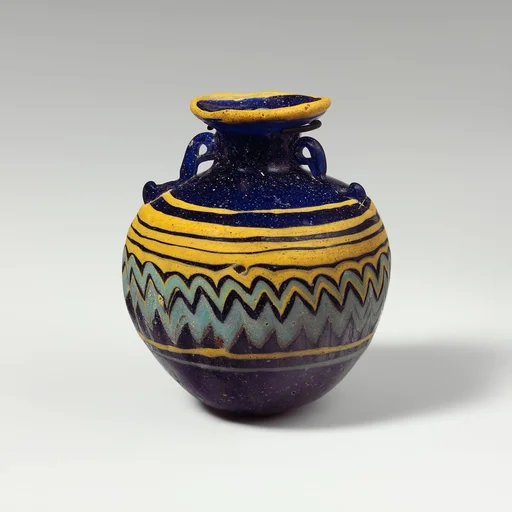
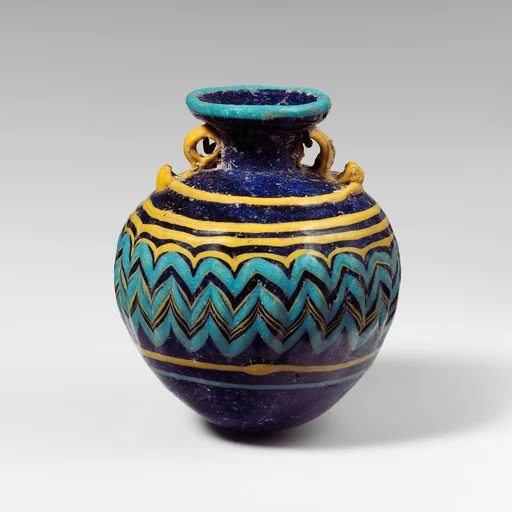
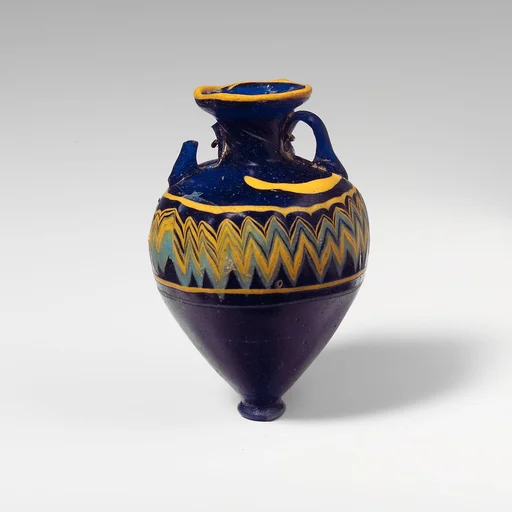
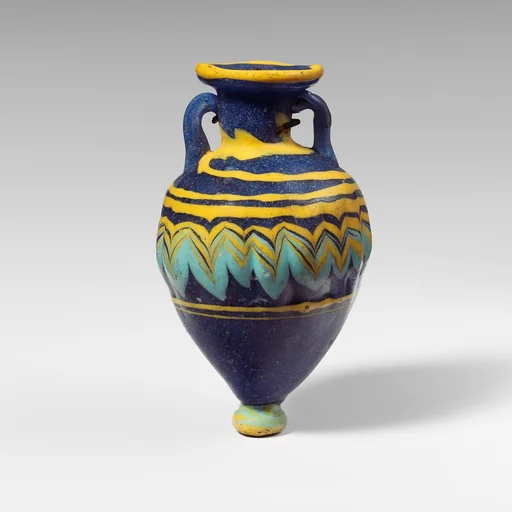
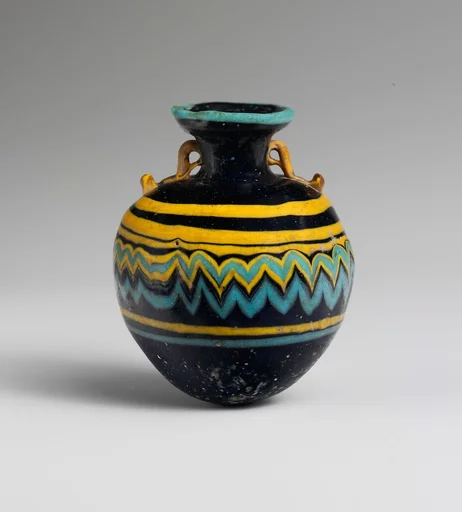
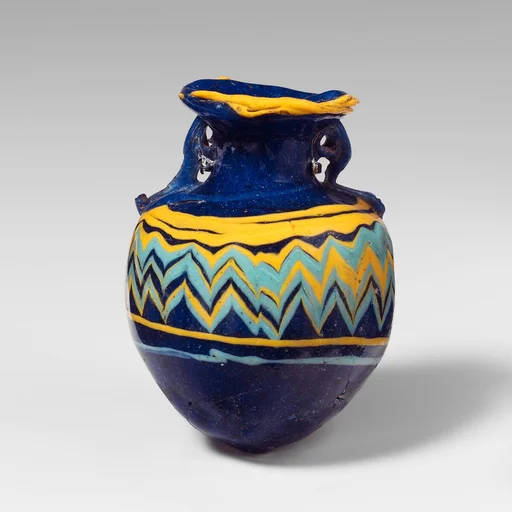
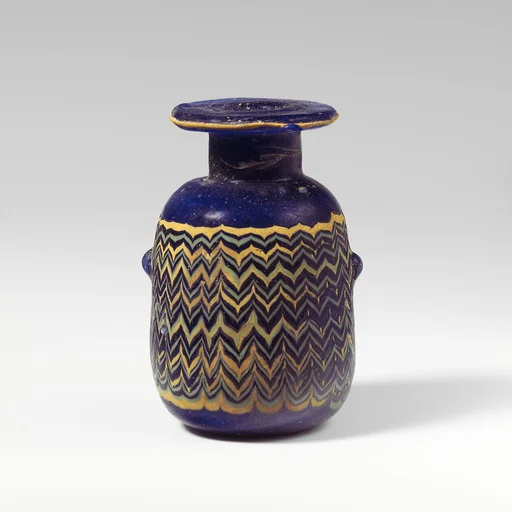
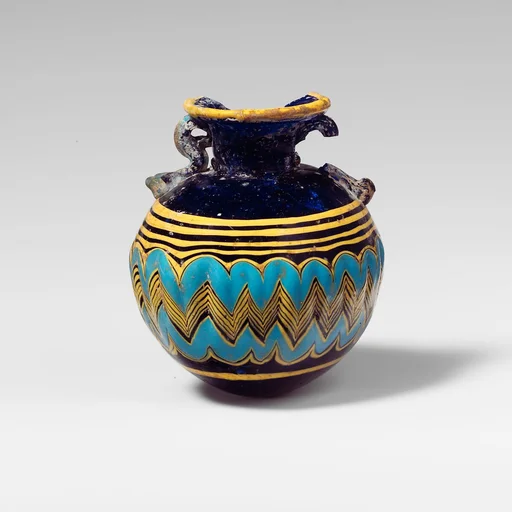
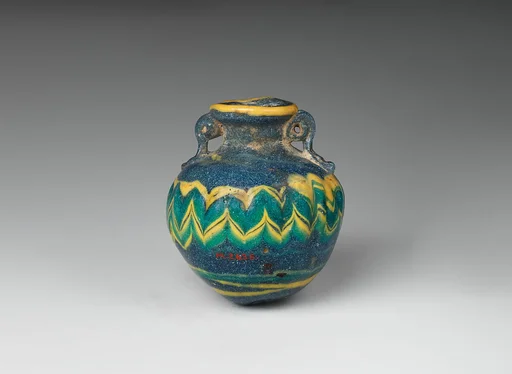
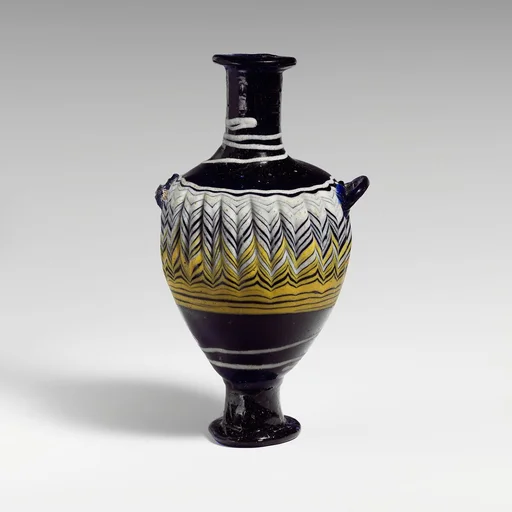
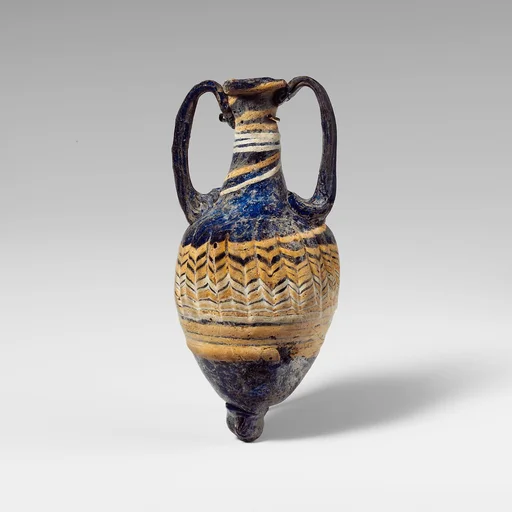
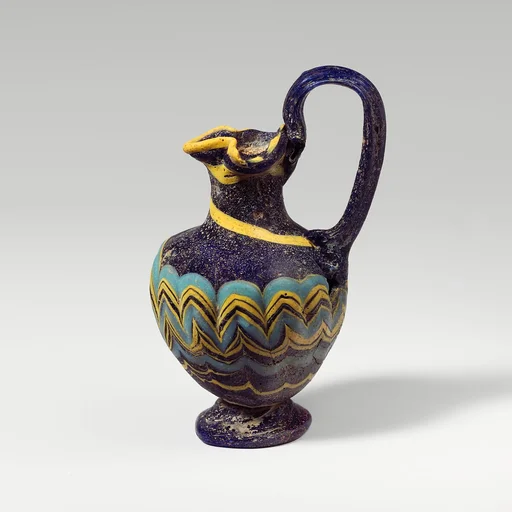
Glass aryballos (perfume bottle)
Unknown
late 6th–5th century BCE · Glass · Greek and Roman Art
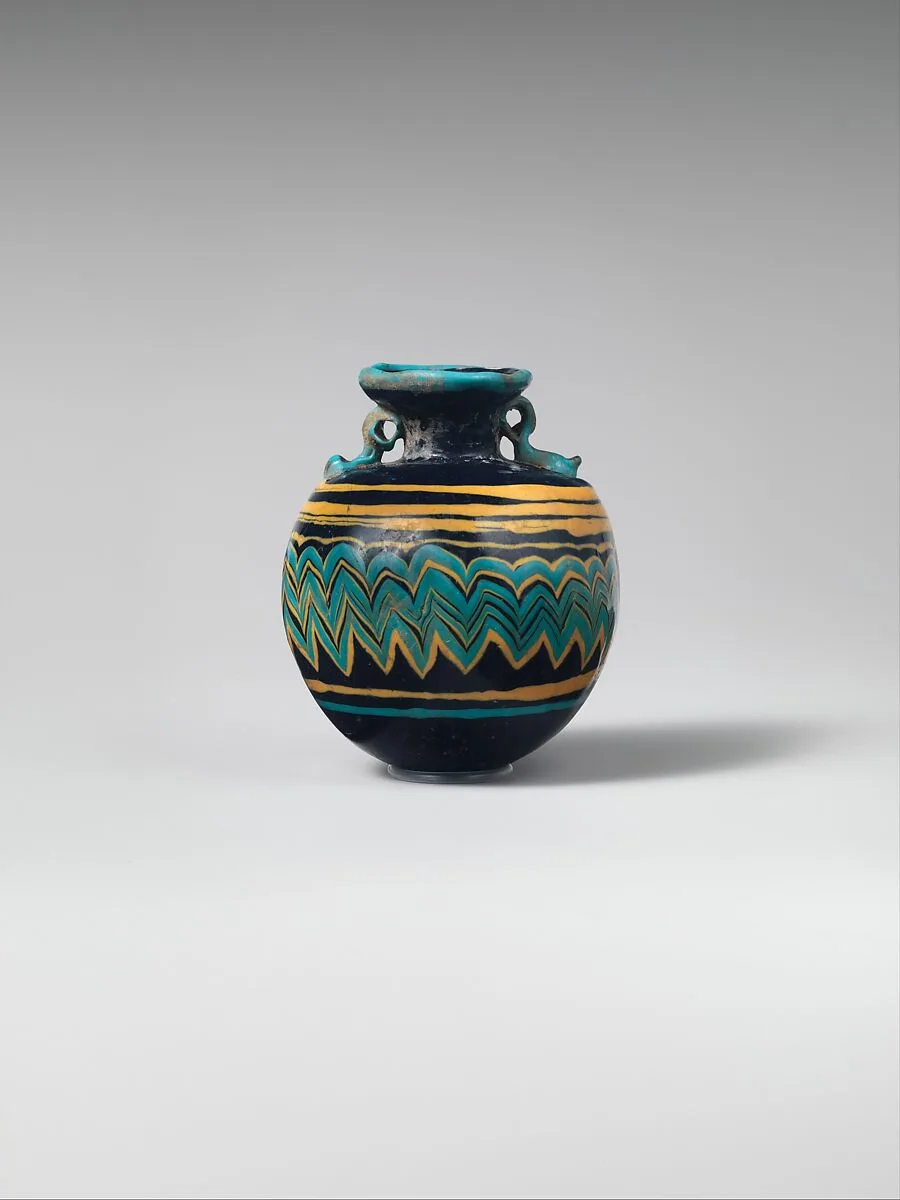
Translucent dark cobalt blue, with handles in opaque turquoise blue; trails in opaque turquoise blue and opaque yellow. Thick inward-sloping rim-disk; short cylindrical neck; almost horizontal sloping shoulder; sperical body; convex, slightly pointed bottom; two vertical ring handles with knobbed tails extend from shoulder to underside of rim-disk. Turquoise blue trail applied to outer edge of rim-disk; a yellow trail applied to outer edge of shoulder and wound spirally, at first in four horizontal lines, then tooled into a zigzag pattern around central section of body, formed by shallow vertical tooling indents, where a turquoise blue trail is added, mingling with the yellow; below this, a yellow trail and a turquoise blue trail wound once around body. Intact; slight dulling and pitting, and small patches of iridescent milky weathering on rim, neck, and handles. Glass vessels such as these first appeared in the Greek world late in the sixth century B.C. They originally contained perfumes or scented oils used in funerary rites, after which the bottles were left in the grave.
- Artist
- Unknown
- Date
- late 6th–5th century BCE
- Medium
- Glass
- Culture
- Greek, Eastern Mediterranean
- Department
- Greek and Roman Art
- Credit line
- Gift of J. Pierpont Morgan, 1917