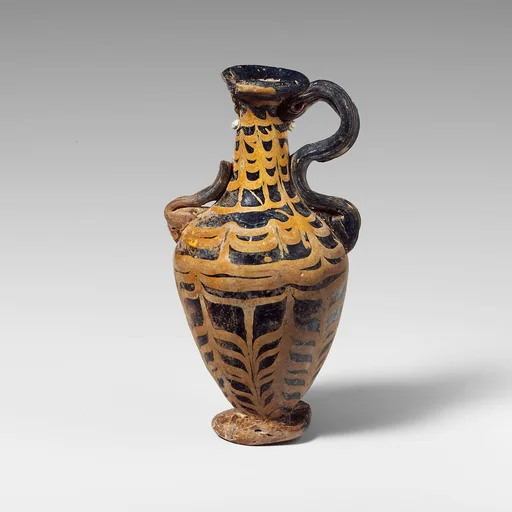
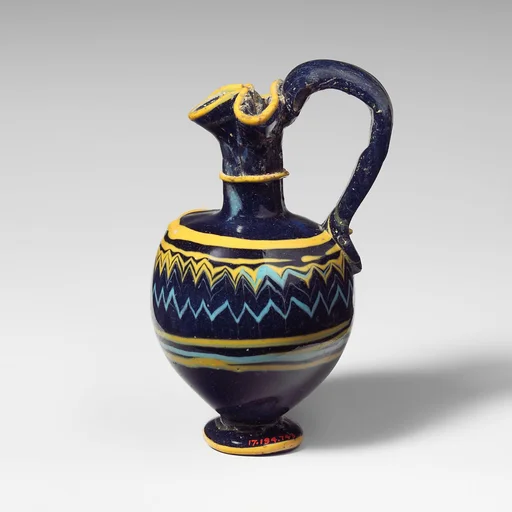
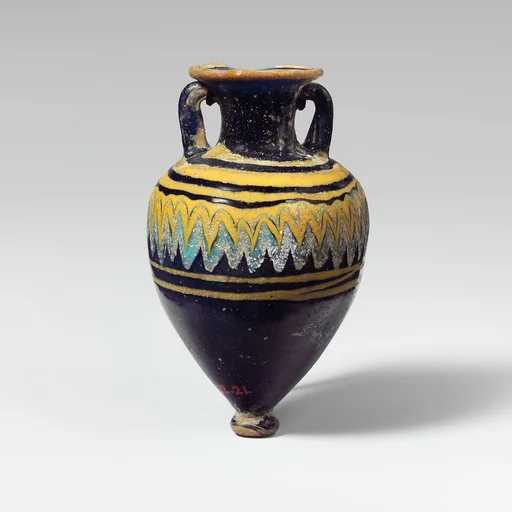
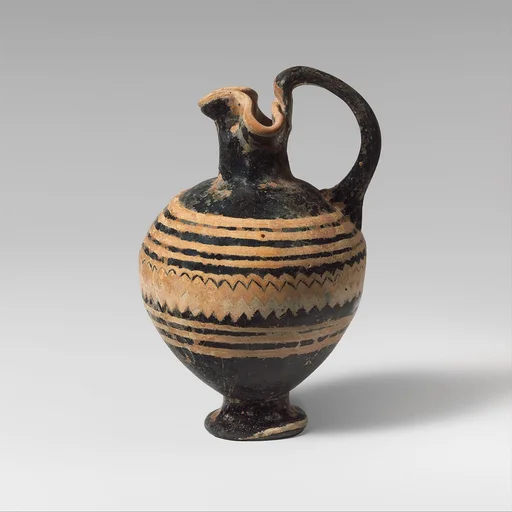
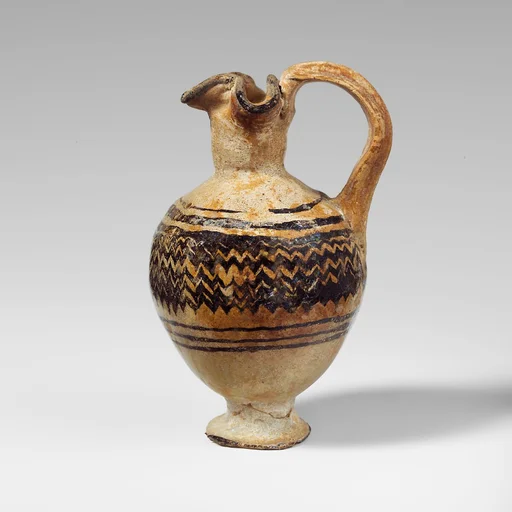
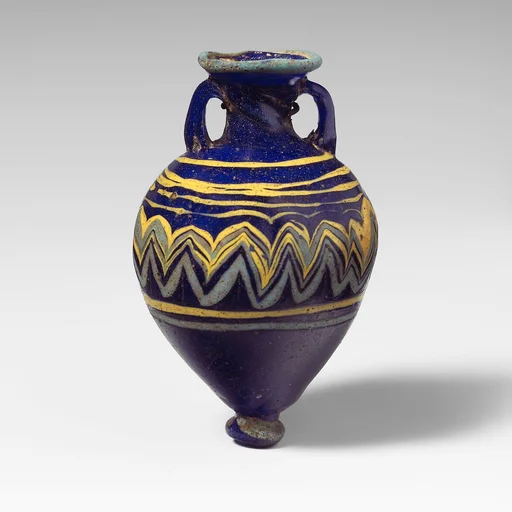
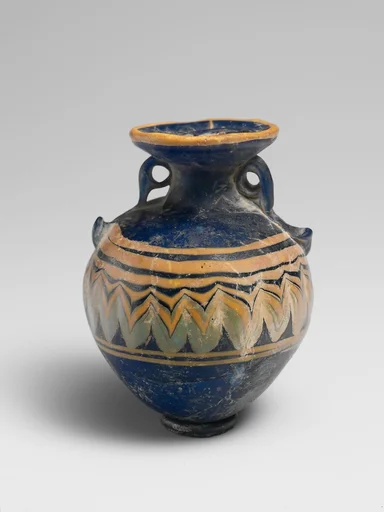
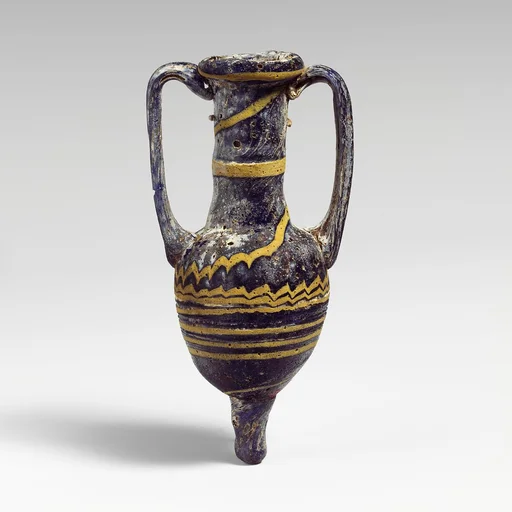
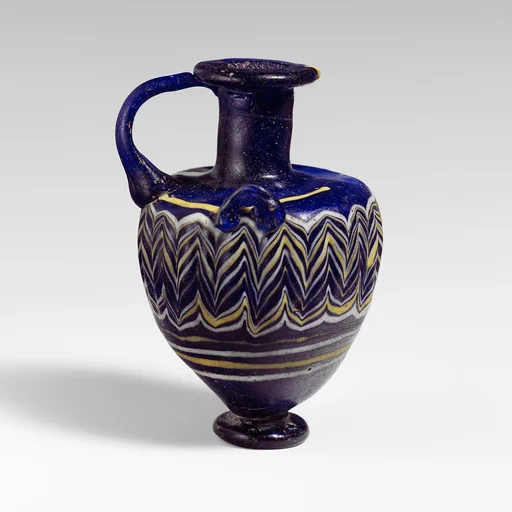
Glass oinochoe (perfume jug)
Unknown
late 6th–5th century BCE · Glass · Greek and Roman Art
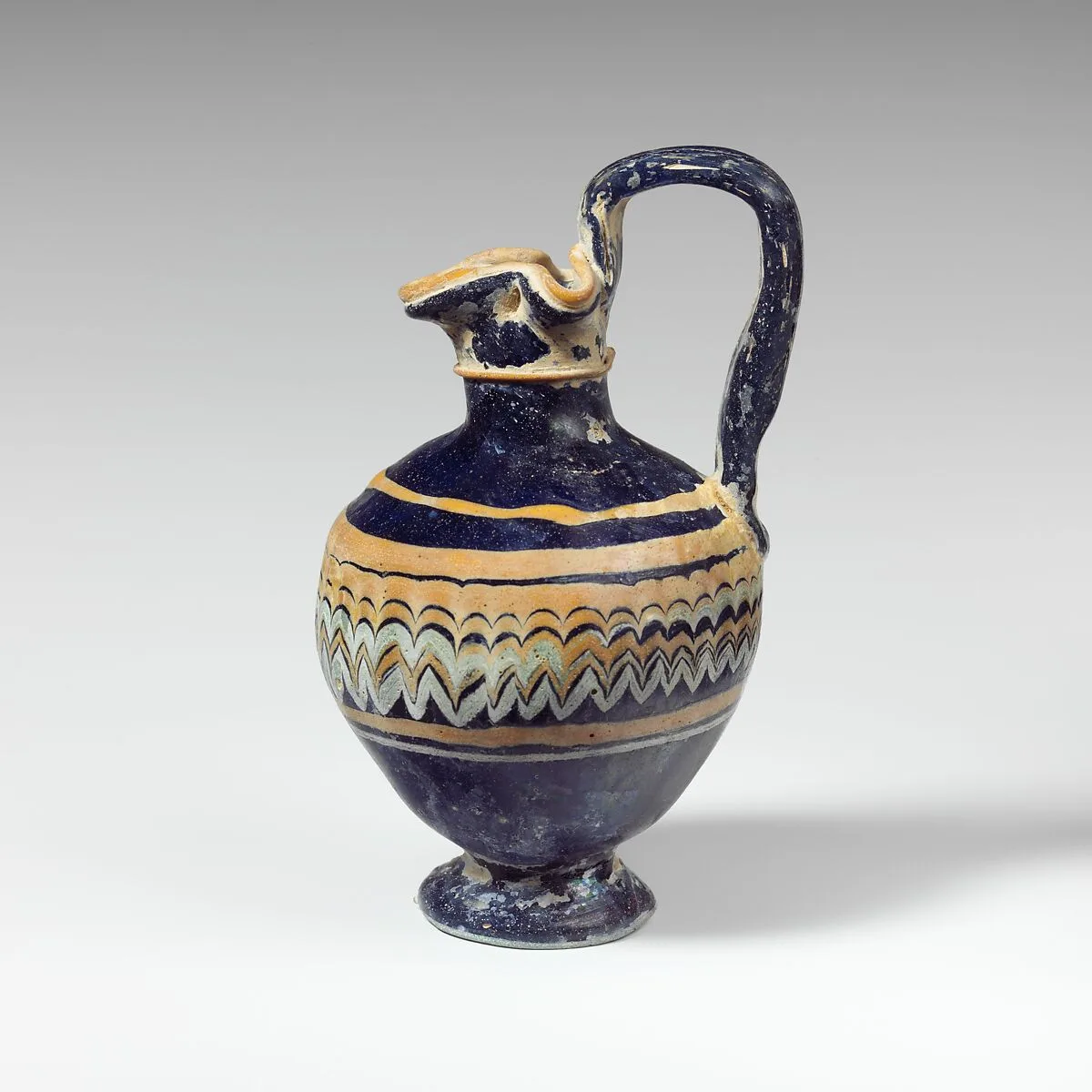
Translucent cobalt blue, with handle and foot in same color; trails in opaque yellow and opaque turquoise blue. Applied broad trefoil rim-disk with narrow cylindrical mouth; cylindrical neck, slanting forward; broad sloping shoulder; large ovoid body; applied outsplayed foot with uneven concave bottom; handle attached to top of body, drawn up, turned in at right angle above rim-disk, dropped down and pressed on to back of neck below rim. Yellow trail attached at edge of rim-disk; a second yellow trail wound horizontally once around middle of neck; a thick yellow trail begun on shoulder and wound spirally, at first in horizontal lines, then tooled into an inverted festoon pattern; halfway down pattern a turquoise blue trail is added, mingling with yellow, and tooled into a close-set zigzag pattern; immediately below this, a broad yellow trail and a thinner turquoise blue trail wound horizontally once around body; a turquoise blue trail wound around edge of foot; a large flattened disk of yellow applied to bottom of handle. Complete, except for part of yellow trail around neck, and one side of foot broken and repaired; some dulling and pitting, iridescent weathering, and patches of thick creamy brown encrustation. Glass vessels such as these first appeared in the Greek world late in the sixth century B.C. They originally contained perfumes or scented oils used in funerary rites, after which the bottles were left in the grave.
- Artist
- Unknown
- Date
- late 6th–5th century BCE
- Medium
- Glass
- Culture
- Greek, Eastern Mediterranean
- Department
- Greek and Roman Art
- Credit line
- Gift of J. Pierpont Morgan, 1917