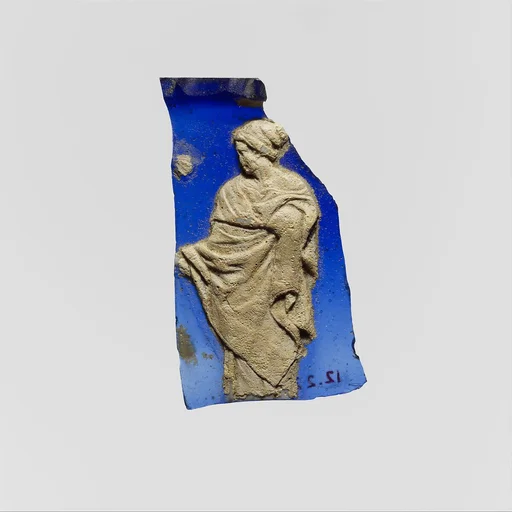
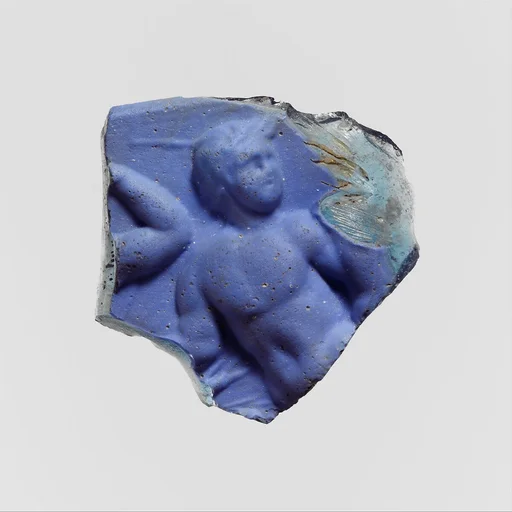
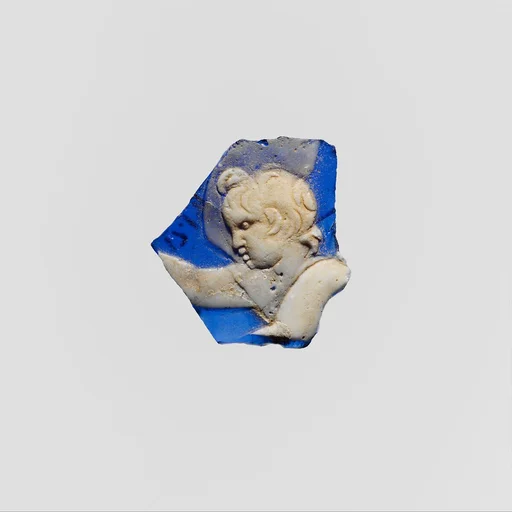
Glass cameo fragment
Unknown
late 1st century BCE–mid-1st century CE · Glass · Greek and Roman Art
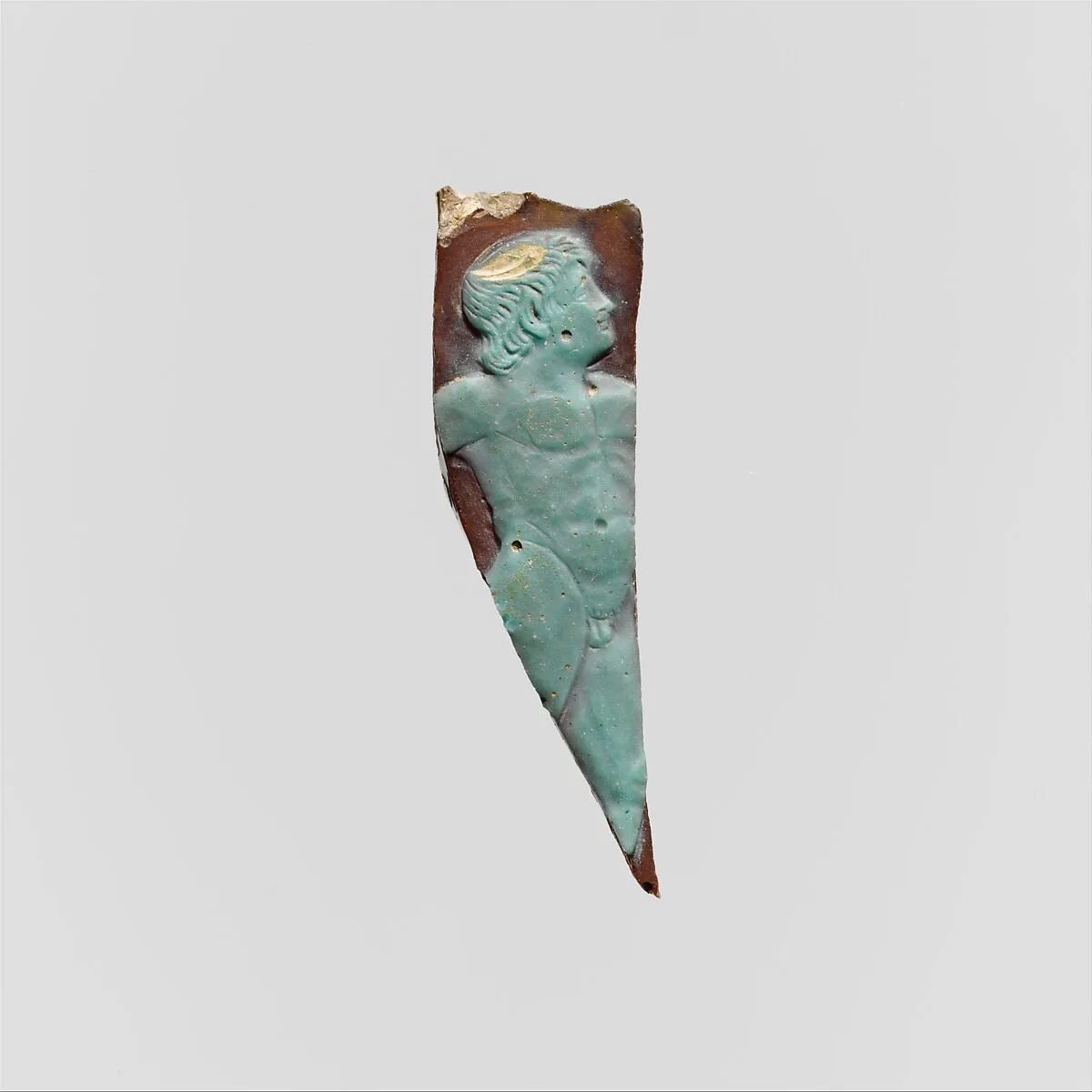
Translucent deep honey brown with opaque turquoise green overlay. Flat underside; top surface with shallow relief decoration. In relief in green, naked youthful satyr, facing right with head in profile, torso and legs in three-quarter view, and proper right arm raised behind him; torso rendered with musculature in fine detail; on his head, above his pointed proper right ear, is what appears to be a leaf or wing, picked out by differential weathering. Broken on all sides with weathered edges; dulling, slight pitting, patches of weathering and brilliant iridescence on back. The fragment comes from a flat panel of glass, probably a plaque rather than a vessel. The honey brown ground and opaque turquoise overlay are an unusual combination for Roman cameo glass.
- Artist
- Unknown
- Date
- late 1st century BCE–mid-1st century CE
- Medium
- Glass
- Culture
- Roman
- Department
- Greek and Roman Art
- Credit line
- Gift of J. Pierpont Morgan, 1917