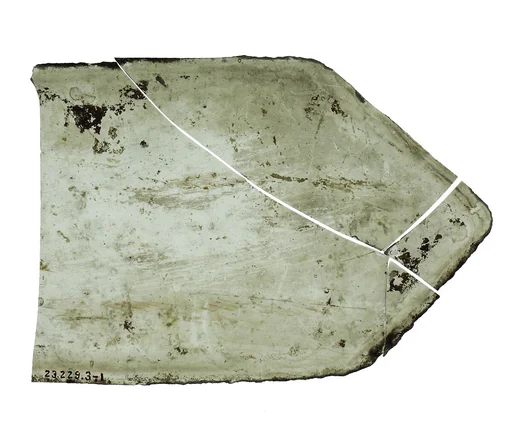
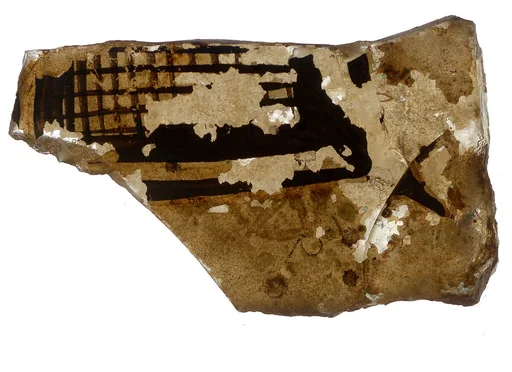
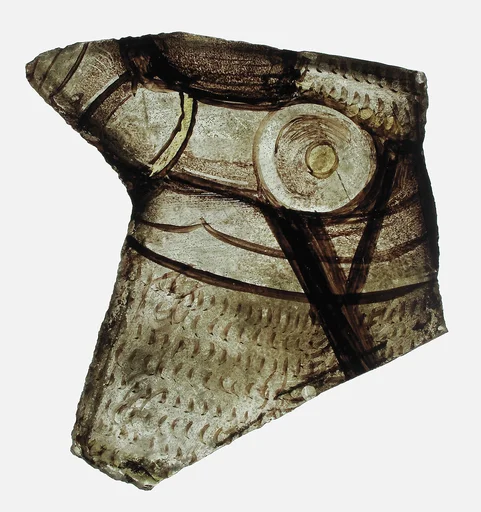
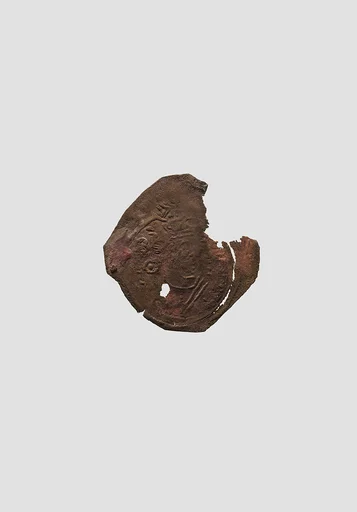
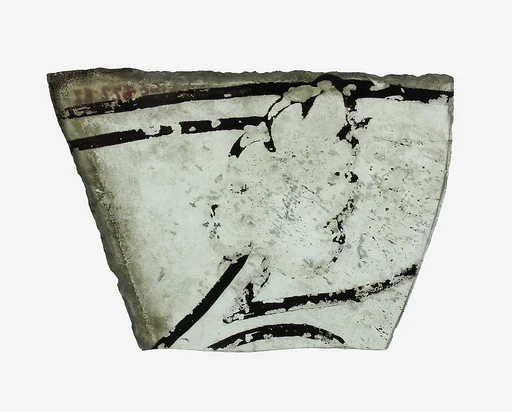
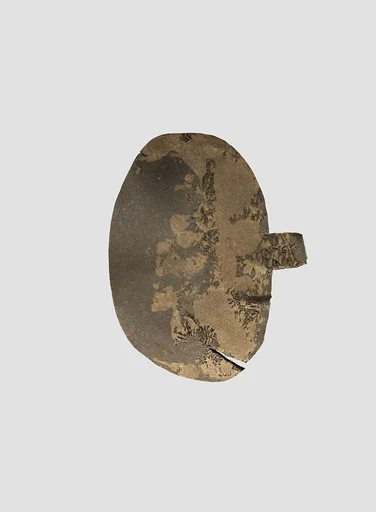
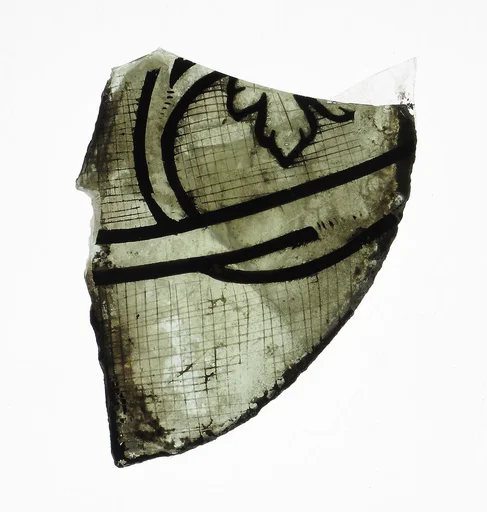
Glass bowl fragments with cut decoration
Unknown
ca. 330–380 CE · Glass · Greek and Roman Art
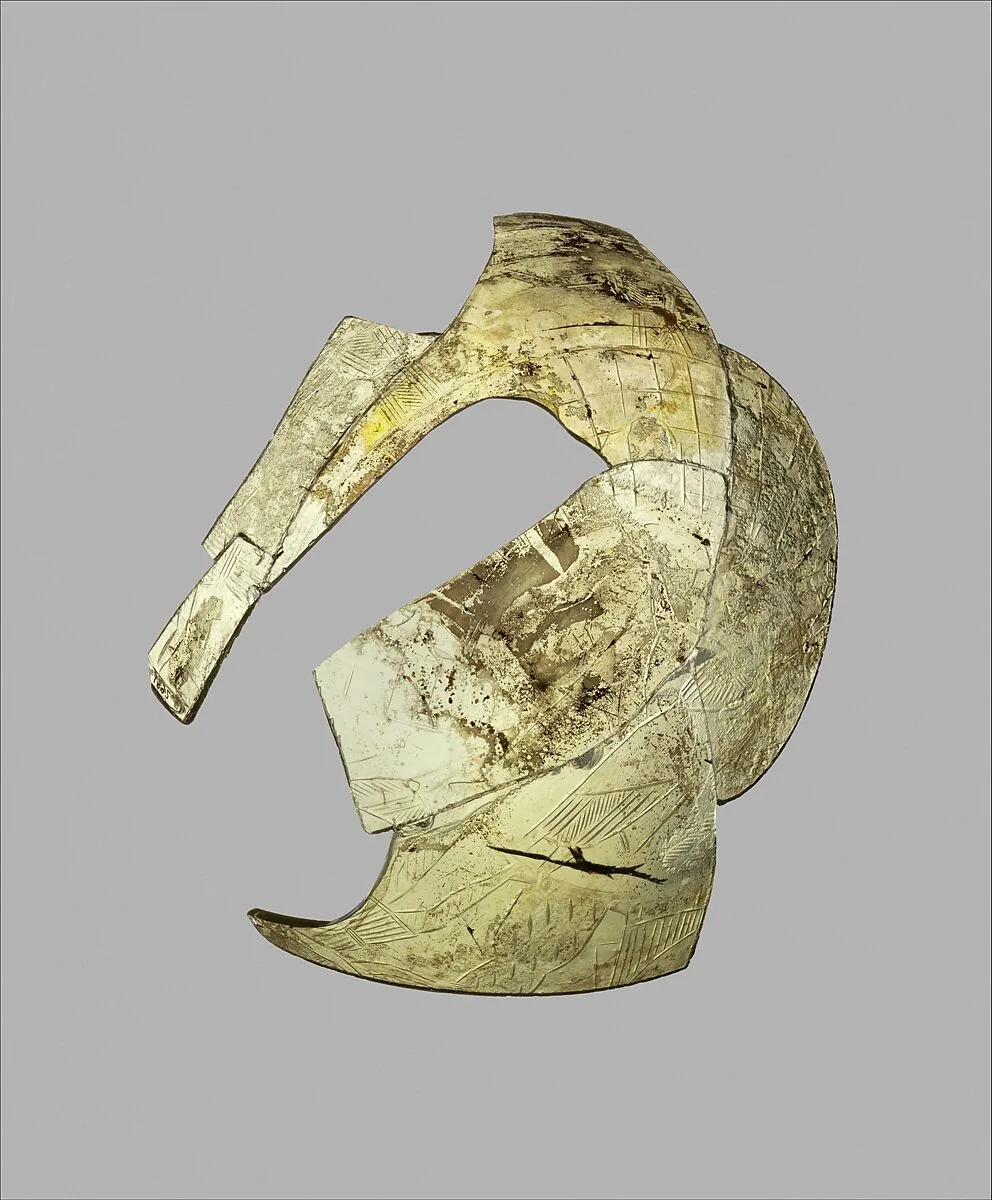
Translucent green. Hemispherical bowl with plain, ground rim; convex curving side; round bottom. Below rim, a single horizontal wheel-cut groove; around body, a figural frieze. It comprises three figures wearing short-sleeved tunics, facing front with their heads turned in profile to left and their arms raised, standing above a structure marked with five courses of masonry in which two opening are visible (probably three existed); to the right of the structure, the lower part of a column and the legs and lower body of a robed figure; to the left, three other standing figures, one apparently wearing leggings, flanking a rock from which flows a stream of water. On the bottom, is a circular medallion, in which is depicted a man, standing facing left, wearing a long robe and with a long staff under his outstretched right arm. Broken and incomplete, repaired from six joining fragments (including 1992.61); some pinprick bubbles; patches of severe pitting and weathering, with dulling and iridescence. The bowl is decorated with Christian scenes that represent well-known stories from the Old Testament. The figure in the medallion at the bottom is either Moses or Aaron; his staff is the rod that turned into a snake. On the body are two separate scenes: one is of the Three Youths in the Furnace; the other shows Moses and the Miracle of the Rock in Horeb.
- Artist
- Unknown
- Date
- ca. 330–380 CE
- Medium
- Glass
- Culture
- Roman
- Department
- Greek and Roman Art
- Credit line
- Gift of J. Pierpont Morgan, 1917