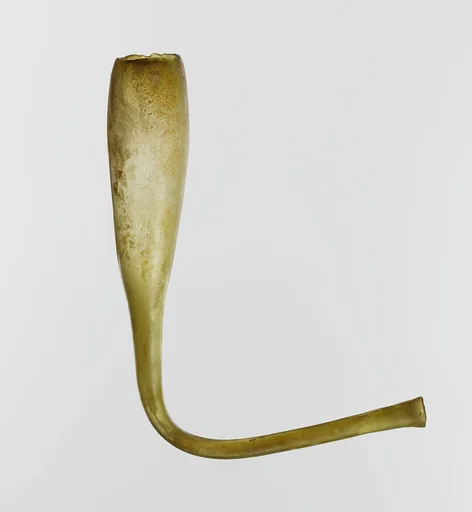
Glass strigil (scraper)
Unknown
3rd–4th century CE · Glass · Greek and Roman Art
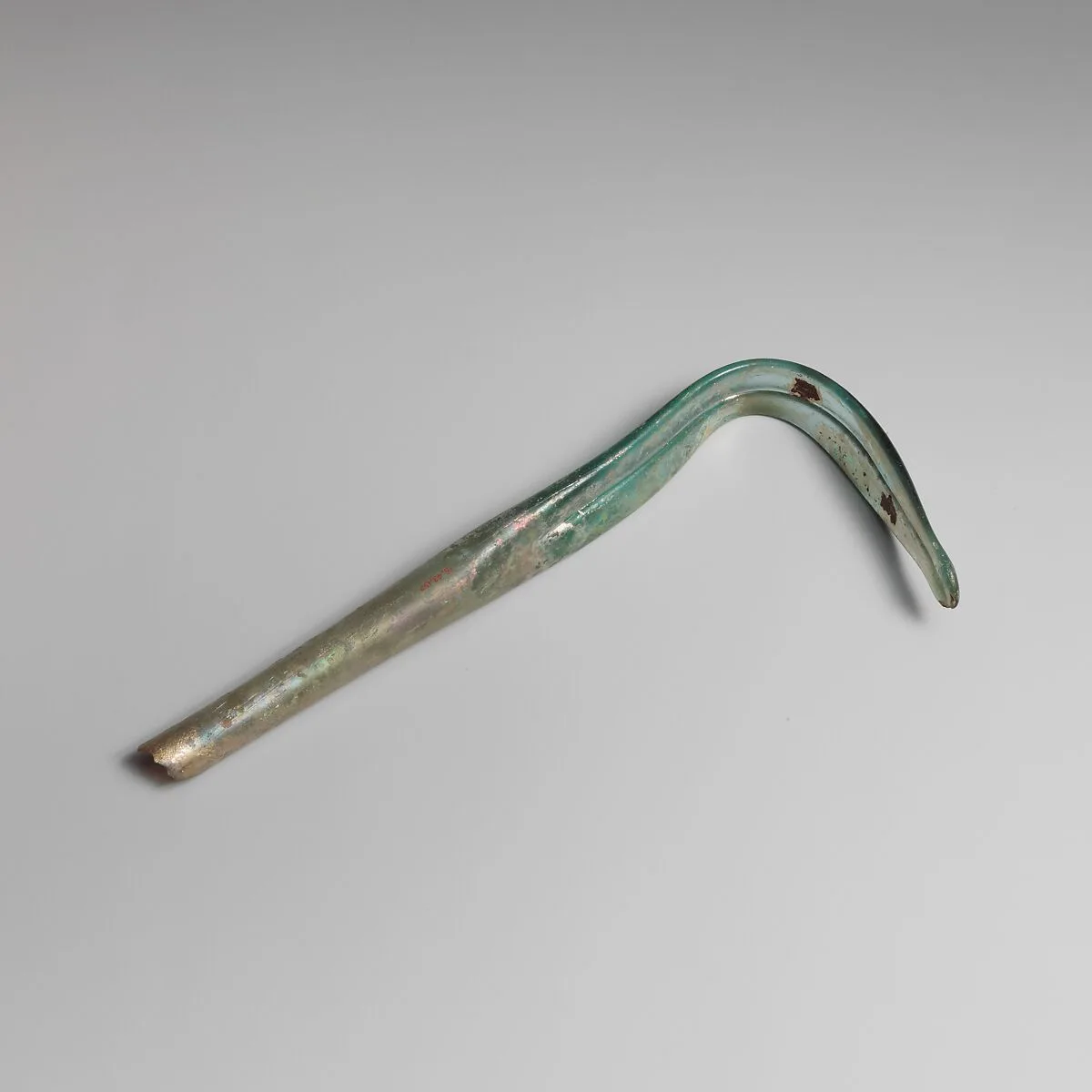
Translucent blue green. Handle in the form of a long hollow cylinder, expanding slightly downwards; the curved blade or scrapper section has been tooled flat with a deep indent running down its length on the upper side, ending in a rounded tip. Top of handle broken and missing; pinprick and small elongated bubbles; dulling, pitting, and iridescent weathering, with some soil encrustation and thicker weathering on interior. A small number of glass strigils are known, including a group found in a tomb in Cologne, Germany. They were not practical scrapers for use at the baths but were symbolic gifts for the dead, who, it was believed, could use them in the afterlife.
- Artist
- Unknown
- Date
- 3rd–4th century CE
- Medium
- Glass
- Culture
- Roman
- Department
- Greek and Roman Art
- Credit line
- Bequest of Mary Anna Palmer Draper, 1915