Terracotta krater
Trachones Workshop
ca. 725 BCE · Terracotta · Greek and Roman Art
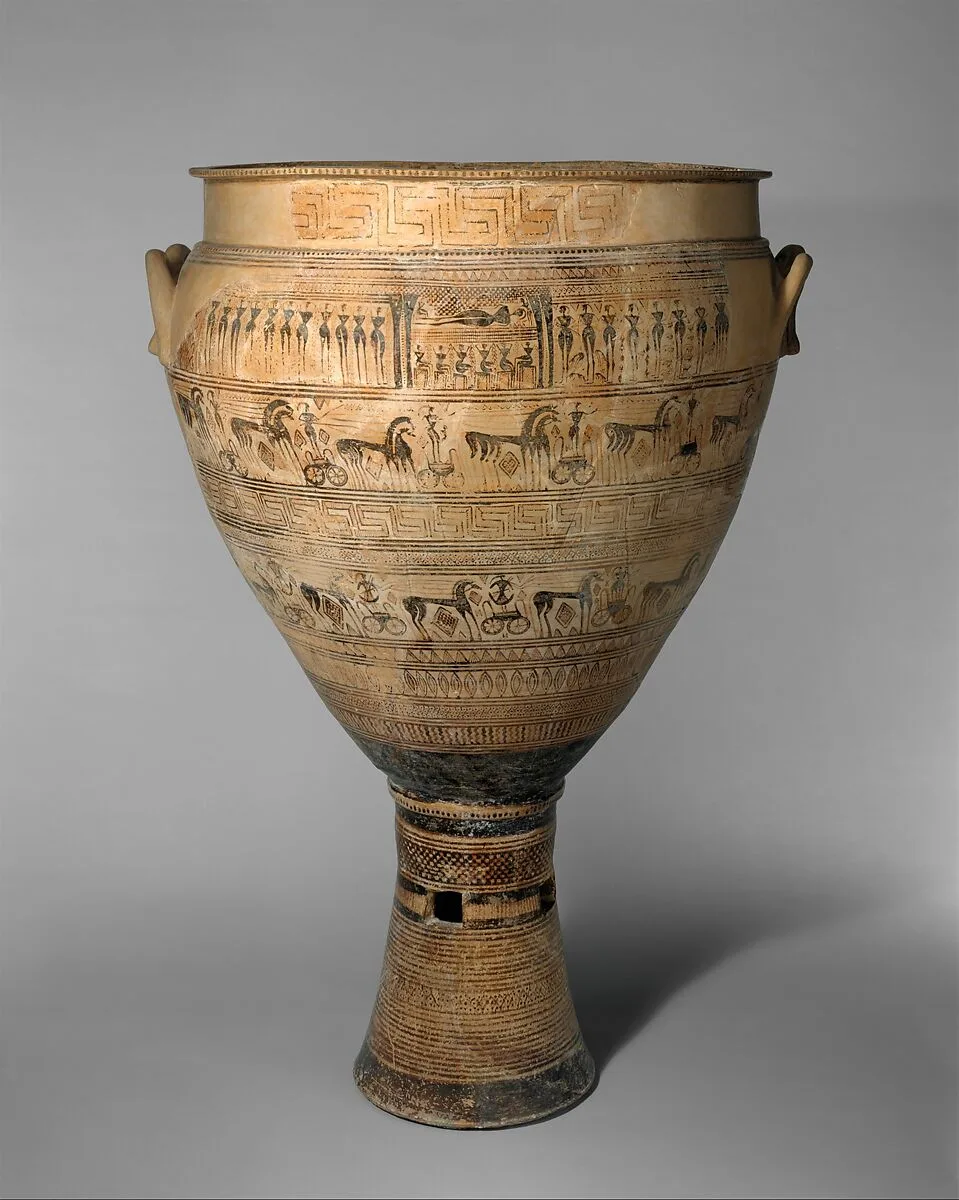
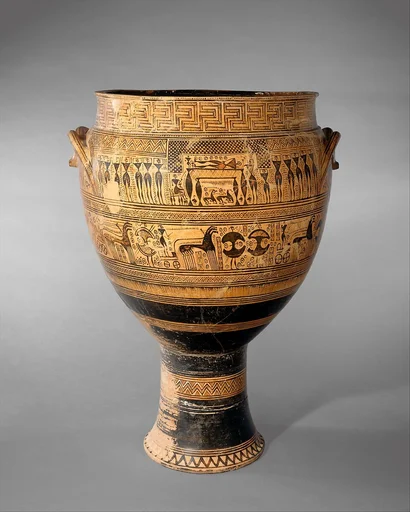
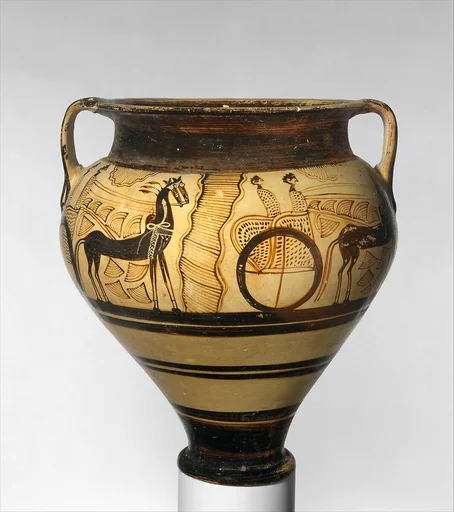
Oversize kraters were used as tomb markers and receptacles for ritual offerings. This one is decorated with a well-known and appropriate subject: the funeral of an Athenian aristocrat. The main scene shows a prothesis—the laying out of the deceased surrounded by mourners, who lift their arms to their heads. In this work, the deceased is shown with a long braid or pigtail issuing from his head; the same detail appears on the warriors standing to the right, suggesting that it is either his braided hair or the crest of his helmet. Also noteworthy is the little creature that seems to be attending to the warrior's head. Below the dead man sits a row of female mourners, who can be identified by the thin, lateral triangles projecting from their chests. Of the two subordinate zones, the upper one shows chariots drawn by two horses; the lower one shows a single horse per chariot. Foot soldiers are at a minimum. Of special interest is the charioteer positioned under the bier scene, who is accompanied by a seated child, perhaps the deceased’s son. This krater, like others of its type, was intentionally built with a hole pierced in the bottom of the body so that libations—liquid offerings—could flow directly through the earth and reach the deceased.
- Artist
- Trachones Workshop
- Date
- ca. 725 BCE
- Medium
- Terracotta
- Culture
- Greek, Attic
- Department
- Greek and Roman Art
- Credit line
- Rogers Fund, 1914