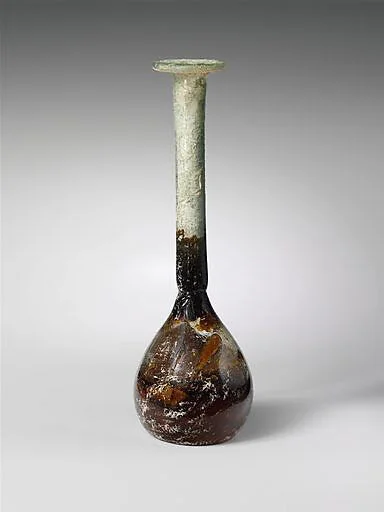
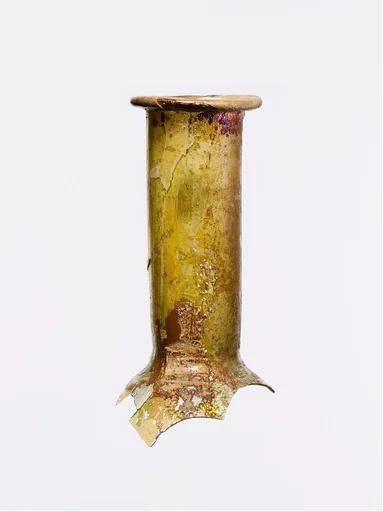
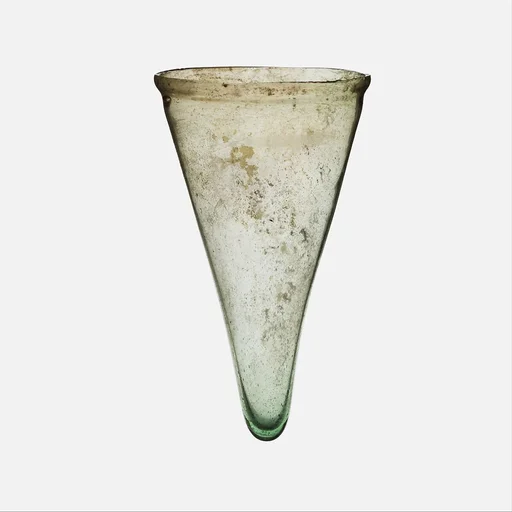
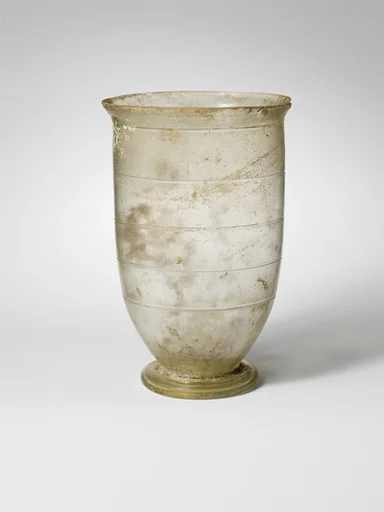
Glass beaker with cut decoration
Unknown
4th–early 5th century CE · Glass · Greek and Roman Art
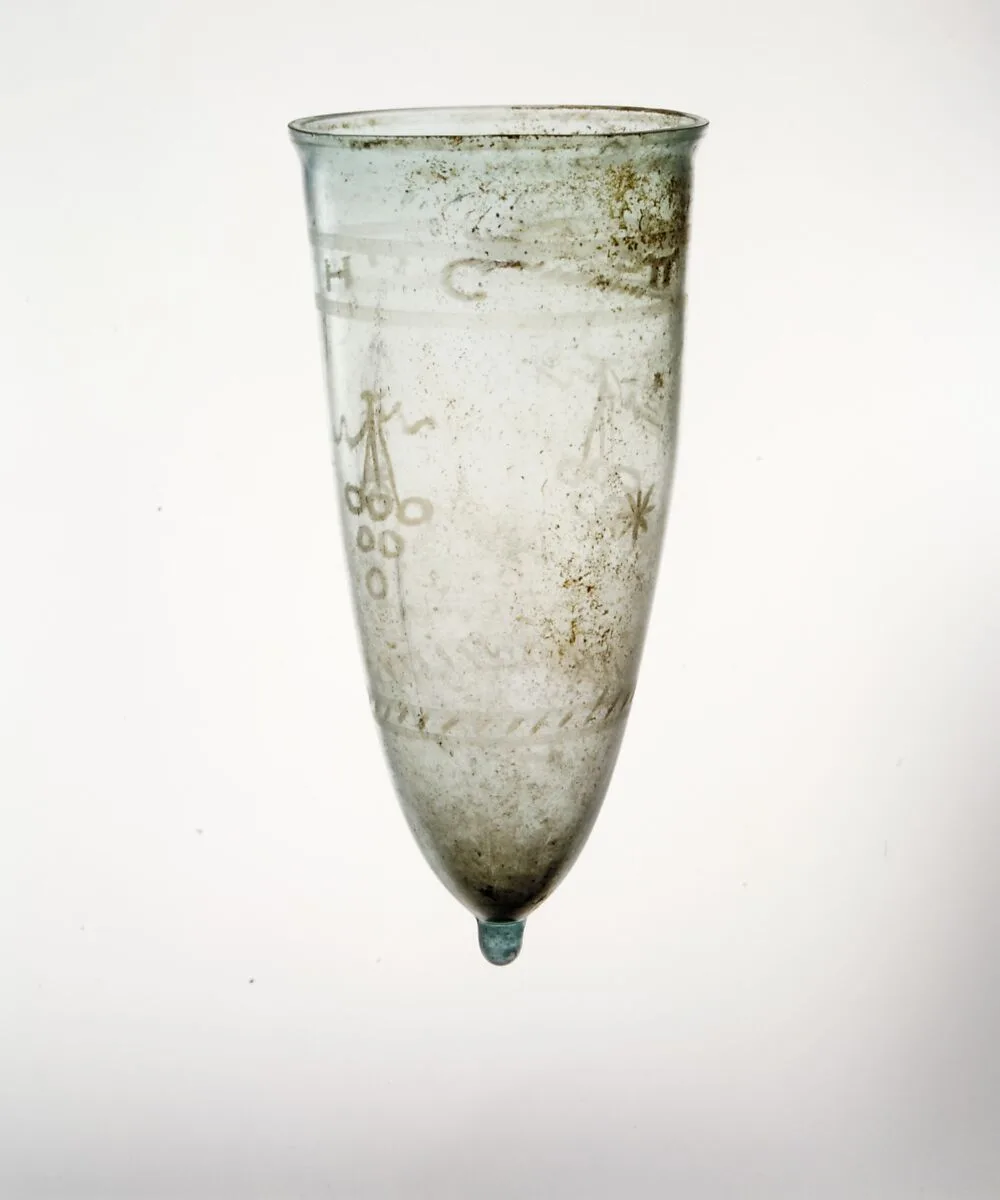
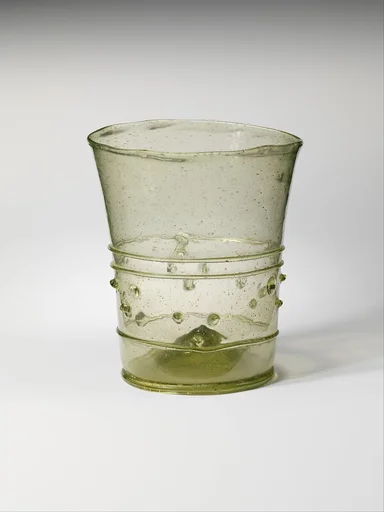
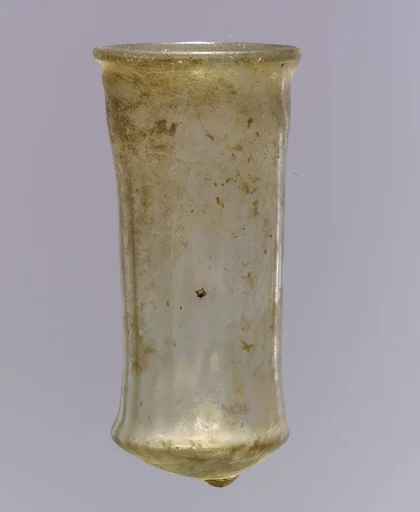
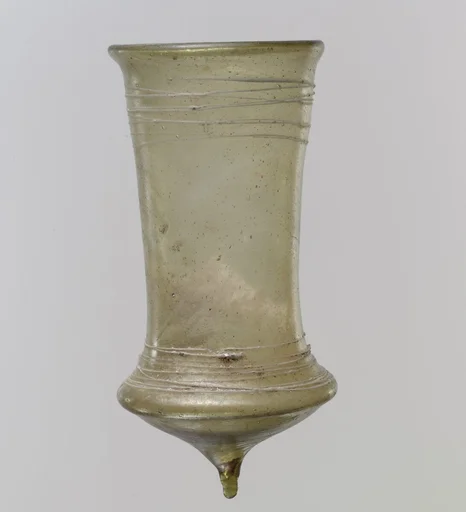
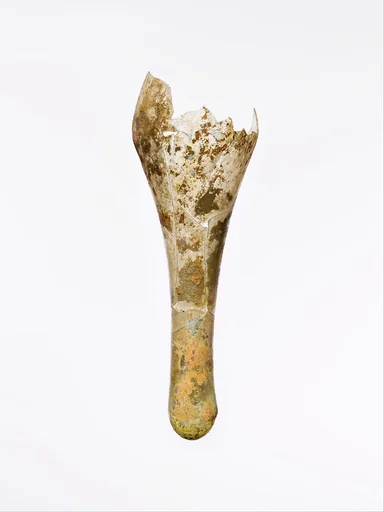
Translucent pale blue. Vertical rim, cracked-off and ground flat, with bulge below; conical body with side tapering gently downwards; solid projecting knob on bottom. Wheel-abraded decoration comprising at top two broad horizontal bands of lines, enclosing Greek letters with a diagonal band of short lines marking the beginning and/or end of the inscription; at center, a broad frieze containing two bunches of stylized grapes suspended from a T bar and flanked by wavy ribbons, alternating around side with two eight-armed stars; below, two bands of two horizontal lines flanking a band of short diagonal lines. Intact; a few bubbles; faint iridescent weathering, with slight soil encrustation at bottom of interior. The Greek inscription PIE ZHCHC (Drink [so that] you may live [well]) is an exhortation commonly found on both pottery and glass vessels. It probably echoes the kind of toast that would have been given at a drinking or dinner party. This beaker was likely made and decorated at a workshop in Syria, demonstrating that glassmakers (vitrarii) worked closely with glass cutters (diatretarii) in the production of glass tableware.
- Artist
- Unknown
- Date
- 4th–early 5th century CE
- Medium
- Glass
- Culture
- Roman
- Department
- Greek and Roman Art
- Credit line
- Smith Fund, 1913