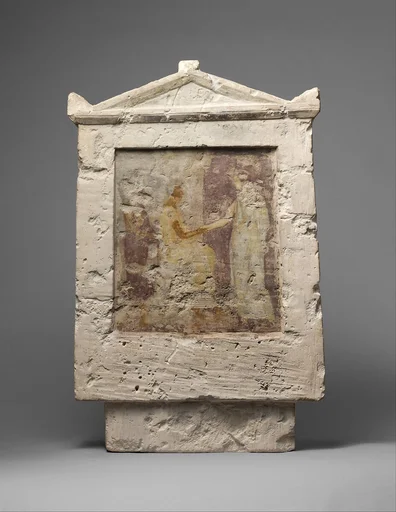
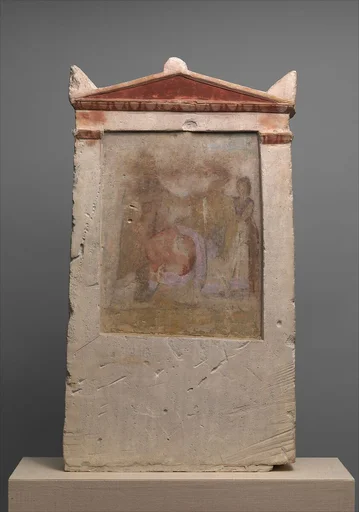
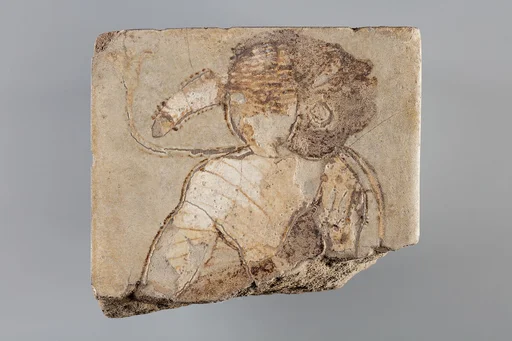
Painted limestone funerary slab with a man controlling a rearing horse
Unknown
2nd half of 3rd century BCE · Limestone, paint · Greek and Roman Art
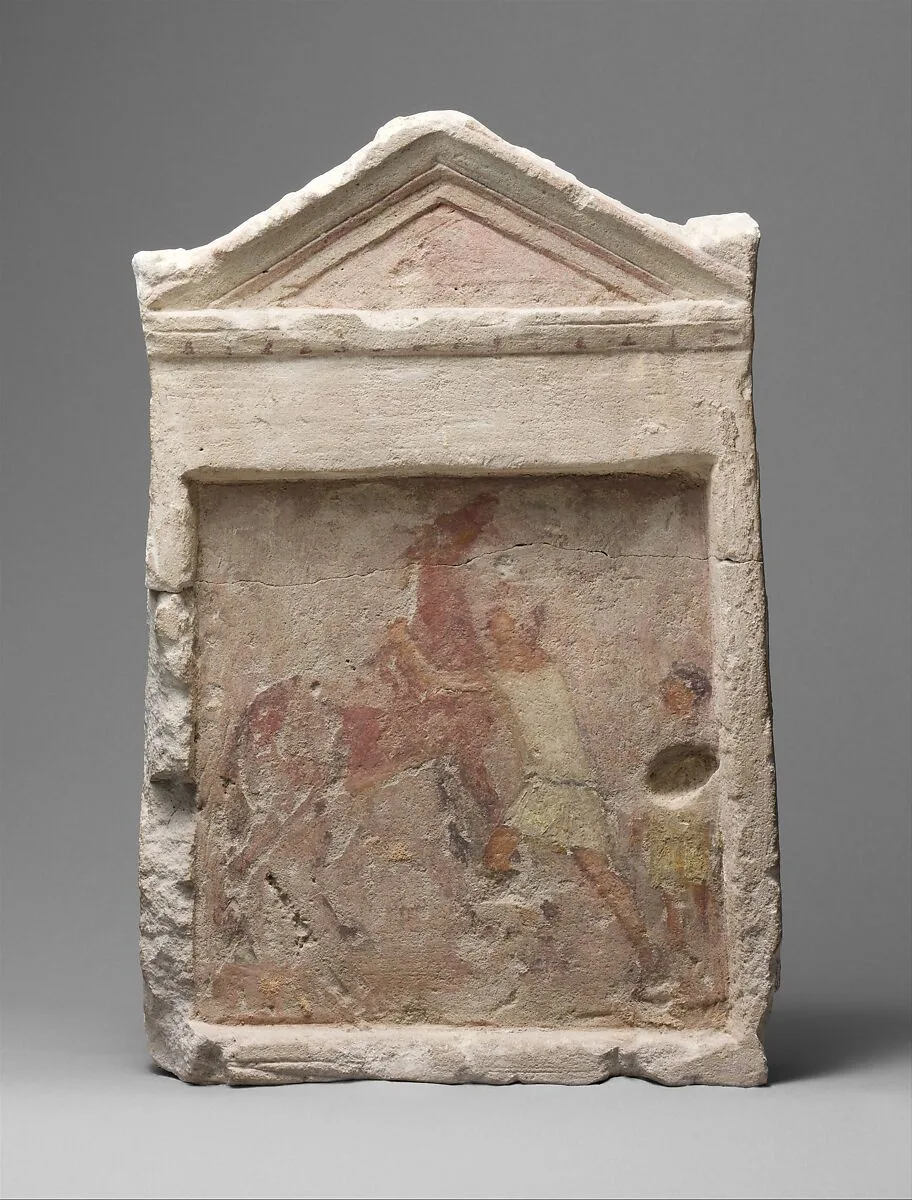
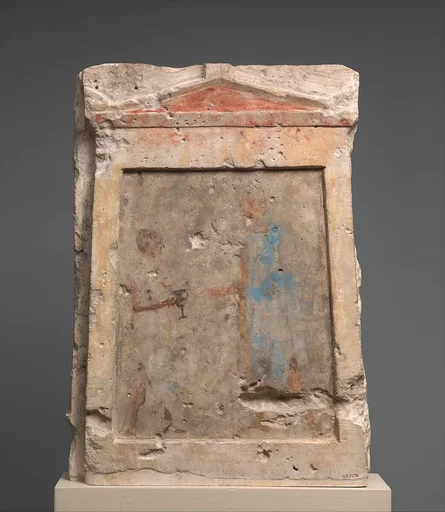
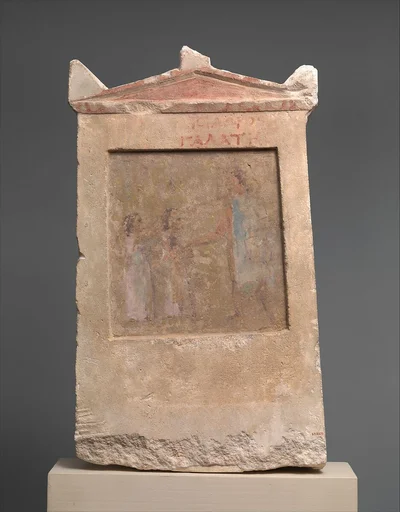
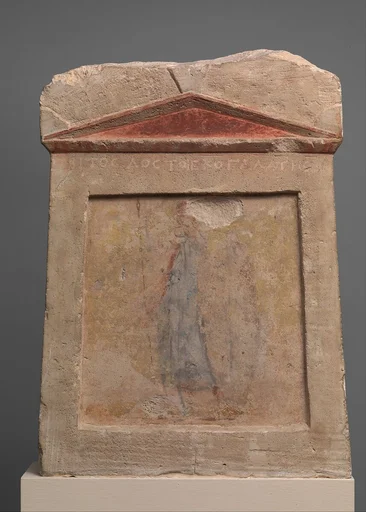
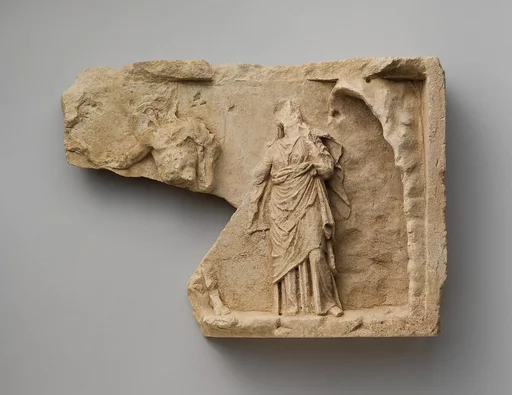
During the Ptolemaic period a distinctive type of subterranean tomb for multiple burials proliferated in the cemeteries around the city of Alexandria. Underground chambers cut into the living rock radiated from a central courtyard open to the sky. Most chambers contained a number of loculi, long narrow niches cut into the walls, which served as burial slots. Some loculi were sealed with painted limestone slabs in the form of small shrines. Here, a lively depiction of a man trying to bridle a horse, while a boy stands behind him, commemorates a man from Thessaly in Northern Greece, who must have been one of the many foreigners who congregated in the wealthy, cosmopolitan Ptolemaic capital.
- Artist
- Unknown
- Date
- 2nd half of 3rd century BCE
- Medium
- Limestone, paint
- Culture
- Greek
- Department
- Greek and Roman Art
- Credit line
- Gift of Darius Ogden Mills, 1904