Stucco relief panel
Unknown
mid-1st century CE · Stucco · Greek and Roman Art
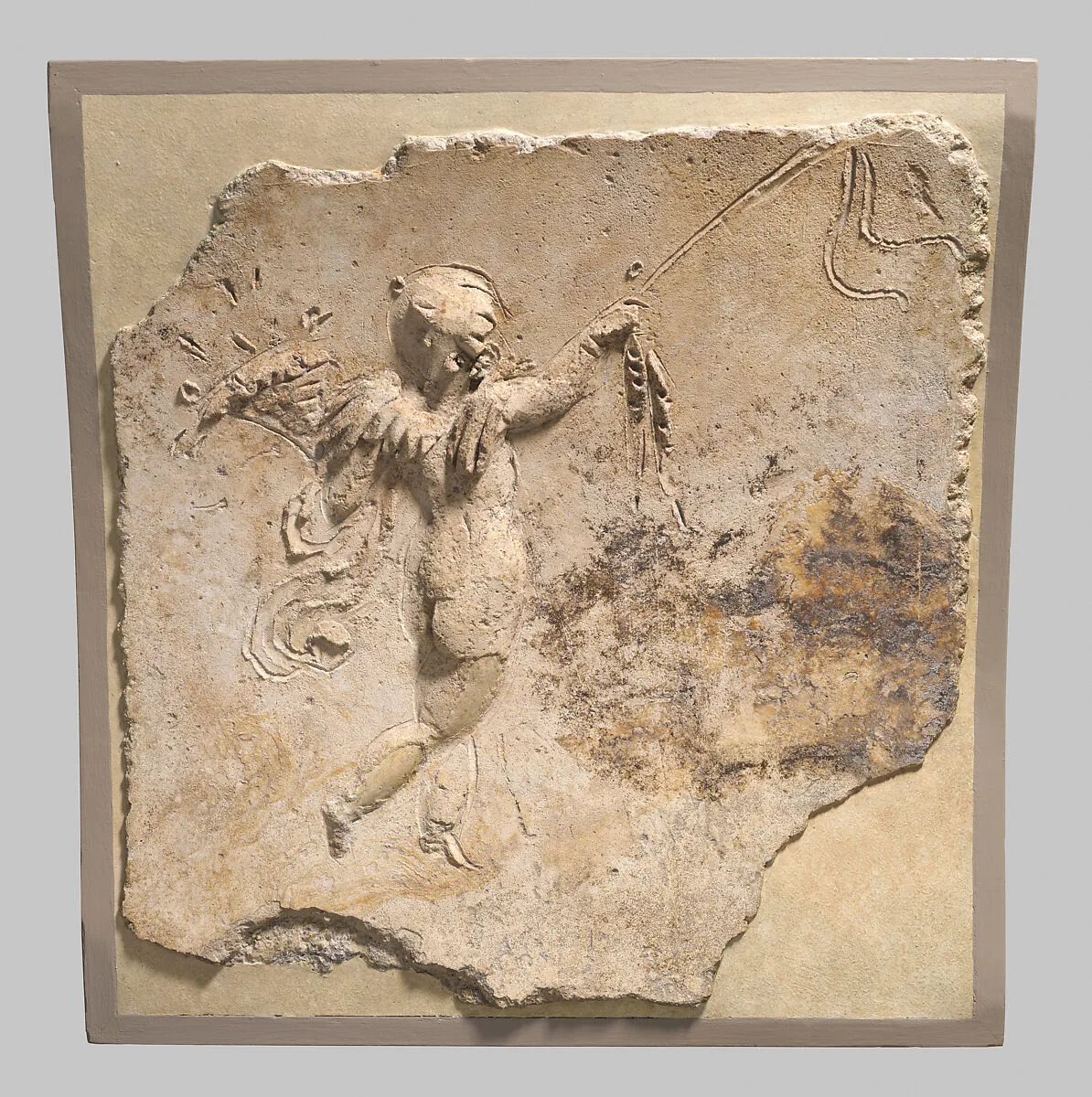
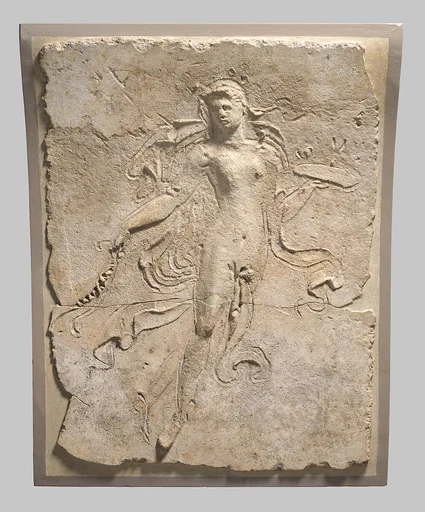
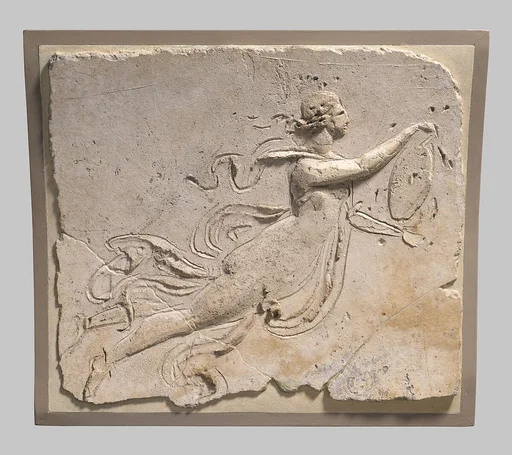
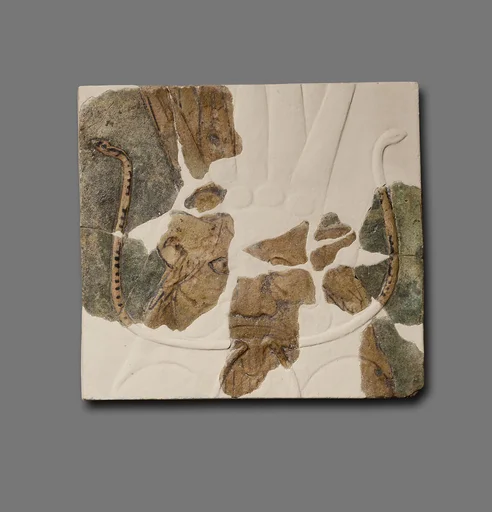
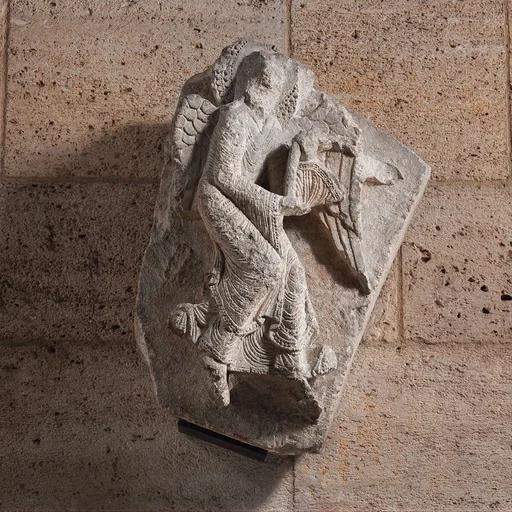
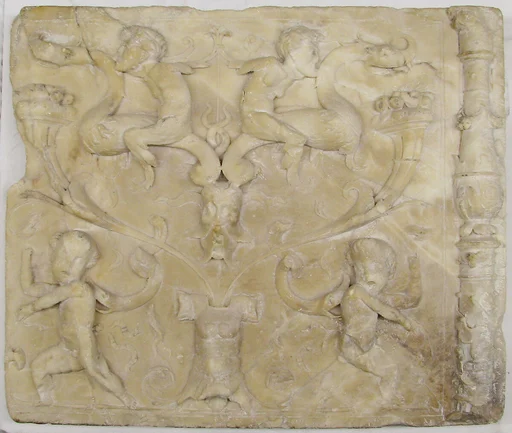
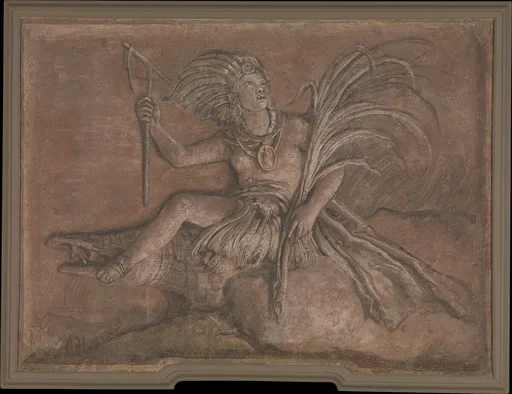
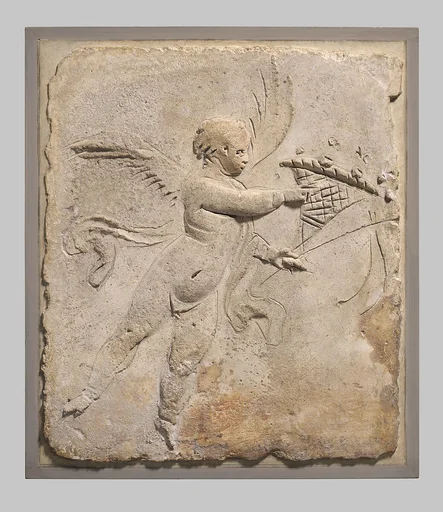
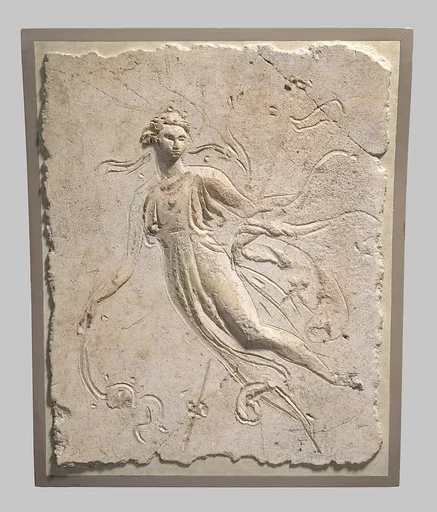
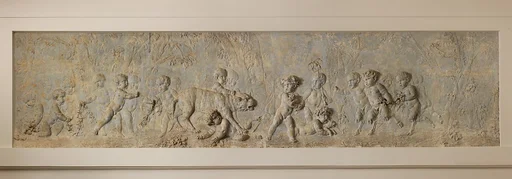
Stucco played an important role in Roman construction and interior design. In its simplest form, it provided an attractive smooth surface for walls and columns built of rough masonry and brick. Since stucco was applied wet, its surface could also be shaped with either a template or a mold to provide a decorative architectural framework for wall frescoes. Stucco was also extensively employed to cover ceilings, especially barrel vaults in the halls, corridors, and rooms of large houses, in public buildings such as baths, and in tombs. These ceilings could be extremely elaborate, including panels with figures modeled freehand in situ. The eight ceiling panels displayed here belong to this last category. Their subjects are typical of the genre; they include satyrs, maenads, cupids, and panthers. Other mythological figures and creatures were also popular. Occasionally, too, the stucco was painted so that the pale relief decoration stood out more prominently against a deeply colored background.
- Artist
- Unknown
- Date
- mid-1st century CE
- Medium
- Stucco
- Culture
- Roman
- Department
- Greek and Roman Art
- Credit line
- Gift of Henry G. Marquand, 1892